Films People Pull a Fast One Night Beat Reading Room On TV Shop
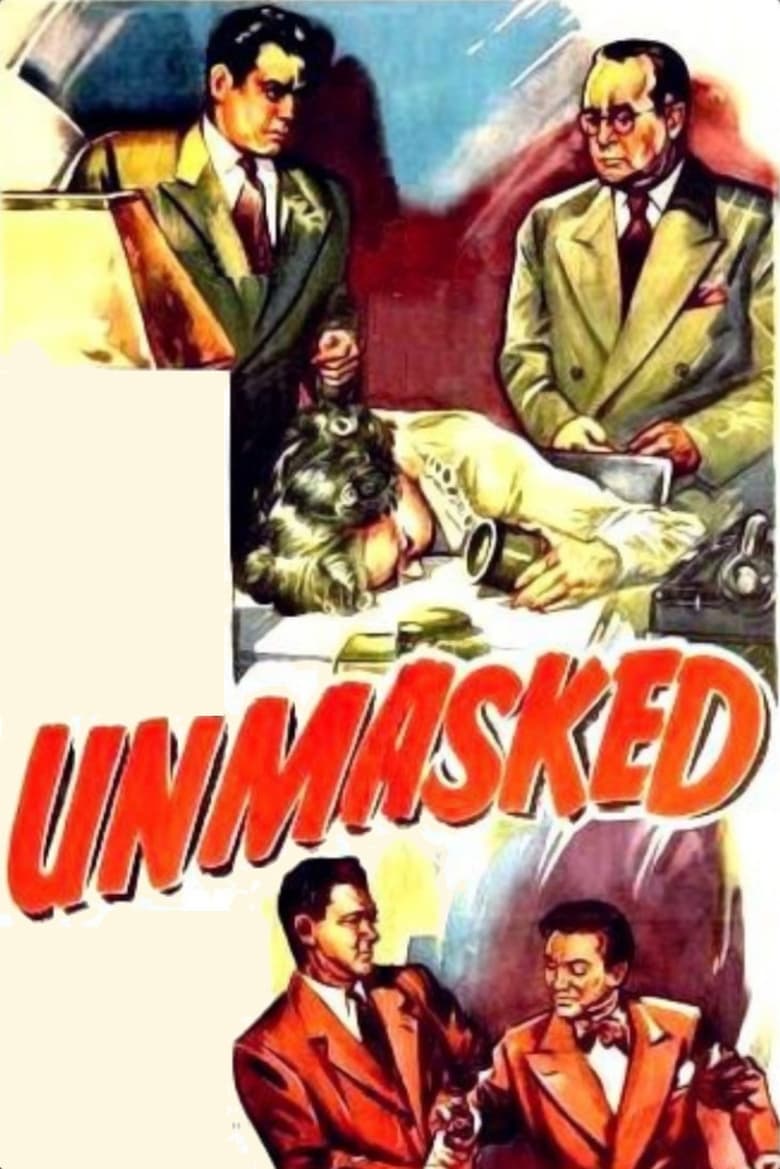
Unmasked 1950
1950 Republic Pictures
★★★☆☆ Notable
Film Noir · 60 minutes · Black & White

Unmasked

Directed by George Blair
Year 1950
Runtime 60 min
Studio Republic Pictures
TMDB 5.0 / 10
"A detective follows the money, and the money leads somewhere a good man was never meant to go."

In a mid-sized American city, Detective Lieutenant James Webster is assigned to investigate the murder of a man with syndicate connections. The trail leads him to Linda Jackson, a young woman whose apparent innocence is complicated by her ties to a web of criminal interests she claims not to understand. Her stepfather, Harry Jackson, sits at the edge of the underworld, and the family name carries more freight than Linda knows.

Roger Lewis, played with coiled menace by Raymond Burr, emerges as the dominant criminal figure – a man who controls associates through debt and fear rather than loyalty. As Webster presses deeper into the case, the allegiances around Linda begin to shift. Doris King, whose relationship to the Jackson family carries its own ambiguities, proves to be a figure who operates according to her own calculus. The investigation reveals that nearly everyone in Webster's orbit has something to protect and a reason to lie.

Unmasked works within the procedural strand of postwar noir, where the detective is less a knight errant than a bureaucratic instrument pressing against entrenched corruption. At sixty minutes, the film moves without sentimentality, trusting its genre mechanics to carry moral weight. Republic Pictures produced dozens of films like this one – compact, economical, and more revealing of how crime was imagined in postwar America than their modest budgets might suggest.
Classic Noir

Unmasked is a minor entry in Republic Pictures' postwar crime output, but minor here means precisely calibrated rather than slight. George Blair directs with the efficiency the studio demanded – no scene lingers beyond its function, no character is granted more depth than the plot requires. What distinguishes the film is the casting of Raymond Burr in a supporting role he had not yet outgrown. In 1950, before Perry Mason transformed him into a figure of reassurance, Burr occupied the far edge of the frame as threat personified: soft-spoken, physically imposing, capable of implying violence without performing it. The procedural structure keeps Detective Webster at the moral center, but the film's real argument is about the infrastructure of organized crime in American civic life – the way legitimate family structures and criminal networks share personnel and geography. For a film running one hour, that is a substantial claim to be making.

– Classic Noir
3 ★★★☆☆ Notable
Credits

The Crew

DirectorGeorge Blair
ScreenplayPaul Yawitz
CinematographyEllis W. Carter
MusicStanley Wilson
EditingRobert M. Leeds
Art DirectionFrank Hotaling
CostumesAdele Palmer
ProducerStephen Auer
Performances

The Cast

Close Reading

The Signature Scene

Unmasked – scene
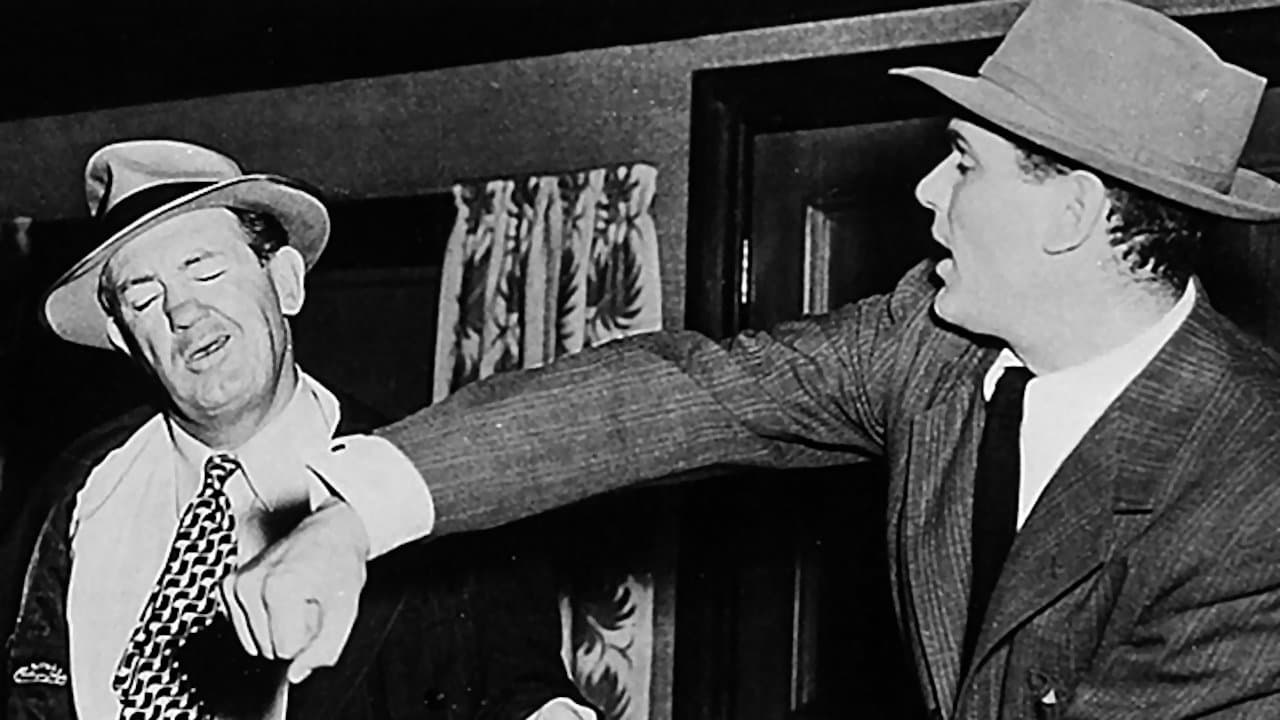
The Confrontation in Lewis's Office Burr Seated, Light Falling

Ellis W. Carter positions Roger Lewis behind a desk that functions as both furniture and fortification. The key light comes from screen left at a steep angle, carving the right side of Burr's face into shadow and reducing his eyes to points of calculation. Webster stands, which should confer authority, but the framing keeps Lewis's bulk dominant in the foreground. The background is deliberately underlit – a standard Republic economy that here reads as moral void rather than budget constraint.

The scene's argument is quiet but firm: institutional power and criminal power occupy the same rooms and use the same grammar. Lewis does not threaten Webster directly. He does not need to. The composition has already communicated what dialogue would only diminish. Webster leaves with information but without leverage, and the film's camera understands that distinction before the script says it aloud.

Visual Language

The Cinematography

🎞️
Ellis W. Carter – Director of Photography

Ellis W. Carter was one of the more reliable cinematographers working the lower tier of studio noir in this period, and Unmasked demonstrates both his competence and his constraints. Working on Republic's compressed schedules and studio-bound sets, Carter relies on steep key lighting and deep shadow fills to do the atmospheric work that location shooting might otherwise provide. His lens choices favor moderate focal lengths that keep backgrounds legible but slightly compressed, reinforcing the sense that characters have nowhere to retreat. The moral logic of the story – corruption is close, proximity is complicity – is served by Carter's refusal to let any frame breathe too easily. Interiors feel occupied rather than inhabited. When a figure moves toward a light source, it registers as decision rather than choreography. Carter does not achieve the baroque shadow geometry of a John Alton, but within the hour the film is given, his work earns its keep.

In the Catalogue

Themes & Motifs

Availability

Where to Watch

Also in the Directory

See Also