Films People Pull a Fast One Night Beat Reading Room On TV Shop
Under the Gun 1951
1951 Universal International Pictures
★★★☆☆ Notable
Film Noir · 83 minutes · Black & White

Under the Gun

Directed by Ted Tetzlaff
Year 1951
Runtime 83 min
Studio Universal International Pictures
TMDB 6.6 / 10
"A man running from a frame-up finds the swamp closes in from every direction."

Bert Galvin (Richard Conte) is a small-time gambler with a talent for landing in the wrong place at the wrong time. Convicted of a murder he insists he did not commit, he escapes from a prison work gang in the Louisiana bayou country and goes on the run, carrying a death sentence on his back and a grudge in his chest. His only lead is the name of the man who set him up, and his only asset is a wary, street-level intelligence that has kept him alive this far.

Galvin finds temporary shelter through Ruth Williams (Audrey Totter), a woman whose loyalty is never quite settled between self-interest and something approaching conscience. The local power structure, fronted by the politically connected Samuel Gower (Sam Jaffe) and enforced by Sheriff Bill Langley (John McIntire), has every reason to keep Galvin from talking. District Attorney Arthur Sherbourne (Donald Randolph) represents the law's cleaner face, but the law and the racket are wound tighter together here than Galvin initially understood. Milo Bragg (Shepperd Strudwick) operates in the middle distance, a fixer whose precise allegiances remain deliberately obscured.

Under the Gun belongs to a recognizable postwar cycle in which the justice system itself becomes the threat rather than the remedy. Tetzlaff works the bayou geography hard, using its isolation and visual strangeness to externalize Galvin's entrapment. The film asks a question the period returned to repeatedly: how far can an innocent man trust any institution when the institutions have already failed him once.
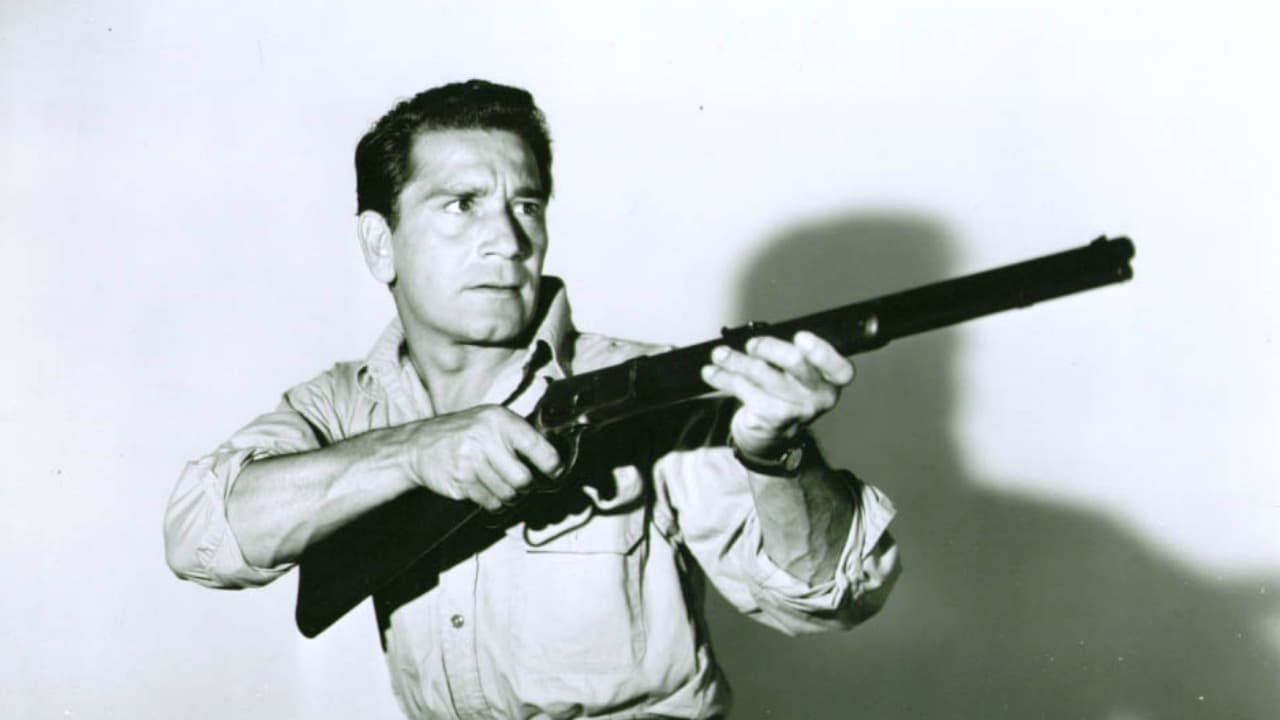
Classic Noir

Under the Gun arrives at a moment when Universal International was producing competent, efficiently budgeted noir with just enough location texture to distinguish it from pure studio product. Ted Tetzlaff, a former cinematographer himself, brings a craftsman's eye to the material – the Louisiana bayou setting is not merely decorative but functions as a moral environment, something airless and without clear exits. Richard Conte, at his best when playing men whose toughness is a form of controlled desperation, anchors the film without sentimentalizing the character. Sam Jaffe's Gower is the more interesting figure: soft-spoken, civic-minded in appearance, corrupt in structure, a portrait of the respectable criminal that the early 1950s found particularly useful. The film does not fully develop its female lead – Totter's Ruth Williams is capable of more than the script demands – but it sustains its procedural tension and its central argument about systemic corruption with enough discipline to reward serious attention.

– Classic Noir
3 ★★★☆☆ Notable
Credits

The Crew

DirectorTed Tetzlaff
ScreenplayGeorge Zuckerman
CinematographyJohn L. Herman
EditingVirgil W. Vogel
ProducerRalph Dietrich
Performances

The Cast

Close Reading

The Signature Scene

Under the Gun – scene
The Bayou Pursuit Reed Grass, Fading Light

Tetzlaff frames the pursuit through the bayou shallows with the camera low and level to the waterline, so that Galvin's body is bisected by the horizon between dark water and pale sky. The light is late and diffuse, eliminating strong shadow and replacing it with a flat, enveloping grey that makes the landscape feel less like a location than a condition. Reeds and cypress knees crowd the frame edges, narrowing the available space with each cut. Herman's photography finds no clean geometry here – only the horizontal line of the water and the vertical of a running man, the composition itself arguing constriction.

The scene crystallizes the film's central premise: escape is not freedom. Galvin moves through open country and is more trapped than he was behind wire. The bayou does not pursue him – it simply waits, indifferent, offering the same murk in every direction. Tetzlaff uses this passage not for action spectacle but for a quieter kind of dread, the recognition that the landscape has aligned itself with the system that wants Galvin dead.

Visual Language

The Cinematography

🎞️
John L. Herman – Director of Photography

John L. Herman's cinematography on Under the Gun represents a considered deployment of location shooting against studio interiors, using the contrast between the two registers to map the film's moral geography. Exterior bayou sequences favor wide lenses that flatten depth and spread darkness evenly across the frame, refusing the expressionist chiaroscuro that noir convention might invite in favor of something more oppressive: an undifferentiated gloom with no redemptive shadow architecture. Interior scenes – Gower's office, the sheriff's anteroom – tighten the lens and sharpen the contrast, making authority's spaces feel crisp and legible in ways the natural world refuses to be. Herman rarely places a key light without acknowledging what it cannot reach; the fill is consistently underexposed, so that characters' faces resolve only partially, withholding the readable legibility that the plot keeps promising and deferring. Tetzlaff, himself a former DP of considerable skill, clearly maintained an active working relationship with Herman on the visual grammar of the film.

In the Catalogue

Themes & Motifs

Availability

Where to Watch

Also in the Directory

See Also