Films People Pull a Fast One Night Beat Reading Room On TV Shop
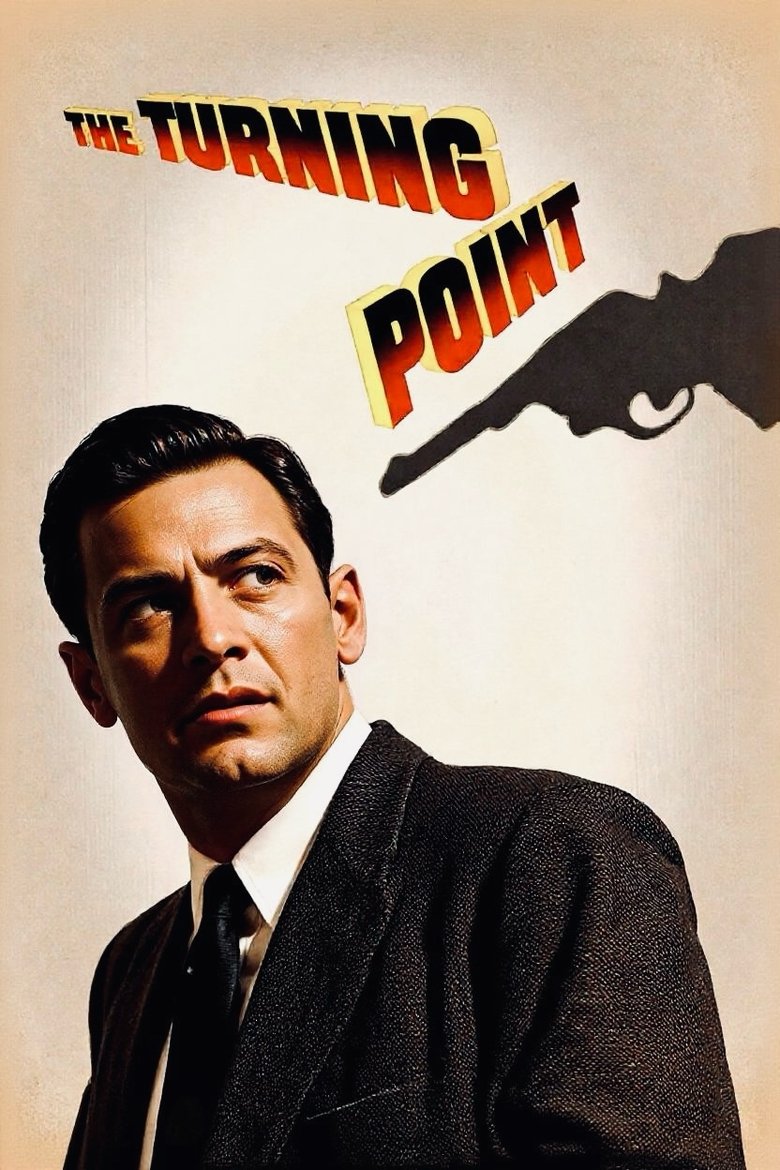
Turning Point 1952
1952 Paramount Pictures
★★★☆☆ Notable
Film Noir · 85 minutes · Black & White

Turning Point

Directed by William Dieterle
Year 1952
Runtime 85 min
Studio Paramount Pictures
TMDB 6.3 / 10
"Between the law and the syndicate, a man discovers the distance is shorter than he thought."

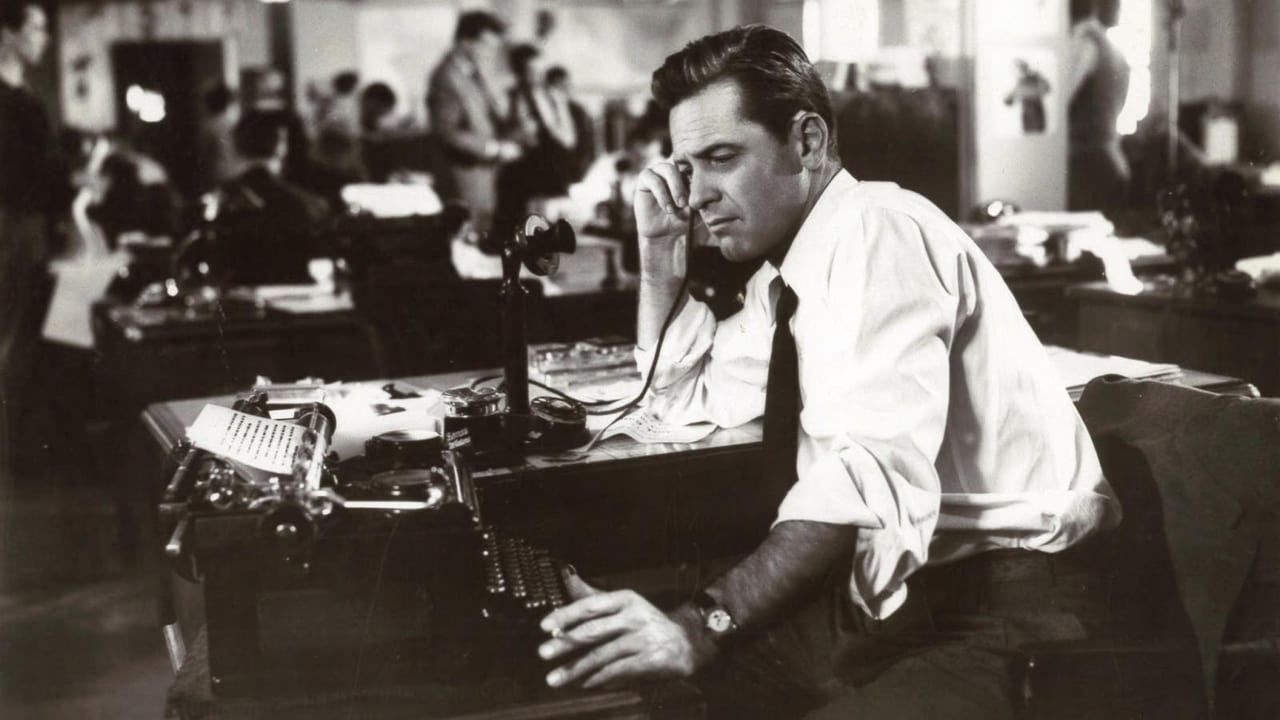
In an unnamed American city, a state crime commission launches an investigation into organized crime, placing idealistic newspaper reporter Jerry McKibbon (William Holden) at the center of a conflict between civic duty and personal loyalty. The committee's chief counsel, John Conroy (Edmond O'Brien), is an old friend of McKibbon's, a relationship that gives the reporter privileged access to the investigation while complicating his professional objectivity. Presiding over the syndicate's local operations is Neil Eichelberger (Ed Begley), a pragmatic crime boss who has long understood that the right pressure applied to the right man can neutralize any threat the law might pose.

The investigation's credibility depends on witnesses willing to testify, but the syndicate moves efficiently to silence or discredit them. What sharpens the film's tension is the figure of Matt Conroy (Tom Tully), John's father and a veteran police officer whose career-long accommodation of the mob places him directly in the committee's path. John must choose between prosecuting the case with full integrity and protecting a father whose compromises, however pragmatic they once seemed, now constitute obstruction. Amanda Waycross (Alexis Smith) moves between these men, her loyalties as carefully managed as everything else in a city where allegiance is a commodity.

Turning Point situates itself within the cycle of early-1950s crime films directly shaped by the Kefauver Committee hearings, which had recently exposed organized crime's penetration of American civic and political life on national television. The film takes that documentary-adjacent urgency and runs it through classical noir's moral geometry: the closer a man gets to the truth, the more personal the cost. Dieterle frames the investigation not as a triumph of institutions but as a test of individual men, each of whom must decide how much of himself he is willing to spend.
Classic Noir

Turning Point arrives in 1952 at the intersection of two distinct noir currents: the procedural semi-documentary strain pioneered by films like He Walked by Night and The Naked City, and the more psychologically interior noir concerned with loyalty, complicity, and the moral weight of institutional life. Dieterle holds those currents in productive tension. The film's central situation – a son prosecuting a corruption case that implicates his own father – gives what might otherwise be a straightforward crime expose genuine dramatic density. Edmond O'Brien, characteristically taut and slightly overwound, carries the film's ethical argument in his body as much as in his dialogue. Holden, still refining the disenchanted idealist he would crystallize in Stalag 17 the following year, provides a useful counterweight. The film does not fully resolve its tensions, which is partly a structural limitation and partly, one suspects, an honest acknowledgment that the institutions the Kefauver hearings exposed did not resolve cleanly either. As a period document and a genre exercise, it earns its place.

– Classic Noir
3 ★★★☆☆ Notable
Credits

The Crew

DirectorWilliam Dieterle
ScreenplayHorace McCoy
CinematographyLionel Lindon
EditingGeorge Tomasini
Art DirectionJ. McMillan Johnson
CostumesEdith Head
ProducerIrving Asher
Performances

The Cast

Close Reading

The Signature Scene

Turning Point – scene
The Commission Hearing Room Father Facing the Committee

Lionel Lindon positions the camera at a low angle as Matt Conroy takes the witness chair, the arc of committee members above him forming a judgment line across the upper frame. The hearing room lighting is institutional and flat at the edges but gathers into a single hard source over the witness position, isolating Tully in a pool that functions less as illumination than as exposure. The depth of field is shallow enough to keep the committee members slightly soft, directing the eye insistently back to the aging policeman in the chair, whose face carries more information than any testimony he offers.

The scene is the film's moral fulcrum. Everything the story has constructed – the procedural apparatus, the newspaper investigation, John Conroy's prosecutorial ambition – collapses into a single room where a son must watch his father account for decades of accommodation. Dieterle does not sentimentalize the moment. The camera stays at its low angle, maintaining the geometry of judgment, and the scene argues without editorializing that the institutions men build to protect themselves eventually require a reckoning that no personal loyalty can deflect.

Visual Language

The Cinematography

🎞️
Lionel Lindon – Director of Photography

Lionel Lindon, whose work across the early 1950s demonstrates a consistent facility with location-inflected noir photography, brings to Turning Point a visual strategy calibrated to the film's thematic concern with exposure and concealment. Shooting largely on studio sets dressed to suggest civic interiors – hearing rooms, newspaper offices, police precincts – Lindon avoids the expressionist shadow play of earlier noir in favor of a harder, more forensic light that suits the Kefauver-era procedural context. Where shadow does appear, it is architectural rather than psychological, falling from venetian blinds or doorframes to impose a grid on characters who believe they operate freely. His coverage of crowd scenes and public spaces draws on the semi-documentary grammar of the period without sacrificing compositional control, and his handling of medium close-ups – particularly on O'Brien – uses shallow focus to strip away institutional context and locate the drama in the individual face. The visual language consistently argues that transparency is itself a form of pressure.

In the Catalogue

Themes & Motifs

Availability

Where to Watch

Also in the Directory

See Also