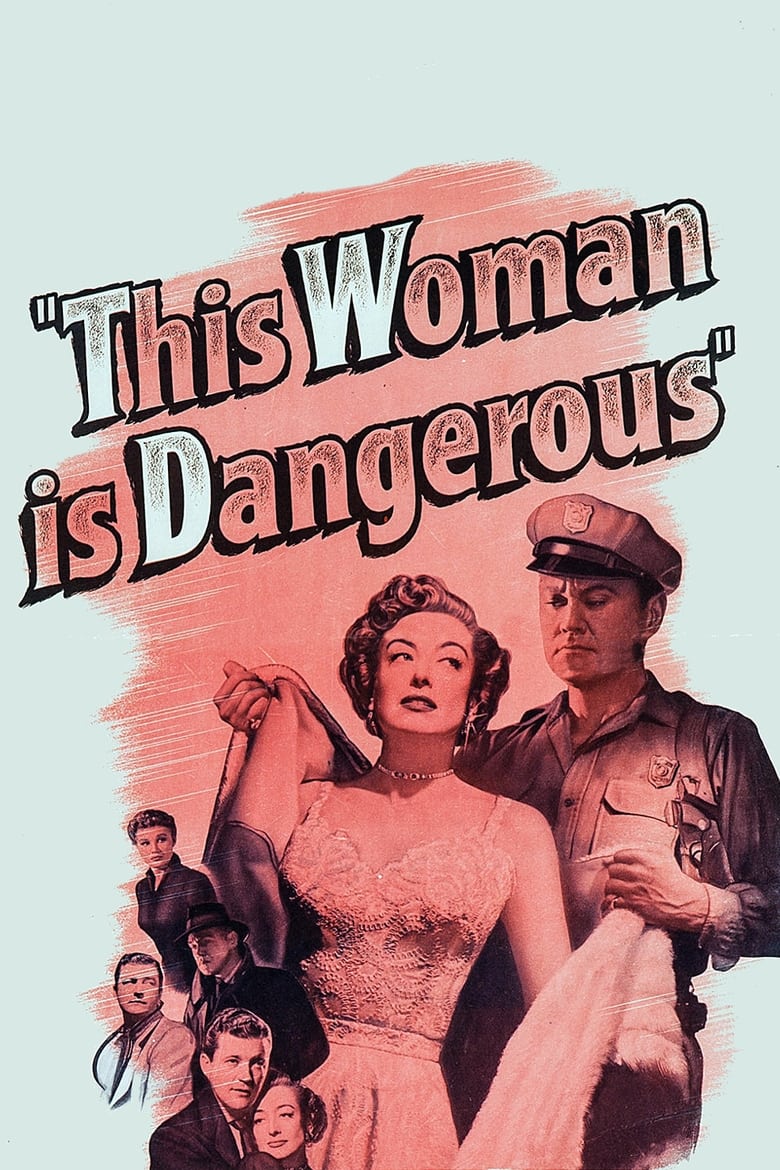
Beth Austin (Joan Crawford) is the cool, capable organizer behind a criminal syndicate led by her possessive lover, Matt Jackson (David Brian). When a robbery goes wrong and Beth begins losing her sight, Matt arranges for her to receive treatment from a respected eye surgeon, Dr. Ben Halleck (Dennis Morgan), in a quiet Indiana clinic – far from the heat of any investigation. Beth enters the hospital under a false identity, calculating and self-contained, carrying her past like a concealed weapon.
What Beth does not anticipate is Halleck himself: a widower of evident integrity whose steady attention begins to erode her defenses. As the treatments proceed and her sight slowly returns, an unexpected attachment forms – one that forces her to weigh the life she has built against the possibility of a different kind of future. Meanwhile, Matt Jackson grows suspicious, tightening his grip from a distance, and federal agent James Franklin (Richard Webb) closes in on the syndicate, threatening to collapse the careful fiction Beth has constructed around her stay.
This Woman is Dangerous occupies the contested border between the woman's picture and the crime film that Warner Bros. worked with particular facility in the early 1950s. The film asks whether a woman defined entirely by her criminal utility can reconstitute herself through feeling alone – a question the noir tradition habitually answers in the negative. Crawford's performance keeps that answer genuinely uncertain for much of the running time, even as the plot's moral architecture slowly reasserts itself.
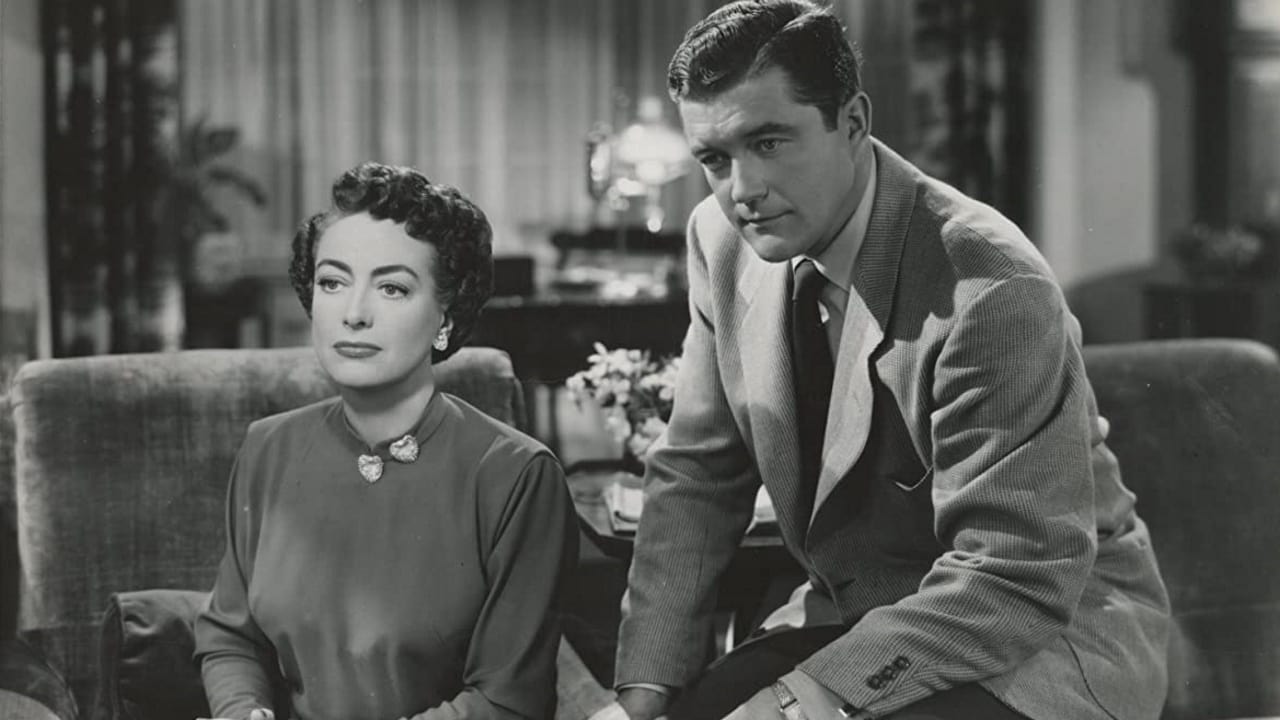
This Woman is Dangerous arrives late in the classic noir cycle, and the strain of the era's shifting moral climate is legible in its structure. Warner Bros. paired Joan Crawford – already a studio unto herself by 1952 – with a premise that places a female criminal at the center without simply condemning or redeeming her on the opening reel. Felix E. Feist directs with professional economy rather than visual ambition, and the film is most useful as a document of how the studios were beginning to domesticate noir's harder edges: the clinic setting, the sympathetic surgeon, the gradual rehabilitation of the protagonist all point toward a compromise the genre's founding films would not have entertained. Crawford's work is the film's chief asset; she brings an exact, guarded intelligence to Beth Austin that resists sentimentality even when the screenplay reaches for it. David Brian's Matt Jackson supplies genuine menace without caricature. The film does not resolve its tensions as cleanly as it pretends to, and that residual unease is where its lasting interest lies.
– Classic Noir
Ted D. McCord frames Crawford in a hospital corridor under overhead fluorescent light that flattens shadow in a way unusual for the genre – the clinical whiteness a deliberate inversion of noir's characteristic darkness. The camera holds on Crawford's face in medium close-up as the bandages are removed, the light source positioned slightly above eye level so that the first thing illuminated is not relief but calculation: her expression organizing itself before anyone else in the frame can read it.
The scene functions as the film's moral hinge. Restored sight ought to signal liberation, but Crawford plays the moment as something closer to reckoning. What Beth sees first – Halleck's cautious hope – is precisely what makes her situation more complicated, not less. The returning light does not clarify her path; it illuminates how far she has traveled from any life that might accommodate what she now wants.
Ted D. McCord, whose career at Warner Bros. spanned decades of varied tonal work, brings a restrained and purposeful visual approach to This Woman is Dangerous. The film is shot largely on studio interiors, and McCord uses that controlled environment to distinguish between worlds: the syndicate sequences rely on harder key lighting and compressed foreground-to-background staging that creates a sense of surveillance and entrapment, while the clinic scenes open the frame slightly, employing softer, more diffuse sources that suggest – without sentimentalizing – the possibility of a different kind of existence. Shadow work is selective rather than atmospheric in the manner of the cycle's early years; by 1952, McCord is deploying darkness as punctuation rather than environment. Crawford's face receives particular care in close-up, lit to preserve its sculptural quality without flattering dishonesty. The visual grammar supports the film's central argument: that the noir world does not simply disappear because a character steps out of it.
TCM holds extensive Warner Bros. library rights for this period and is the most reliable broadcast source for this title.
MaxSubscriptionWarner Bros. catalogue titles from the early 1950s surface periodically on Max; availability varies by region and season.
TubiFree (Ad-Supported)Tubi has carried Warner Bros. catalogue noir titles at no cost, though the transfer quality and availability of this specific title should be confirmed before viewing.