Films People Pull a Fast One Night Beat Reading Room On TV Shop
Tattooed Stranger 1950
1950 RKO Pathé Pictures
★★★☆☆ Notable
Film Noir · 64 minutes · Black & White

Tattooed Stranger

Directed by Edward Montagne
Year 1950
Runtime 64 min
Studio RKO Pathé Pictures
TMDB 5.2 / 10
"A dead woman in a parked car, and the only lead is the ink beneath her skin."

A woman is found shot dead in a car in Central Park, her identity unknown and her past erased. Detective Tobin, a methodical and somewhat weary plainclothes officer, is assigned to the case alongside a young botanist, Mary Mahan, whose expertise in plant identification becomes unexpectedly central to the investigation. The single concrete clue is a tattoo on the victim's arm, and it is this marking – obscure, faded, personal – that sets the inquiry in motion through the back corridors of New York's criminal and civilian worlds.

As Tobin and Mary work the case through laboratories, tattoo parlors, and street-level contacts, the investigation gradually unsettles both of them. The professional distance Tobin maintains begins to erode under the pressure of a case with no clear motive and no obvious suspects. Mary, initially a civilian consultant, finds herself drawn deeper into the procedural machinery of a homicide unit that operates less on intuition than on legwork, patience, and the slow accumulation of physical evidence. The identity of the victim, when it begins to emerge, complicates rather than clarifies.

Tattooed Stranger belongs to the semi-documentary strain of late-1940s and early-1950s noir, a cycle that traded expressionist shadow for institutional procedure and location authenticity. Shot largely on the streets and in the working spaces of New York, it frames crime not as fate or passion but as a problem to be solved through bureaucratic persistence. The film's restraint is both its method and its argument: violence here leaves traces, and those traces can be read.
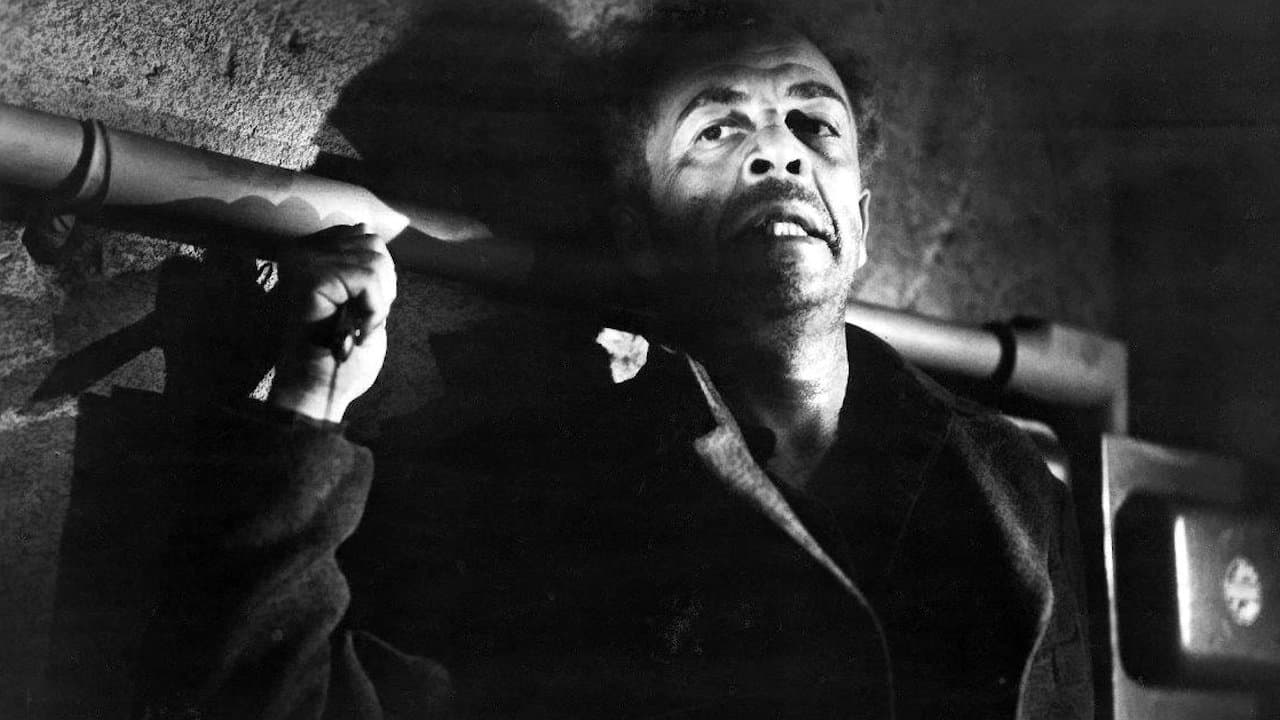
Classic Noir

Tattooed Stranger occupies a specific and underappreciated position within the semi-documentary noir cycle that flourished in the late 1940s under the influence of films like The Naked City. Produced by RKO Pathé and shot on location in New York, it applies a procedural rigor that subordinates character psychology to institutional method – the police laboratory, the records bureau, the forensic detail. Edward Montagne directs with economy rather than flair, and the film is stronger for it. What distinguishes the film is its use of botanical evidence as a narrative mechanism, an unusual choice that anchors the investigation in the material world rather than in confession or coincidence. Patricia Barry's Mary Mahan is not a femme fatale or a victim but a working specialist, and her presence in the frame quietly revises genre convention. At 64 minutes, the film makes no room for digression. Its limitations are real – characterization is thin, dramatic tension is moderate – but as a document of how civic institutions processed violence in postwar America, it carries genuine sociological weight.

– Classic Noir
3 ★★★☆☆ Notable
Credits

The Crew

DirectorEdward Montagne
ScreenplayPhilip H. Reisman Jr.
CinematographyWilliam O. Steiner
MusicAlan Shulman
EditingDavid Cooper
ProducerJay Bonafield
Performances

The Cast

Close Reading

The Signature Scene

Tattooed Stranger – scene
The Police Laboratory Evidence Under the Lens

The camera holds close on a microscope stage, the frame filled with the textures of botanical matter and photographic enlargements of the tattoo. Light falls from a single overhead source, clinical and flat, eliminating shadow rather than deploying it. The composition is functional – instruments, hands, paper – and William O. Steiner keeps the camera largely static, letting the objects rather than the angles carry the scene's visual weight. It is one of the few noir interiors that looks genuinely like a workplace.

The scene makes the argument that detection is labor rather than revelation. There is no dramatic close-up of a face registering insight, no sudden illumination. Knowledge accumulates through process. Mary's presence in the frame – competent, unadorned, reading evidence rather than performing it – positions the film's moral center in expertise rather than instinct, a quiet challenge to the lone-wolf detective who solves crimes through force of personality.

Visual Language

The Cinematography

🎞️
William O. Steiner – Director of Photography

William O. Steiner's cinematography on Tattooed Stranger resists the temptation to aestheticize the city it documents. Shooting on location across New York – Central Park, precinct interiors, laboratory spaces, street-level storefronts – Steiner works with available architectural light supplemented by practical sources, producing an image that is flat and factual where classic noir would reach for contrast and depth. The choice is not a failure of technique but a considered approach: deep shadow would romanticize what the film insists on treating as ordinary. Wide-angle lenses keep figures in context with their environments, resisting the isolating close-up that noir typically uses to signal interiority or menace. The result is a visual register closer to documentary than to expressionism, and it serves the film's central proposition that crime is an institutional problem requiring institutional response. Steiner's work here anticipates the televisual procedural aesthetic that would come to dominate crime storytelling in the following decade.

In the Catalogue

Themes & Motifs

Availability

Where to Watch

Also in the Directory

See Also