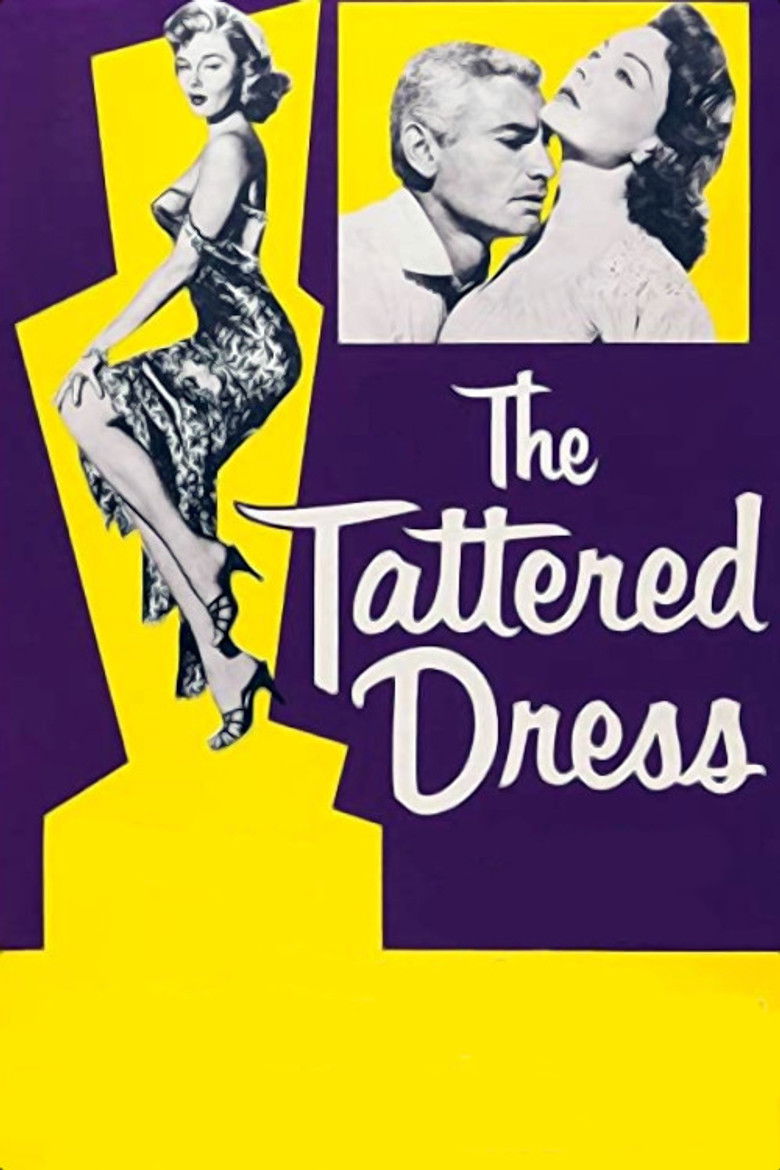
James Gordon Blane is a ruthless, high-earning criminal defense attorney from New York who travels to a small Nevada desert town to defend Michael Reston, a wealthy man accused of murdering a drifter who allegedly attacked his wife, Charleen. Blane secures an acquittal through courtroom maneuvering and the calculated destruction of the prosecution's key witness, but his methods leave a trail of humiliated locals – none more dangerous than Sheriff Nick Hoak, a man who runs the county with the quiet authority of someone accustomed to settling accounts on his own terms.
When Carol Morrow, the witness Blane dismantled on the stand, is found shot dead, Hoak moves swiftly to charge Blane with the murder. Whether the frame is Hoak's personal revenge or a more organized effort to remove a man who knows too much about the Reston money and how it flows becomes the question Blane and his loyal wife Diane must untangle from inside a legal system that no longer extends him professional courtesy. Billy Giles, a small-time local operator, and Lester Rawlings, a local attorney with compromised loyalties, complicate the picture further.
The film operates as a courtroom noir in two movements: the first a showcase for Blane's predatory skill, the second a systematic exposure of the costs that skill exacts. Jack Arnold places the trial sequences and their aftermath in the tradition of films that use the law not as a mechanism of justice but as a terrain on which power is contested and, eventually, redistributed.
The Tattered Dress occupies a specific and underappreciated position in late-cycle noir: it is a film about professional competence as moral liability. Jeff Chandler's Blane is not a corrupt man in the conventional sense – he wins cases by following the logic of adversarial law to its coldest conclusions – and the film's genuine interest lies in watching that competence become the instrument of his own prosecution. Jack Arnold, better known for science fiction work at Universal International, handles the procedural mechanics with economy and keeps sentiment at a distance. Gail Russell's Carol Morrow, destroyed in one scene and dead in the next, functions less as a character than as an invoice the narrative presents to Blane. Jack Carson's Hoak is the more interesting antagonist: a rural authoritarian who understands, correctly, that Blane's methods and his own differ only in the formality of the venue. The film was made in the contractual twilight of classical studio noir, and its unease about institutional law reflects a culture beginning to question the integrity of its own procedural myths.
– Classic Noir
Carl E. Guthrie's camera holds on Carol Morrow at medium close range as Blane circles the witness box, the frame tilting almost imperceptibly to place her at a slight diagonal disadvantage. The courtroom lighting is flat and institutional on the gallery but hardens into a single directional source as it reaches the stand, leaving the right side of Russell's face in partial shadow – a composition that literalizes her exposure without overstating it. Cutaways to the jury and to Hoak in the gallery are tight and brief, accumulating an atmosphere of surveillance rather than spectacle.
The scene is the film's moral fulcrum. Blane wins here, technically and completely, and Guthrie's refusal to soften the visual grammar around that victory means the audience is left with the mechanics of a woman's humiliation rather than the drama of legal combat. What the scene argues – quietly, through composition rather than dialogue – is that the courtroom is not a space of truth but of controlled exposure, and that Blane's mastery of that space is precisely what makes him vulnerable once he steps outside it.
Carl E. Guthrie's cinematography for The Tattered Dress works in a register that might be called institutional noir: the desert exteriors are rendered with a flat, bleaching light that strips the Nevada locations of any romantic ambiguity, while the interiors – courtroom, sheriff's office, hotel room – are lit with a careful attention to authority and its distribution across space. Guthrie uses shadow not as atmosphere but as information, marking which characters control the frame and which are subject to it. His lens choices favor a slightly compressed middle distance in the trial sequences, keeping figures proximate in a way that enforces the claustrophobic logic of the plot: no one in this town is far enough from anyone else to be safe. The studio-bound interiors are handled with crisp economy, and the restraint of the visual scheme – no excessive chiaroscuro, no expressionist distortion – is itself a moral position, suggesting a world in which corruption operates in plain sight, in full light, without requiring the cover of darkness.
Tubi has carried Universal International titles from this period with reasonable print quality; confirm availability in your region before seeking alternatives.
TCMSubscriptionTCM periodically programs Jack Arnold and Universal International noir titles; check the broadcast schedule or TCM's on-demand library via Max for the most reliable access.
Amazon Prime VideoRentalAvailable for digital rental through Amazon in standard definition; a serviceable option when streaming platforms do not carry it in a given cycle.