Films People Pull a Fast One Night Beat Reading Room On TV Shop
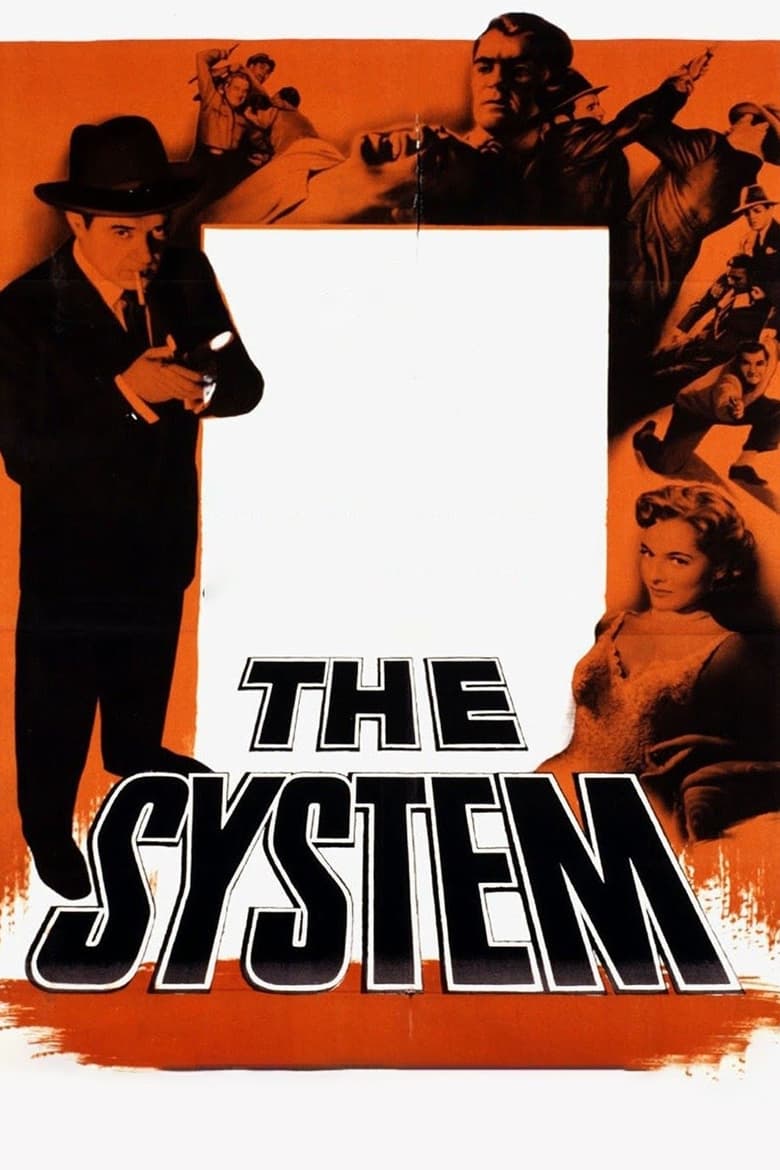
System 1953
1953 Warner Bros. Pictures
★★★☆☆ Notable
Film Noir · 93 minutes · Black & White

System

Directed by Lewis Seiler
Year 1953
Runtime 93 min
Studio Warner Bros. Pictures
TMDB 5.2 / 10
"A seaside resort runs on charm, money, and the quiet arrangements men make at women's expense."

Tinker (Oliver Reed) is a small-time operator working the English resort circuit with a practiced crew of young men known for running 'the system' – a coordinated scheme to identify, court, and bed the wealthiest female tourists before moving them efficiently on. It is transactional, impersonal, and functions with the smoothness of a minor racket. Into this arrangement arrives Nicola (Jane Merrow), a photographer's model whose composure and evident independence mark her as different from the usual targets.

Tinker pursues Nicola with the same studied technique he applies to every other woman, but she reads him clearly and engages on her own terms, gradually unsettling his control over the operation and over himself. Around him, the other women in his orbit – Suzy (Barbara Ferris), Lorna (Julia Foster), Ella (Ann Lynn) – register in different registers of damage: resigned, compliant, or quietly furious. Larsey (Harry Andrews), the older figure who enables and profits from the network, anchors the film's sense that exploitation here has institutional weight.

System operates in the territory where social comedy gives way to something cooler and more troubling – an examination of sexual commerce dressed as recreation, set against the bright, incongruous backdrop of a British seaside summer. The film shares with American noir not the fedora and the rain-slicked street but the underlying geometry: men who mistake calculation for power, women who know the cost of everything, and an arrangement that cannot sustain the weight of genuine feeling.
Classic Noir

Winner's film arrives at an instructive moment – 1964, the year the British New Wave was exhausting its own idioms and the permissive culture it had partly announced was settling into new hierarchies. System takes the liberated resort setting, strips away its promise, and reveals the organisational logic beneath. The contribution of Nicolas Roeg behind the camera is not incidental: his eye for texture and social legibility lifts the material from exploitation comedy toward something approaching moral audit. Reed, still two years from his defining work, brings a sullenness that reads less as charisma than as controlled aggression, which is precisely the point. The film's relationship to American noir is oblique – there is no murder, no femme fatale in the classical sense – yet its preoccupation with systems of predation, with men who mistake method for mastery, and with women who understand the game better than they are permitted to say, places it squarely within the genre's sustained inquiry into power and its disguises. It is a minor work that earns its place on merit.

– Classic Noir
3 ★★★☆☆ Notable
Credits

The Crew

DirectorLewis Seiler
ScreenplayJo Eisinger
CinematographyEdwin B. DuPar
MusicDavid Buttolph
EditingClarence Kolster
Art DirectionGeoffrey Tozer
ProducerSamuel Bischoff
Performances

The Cast

Close Reading

The Signature Scene

System – scene
The Beachfront Confrontation Tinker Reads the Terms

Roeg shoots the exchange in shallow depth of field, the resort crowd softened to near-abstraction behind the two figures. Light comes off the water at a low angle, flattering nothing – it catches the side of Reed's face and leaves the rest in a half-shadow that reads less as glamour than as withholding. The frame is tight, held on Merrow's expression rather than cutting to Reed's reaction, so that the scene's information is delivered by what she chooses not to perform.

The scene turns on Nicola's refusal to be readable on Tinker's terms. He has been trained to read women as itineraries – arrival, availability, departure – and here that skill fails him entirely. What the moment establishes is the film's central argument: that a system built to exploit finally produces, as its only variable it cannot account for, a woman who has already run the same calculation and reached a different conclusion.

Visual Language

The Cinematography

🎞️
Edwin B. DuPar – Director of Photography

Nicolas Roeg's work on System is a document of a cinematographer in the process of developing a visual intelligence that would define his own directorial career within a few years. Shooting largely on location along the English south coast, Roeg refuses the picture-postcard register the setting invites. He uses available light aggressively, allowing the bleached brightness of resort exteriors to flatten faces rather than warm them, producing a documentary neutrality that quietly destabilises the film's surface charm. Interiors are handled with more deliberate shadow work – practical sources manipulated to isolate figures within a frame rather than illuminate a room. Lens choices favour moderate telephoto compression in crowd scenes, pressing characters together in ways that suggest the social claustrophobia the script addresses more obliquely. The effect is a film that looks like leisure and feels like surveillance – which is, given its subject, precisely the appropriate moral register.

In the Catalogue

Themes & Motifs

Availability

Where to Watch

Also in the Directory

See Also