Films People Pull a Fast One Night Beat Reading Room On TV Shop
Strip 1951
1951 Metro-Goldwyn-Mayer
★★★☆☆ Notable
Film Noir · 85 minutes · Black & White

Strip

Directed by László Kardos
Year 1951
Runtime 85 min
Studio Metro-Goldwyn-Mayer
TMDB 5.9 / 10
"A man chases music and luck down the wrong end of the Strip."

Stanley Maxton arrives in Los Angeles with little more than his drumsticks and a hunger for the kind of life the clubs on the Sunset Strip seem to promise. He falls in with Fluff, a weathered small-time operator who knows every back corridor of the entertainment world, and finds work as a musician at a jazz club where Louis Armstrong holds court nightly. It is there that Stanley meets Jane Tafford, a young woman with her own reasons for staying close to the neon and the noise.

The romance between Stanley and Jane is complicated almost immediately by the presence of Delwyn 'Sonny' Johnson, a man with money, leverage, and a proprietary interest in Jane that he has no intention of relinquishing. As Stanley's ambitions sharpen and his attachment to Jane deepens, he is drawn into a web of jealousy and violence that the bright lights of the Strip do nothing to illuminate. Paulette Ardrey moves through the margins of this world as a warning Stanley is too young to read.

The Strip uses the familiar machinery of the noir fall – a decent man, a compromised woman, a rival with a cruel streak – but sets it against the warm, specifically American spectacle of the jazz club, where Armstrong and Vic Damone perform as though the world beyond the bandstand does not exist. The film holds its darkness at a careful distance from its musical sequences, which gives the collision between entertainment and consequence a particular, unresolved tension.
Classic Noir

The Strip occupies an odd but instructive corner of the MGM noir cycle, a film that seems at first to be softening its genre commitments with musical cameos yet ultimately uses those very cameos to deepen its argument about illusion and exposure. László Kardos directs with functional efficiency rather than stylistic ambition, but he is shrewd enough to let Robert Surtees carry the moral weight of the picture through selective shadow and restless framing. Mickey Rooney's casting is not incidental: his energy reads here as compulsion rather than charm, a man propelled forward by a need he cannot name. The film is also a document of a precise cultural moment – postwar Los Angeles as a city where jazz, celebrity, and low-level criminality share the same corridor of neon. It does not resolve these tensions so much as leave them visible, which is perhaps the most honest thing a minor noir can do. For students of the period, The Strip rewards attention disproportionate to its reputation.

– Classic Noir
3 ★★★☆☆ Notable
Credits

The Crew

DirectorLászló Kardos
ScreenplayAllen Rivkin
CinematographyRobert Surtees
EditingAlbert Akst
Art DirectionLeonid Vasian
ProducerJoe Pasternak
Performances

The Cast

Close Reading

The Signature Scene

Strip – scene
The Club Floor, Late Evening Light Across the Kit

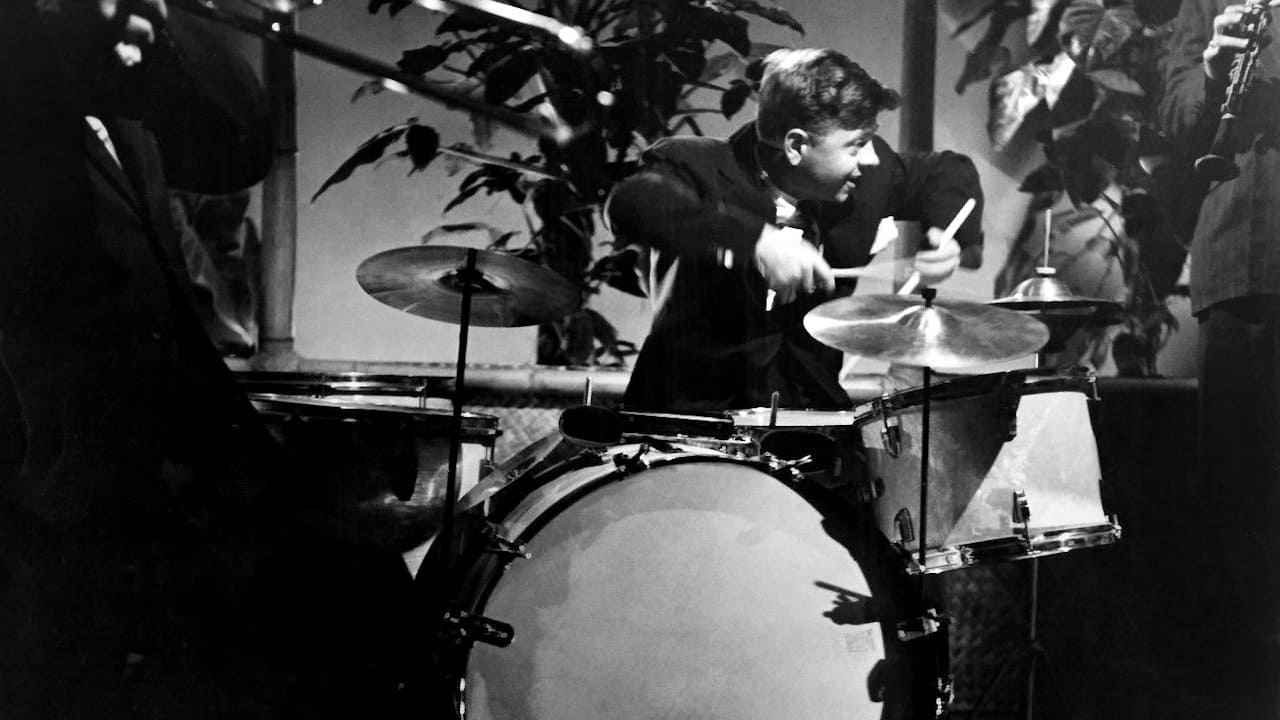
Surtees places the camera low and to the left of Stanley's drum kit, letting the overhead stage lighting cut hard across the cymbals and throw long parallel shadows across the floor behind him. The rest of the club recedes into a graduated darkness in which faces are suggestions rather than facts. When the camera pulls back slowly, the geometry of tables, chairs, and distant drinkers forms a visual trap, with Stanley at its illuminated center and the darkness pressing in from every edge of the frame.

The scene functions as the film's clearest statement about Stanley's condition: he is most visible, most exposed, precisely when he believes he is in his element. The light that makes him a performer also makes him a target. Surtees holds this composition long enough that it stops feeling like a musical interlude and starts feeling like an indictment, the club not as a place of possibility but as a stage on which Stanley's fate is already being arranged by forces just outside the light's reach.

Visual Language

The Cinematography

🎞️
Robert Surtees – Director of Photography

Robert Surtees, who would later shoot Ben-Hur and The Graduate, brings a disciplined economy to The Strip that elevates the material considerably. Working within MGM's studio infrastructure but making selective use of location atmospherics along the actual Sunset Strip, Surtees calibrates his lighting to track Stanley's moral exposure rather than simply his physical movement. Interior club scenes use hard overhead sources that pool light tightly, leaving the peripheral world in convincing shadow without resorting to the expressionist excess that lesser noir cinematography often mistakes for atmosphere. His lens choices favor moderate focal lengths that keep faces and environments in productive tension – neither the intimacy of a close portrait nor the alienating distance of a wide shot, but a middle register where guilt and innocence look uncomfortably alike. The contrast between the generous, even light of the musical performances and the fractured illumination of the film's dramatic confrontations is the closest The Strip comes to a visual argument, and it is Surtees who makes that argument legible.

In the Catalogue

Themes & Motifs

Availability

Where to Watch

Also in the Directory

See Also