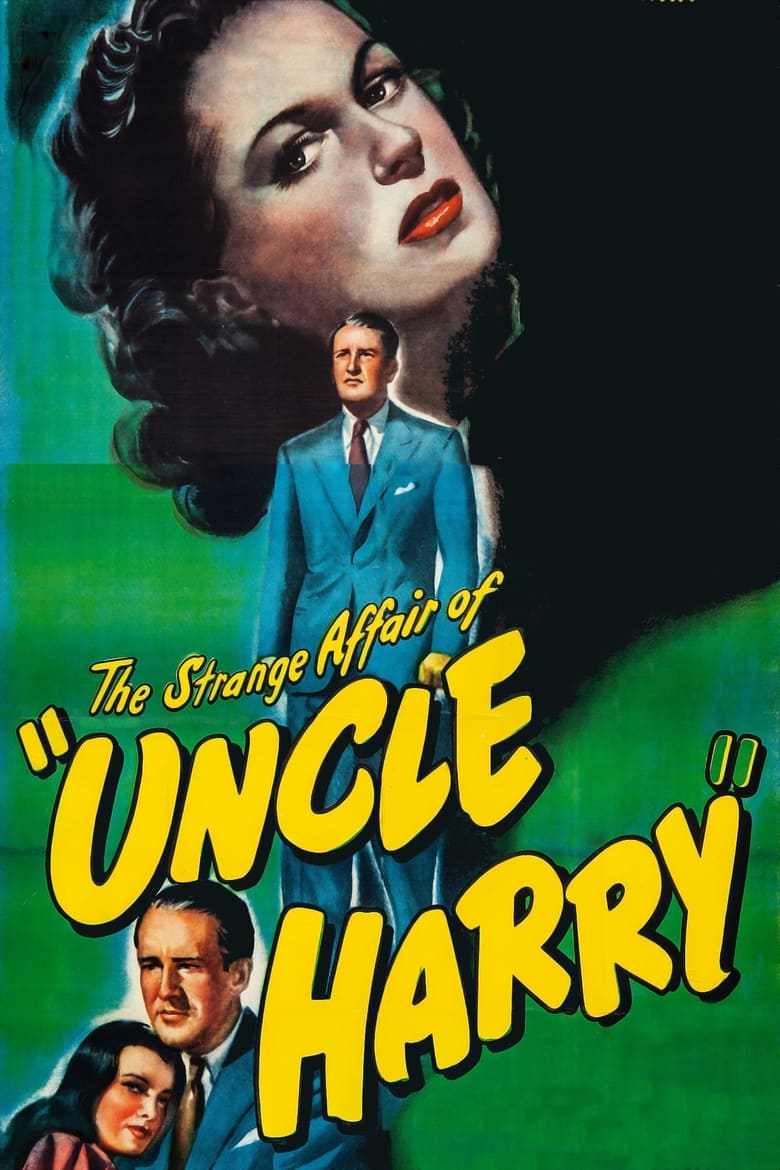
In the small, insular New England mill town of Corinth, Harry Melville Quincey is a middle-aged textile designer of mild manner and stunted ambition, living under the thumb of his two sisters – the warmhearted Hester and the possessive, neurotic Lettie. Harry has long since surrendered any claim to a life beyond the family home, and the town seems to expect nothing more from him. When Deborah Brown, a vivacious woman from out of town, arrives at the mill and takes an interest in Harry, something dormant stirs in him for the first time in years.
Lettie, who harbors an attachment to Harry that carries an unmistakable undercurrent of jealousy, moves swiftly to sever the relationship. She engineers Harry's engagement to Deborah into collapse and drives Deborah away, returning the household to its suffocating equilibrium. Harry, broken and cornered, conceives a plan to poison Lettie – substituting her sleeping draught with something fatal. The murder is carried out, but through a fatal miscalculation, the wrong woman drinks the cup. What follows is a trial, a confession, and a trap of a different kind entirely.
The Strange Affair of Uncle Harry belongs to the wartime cycle of domestic noir – films that locate menace not in urban crime but in the enclosed, respectable household. It sits alongside the era's examinations of repression turned lethal, drawing its tension from the gap between social surfaces and interior violence. The film courts genuine darkness and, for much of its length, delivers it, though Universal's production constraints imposed a resolution that frustrated both filmmakers and critics upon release.
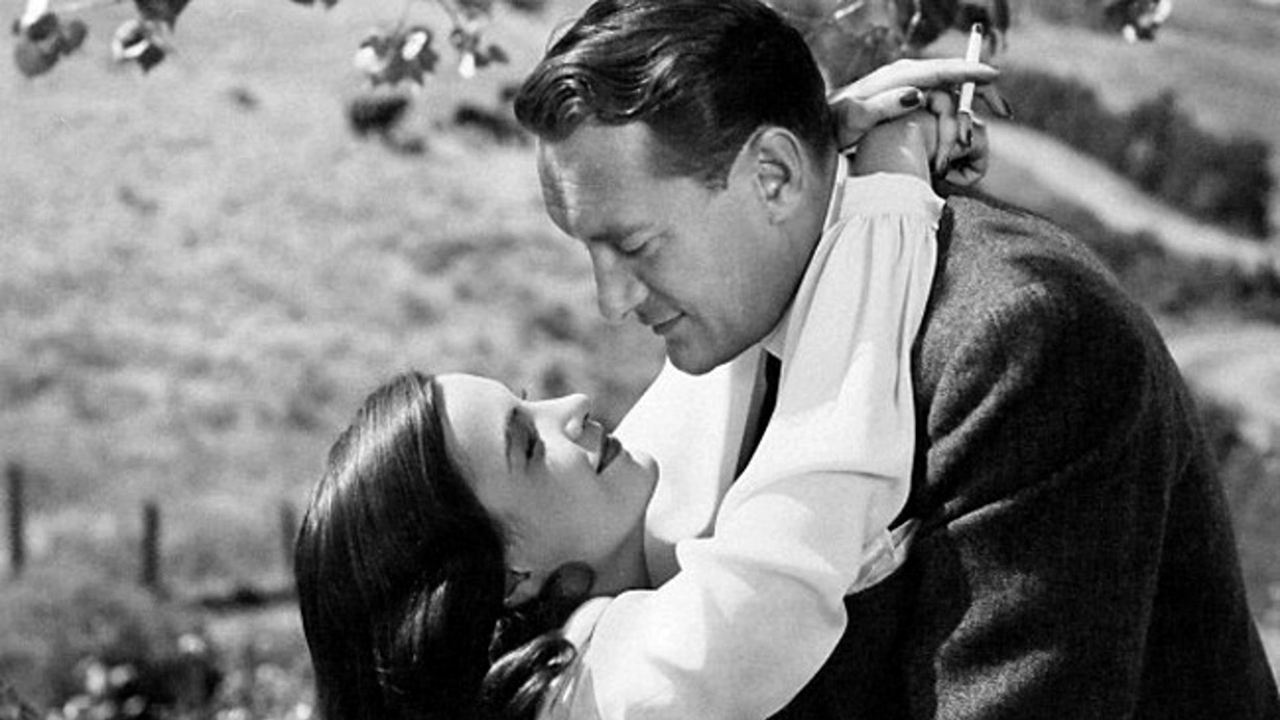
Robert Siodmak was at the height of his Hollywood powers in 1945, and The Strange Affair of Uncle Harry demonstrates his capacity to build dread from domestic geometry rather than criminal procedure. George Sanders, against type, strips away his customary sardonic armor to play a man of such passive inadequacy that his eventual act of violence registers as both shock and sad inevitability. Geraldine Fitzgerald's Lettie is the film's true center of gravity – a study in possessiveness so complete it has curdled into something pathological. Paul Ivano's cinematography confines and oppresses: rooms feel smaller than their dimensions, doorways become thresholds of control, and the family home accumulates shadow even in daylight. The film's notorious ending, imposed by the Production Code, is a genuine wound – it drains the moral logic the preceding seventy minutes had carefully constructed. Taken whole, however, the film remains a precise and unsettling document of what the postwar domestic order required men and women to suppress, and what happened when the suppression failed.
– Classic Noir
Siodmak positions Lettie in the foreground, seated in the parlor's wing chair, while Harry and Deborah are visible through the window behind her – framed by the glass as though already at a remove from her world. Ivano lights Fitzgerald's face from a low angle, allowing the surrounding room to press in darkly around her. The camera holds still while the couple outside moves, making Lettie the fixed point around which the scene's anxiety organizes itself. When she turns from the window, the cut removes Deborah entirely from the frame.
The scene crystallizes the film's central argument about possession and space. Lettie does not pursue or confront; she simply occupies the center, and the visual grammar of the shot confirms her authority over the home's interior. Harry's desire – represented by what is visible only through glass, only outside – is something she can observe and ultimately deny without ever leaving her chair. It is a portrait of domestic control rendered in focal length and shadow rather than dialogue.
Paul Ivano, working on Universal's studio-bound sets, constructs a visual world in which comfort and confinement are indistinguishable. His lens choices favor moderate focal lengths that flatten depth slightly, pressing characters against their backgrounds – wallpaper, curtains, bookshelves – so that the Quincey home reads as an environment that absorbs and holds rather than shelters. Shadows are not the expressionist pools of harder noir but something more domestic and therefore more insidious: the darkness gathers in corners, falls across faces at oblique angles, and deepens in proportion to the emotional temperature of each scene. Siodmak and Ivano reserve the film's most formally striking imagery for moments of interiority rather than action, so that Harry's psychological imprisonment is made visible through composition before it is articulated in the script. The studio setting, which might have worked against the material, instead reinforces the film's argument: this is a world with no exteriors that matter, only rooms and the people who control them.
The most reliable streaming home for Universal noir of this period; check current availability as titles rotate seasonally.
TCMSubscriptionTCM broadcasts the film periodically as part of its classic Universal and Siodmak programming blocks; the presentation is typically uncut.
Archive.orgFreeA public domain print circulates on Archive.org; quality varies, but it offers immediate access without cost.