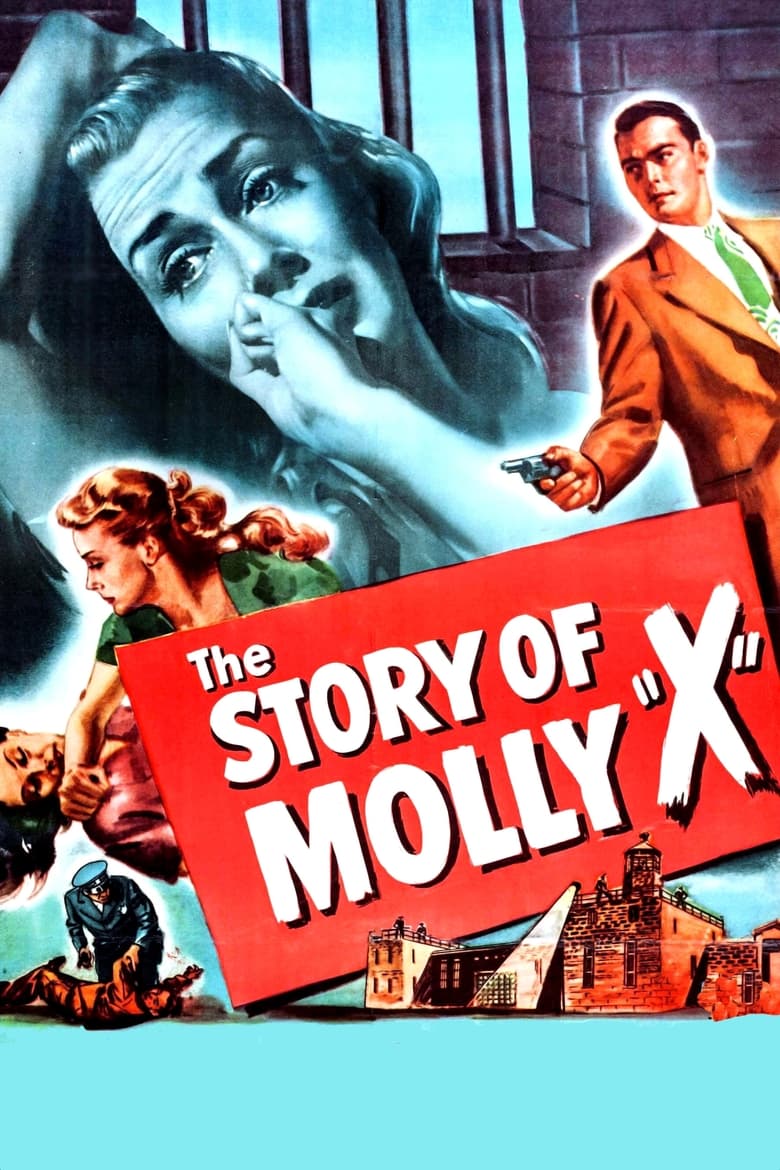
Molly X (June Havoc) is the wife of a small-time gang leader whose sudden death leaves her in reluctant command of his operation. Hardened by years on the margins of the criminal world but never fully of it, Molly finds herself pressed by the gang's enforcer, Cash Brady (John Russell), to maintain business as usual. Brady is calculating and without sentiment; Molly is neither as ruthless as he assumes nor as free as she imagines herself to be.
When Molly is arrested and sent to a women's correctional facility, the film shifts register. Inside, she encounters a population of women – Dawn (Connie Gilchrist), Jan (Cathy Lewis), Amy (Sara Berner), Vera (Sandra Gould) – whose circumstances complicate any easy moral hierarchy. The reformist Norma Calvert (Katherine Warren) represents institutional authority, while Anne (Dorothy Hart) occupies an ambiguous middle ground between inmate solidarity and self-interest. Brady, operating freely on the outside, becomes both threat and absent center.
Story of Molly X belongs to a cycle of women-in-prison pictures that noir absorbed in the late 1940s, using the correctional institution as a compressed social space where questions of guilt, complicity, and rehabilitation carry genuine weight. The film uses Molly's trajectory to examine whether a woman shaped by criminal circumstance can redefine herself on her own terms, or whether the structures around her – legal and criminal alike – will determine her fate regardless.
Story of Molly X occupies a specific and underexamined corner of postwar noir: the women's prison film inflected with genuine social anxiety rather than mere exploitation. Director Crane Wilbur, whose career spanned silent serials to late-studio programmers, brings a functional economy to the material that suits it. June Havoc carries the film with controlled intelligence; her Molly is not a femme fatale but something rarer in the genre – a woman whose culpability is structural rather than volitional. Universal International's B-picture infrastructure keeps the film lean, and that leanness is largely an asset. What the film reveals about its era is the period's conflicted attitude toward female agency: Molly must be punished and reformed before she can be rehabilitated, yet the film's sympathy never fully leaves her side. The ensemble of incarcerated women, played without caricature, gives the prison sequences a texture that elevates the picture above its programmer origins.
– Classic Noir
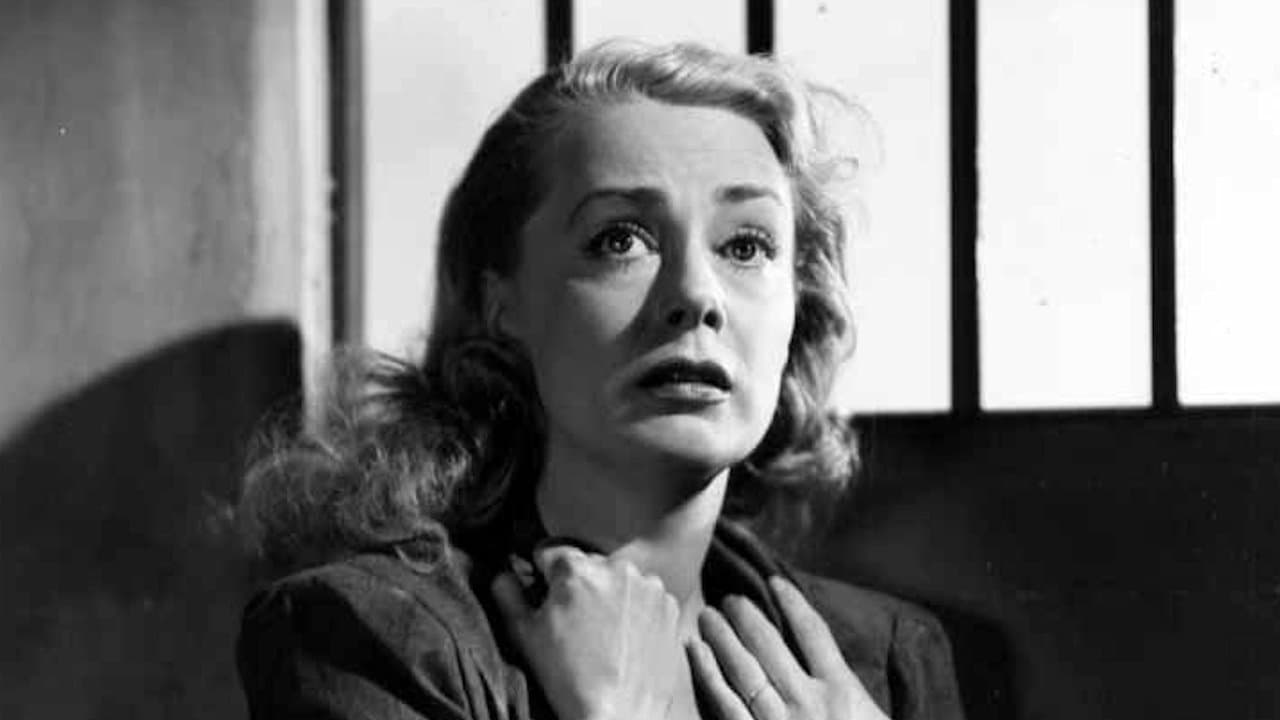
Irving Glassberg frames the common room in a geometry of parallel shadows – light from a high, barred window falls in precise horizontal bands across the floor and across the faces of women arranged at angles that deny any easy communal warmth. The camera holds at a medium distance, refusing close-up intimacy, so that Molly registers as one figure among many rather than as an isolated protagonist. The shadows do not dramatize; they simply organize the space into zones of visibility and concealment.
The scene argues that the institution has already done what it intends to do – it has made individual interiority a secondary matter. Molly's expression carries the weight of someone recalibrating what survival requires. The visual restraint here is the film's central moral statement: there is no melodramatic lighting expressly designed for her suffering, because the system was not designed with her in mind at all.
Irving Glassberg's work on Story of Molly X reflects the house style of Universal International's B unit in the late 1940s: efficient, low-key, with shadow used as a spatial rather than purely expressive tool. Shooting primarily on studio-constructed interiors, Glassberg favors mid-range focal lengths that keep environments readable without opening them into false spaciousness. The prison sequences use overhead and high-angle sources to flatten the women into their institutional context, a choice that reinforces the film's social argument without announcing itself. Exterior and transitional scenes draw on harder side-lighting that sharpens faces into planes, a common technique in Universal noir of this period. What distinguishes Glassberg's approach is a certain restraint in the deployment of chiaroscuro: the shadows in Story of Molly X do not perform menace so much as they define constriction. The moral logic of the image is spatial – characters are boxed, divided, and separated by light as consistently as they are by the plot's power structures.
Tubi has carried a number of Universal International B-pictures from this period and is the most likely free streaming home for this title, though availability shifts.
Archive.orgFreeArchive.org hosts public domain and freely licensed classic films; verify current rights status before relying on any specific upload.
TCMSubscription / Scheduled BroadcastTCM periodically programs Universal noir programmers in themed blocks; check the schedule or TCM's on-demand library via Max.