Films People Pull a Fast One Night Beat Reading Room On TV Shop
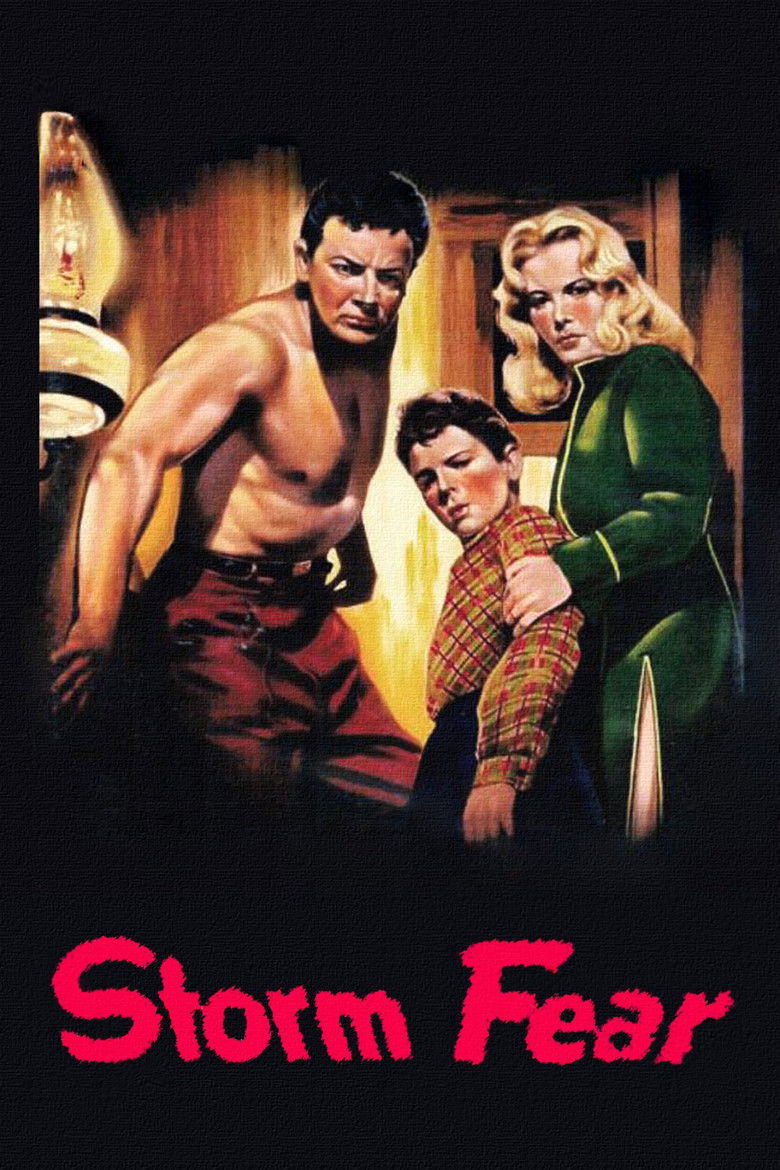
Storm Fear 1955
1955 Theodora Productions
★★★☆☆ Notable
Film Noir · 88 minutes · Black & White

Storm Fear

Directed by Cornel Wilde
Year 1955
Runtime 88 min
Studio Theodora Productions
TMDB 6.0 / 10
"Three men and a woman wait out the winter in a farmhouse where old wounds bleed slower than trust."

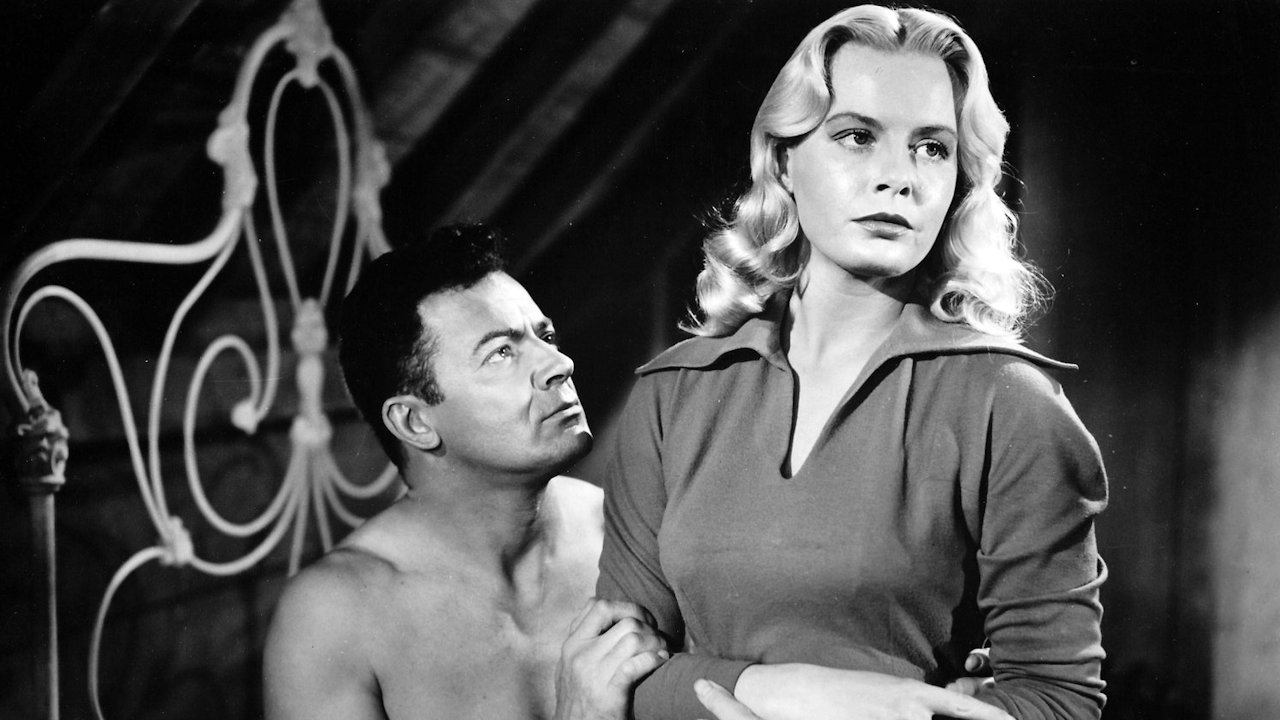
A fierce snowstorm traps a New England farm family when three fugitives from a botched robbery arrive seeking shelter. Charlie, wounded and desperate, is the brother of Fred, the farm's bitter, resentful owner. Elizabeth, Fred's wife, has a history with Charlie that Fred has never forgiven. The third fugitive, Benjie, is volatile and unpredictable, while Edna, the woman who arrived with them, tries to hold the group together through sheer pragmatic will. Fred and Elizabeth's young son David watches everything from the margins, quietly absorbing the tension that the adults cannot contain.

As the storm refuses to lift, the house becomes a pressure vessel of competing loyalties. Elizabeth's feelings for Charlie resurface under circumstances neither of them chose. Fred, hobbled by resentment and a sense of inadequacy he has nursed for years, oscillates between cooperation and sabotage. The gang needs Fred's knowledge of the mountain terrain to escape over the pass, but Fred holds that knowledge as the only leverage he has ever possessed. Hank, the local deputy, begins circling the property, and the boy David is forced to choose where his loyalty lies – with the law, with his father, or with the wounded man his mother clearly loves.

Storm Fear belongs to that compressed, claustrophobic strand of noir that locates its darkness not in city streets but in confined domestic space, where economic failure and romantic betrayal have had years to calcify into something worse than crime. The film is less concerned with whether the fugitives escape than with what the siege reveals about a marriage already hollowed out by disappointment. It is a chamber piece that uses the conventions of the crime thriller to examine quiet, ordinary devastation.
Classic Noir

Storm Fear is Cornel Wilde's debut as a director, and it announces a filmmaker more interested in moral texture than genre mechanics. Working from Clinton Seeley's novel adapted by Horton Foote, Wilde strips the robbery procedural down to its psychological skeleton: a triangle of need, inadequacy, and long-deferred desire played out against a landscape that actively resists escape. Dan Duryea, whose career was built on portraying weakness masquerading as menace, is precisely cast as Fred – a man whose cruelty is the direct product of his smallness. Jean Wallace, Wilde's real-life wife, brings an unguarded quality to Elizabeth that makes her complicity credible rather than merely convenient. The film does not glamorize the fugitives or sentimentalize the family. It understands that domestic misery and criminal desperation are different expressions of the same failure to imagine a better life. For 1955, that is a reasonably honest argument.

– Classic Noir
3 ★★★☆☆ Notable
Credits

The Crew

DirectorCornel Wilde
ScreenplayHorton Foote
CinematographyJoseph LaShelle
MusicElmer Bernstein
EditingOtto Ludwig
ProducerCornel Wilde
Performances

The Cast

Close Reading

The Signature Scene

Storm Fear – scene
The Mountain Passage Figures Against White Silence

LaShelle shoots the escape attempt across the snow-covered mountain slope with a lens that flattens depth and makes the figures appear smaller with each successive cut. The light is overcast and sourceless, offering no shadow and no relief – a white field that functions as exposure rather than illumination. The camera holds wide, refusing the close-up comfort that might invite identification, so that the characters are reduced to dark shapes moving through indifferent terrain. The snow itself becomes a compositional element, filling the frame with a blankness that communicates both freedom and annihilation.

The scene crystallizes the film's central argument: that the world beyond the farmhouse offers no sanctuary, only a different variety of entrapment. The mountain does not care about guilt or innocence, about who was wronged or who deserved better. It simply resists. In this, the landscape mirrors the marriage at the film's core – a space that was supposed to represent safety but has become another form of slow erasure.

Visual Language

The Cinematography

🎞️
Joseph LaShelle – Director of Photography

Joseph LaShelle, working here in the early years of widescreen composition, uses the Academy ratio's verticality to emphasize enclosure inside the farmhouse and exposure on the mountain exterior. His interior lighting relies on hard sources placed low and to the side, producing the kind of cross-shadow that maps the characters' faces as contested territories rather than transparent windows. LaShelle had won the Academy Award for Laura a decade earlier, and he brings to Storm Fear that same discipline of letting darkness do structural work rather than decorative work. The location shooting in actual snowbound terrain gives the exterior sequences a physical credibility that studio process shots could not have achieved, and LaShelle integrates this footage with the interior work without perceptible seam. The moral logic of the film – that confinement and exposure are equally punishing – is carried almost entirely by his choices about where the light falls and, more pointedly, where it refuses to reach.

In the Catalogue

Themes & Motifs

Availability

Where to Watch

Also in the Directory

See Also