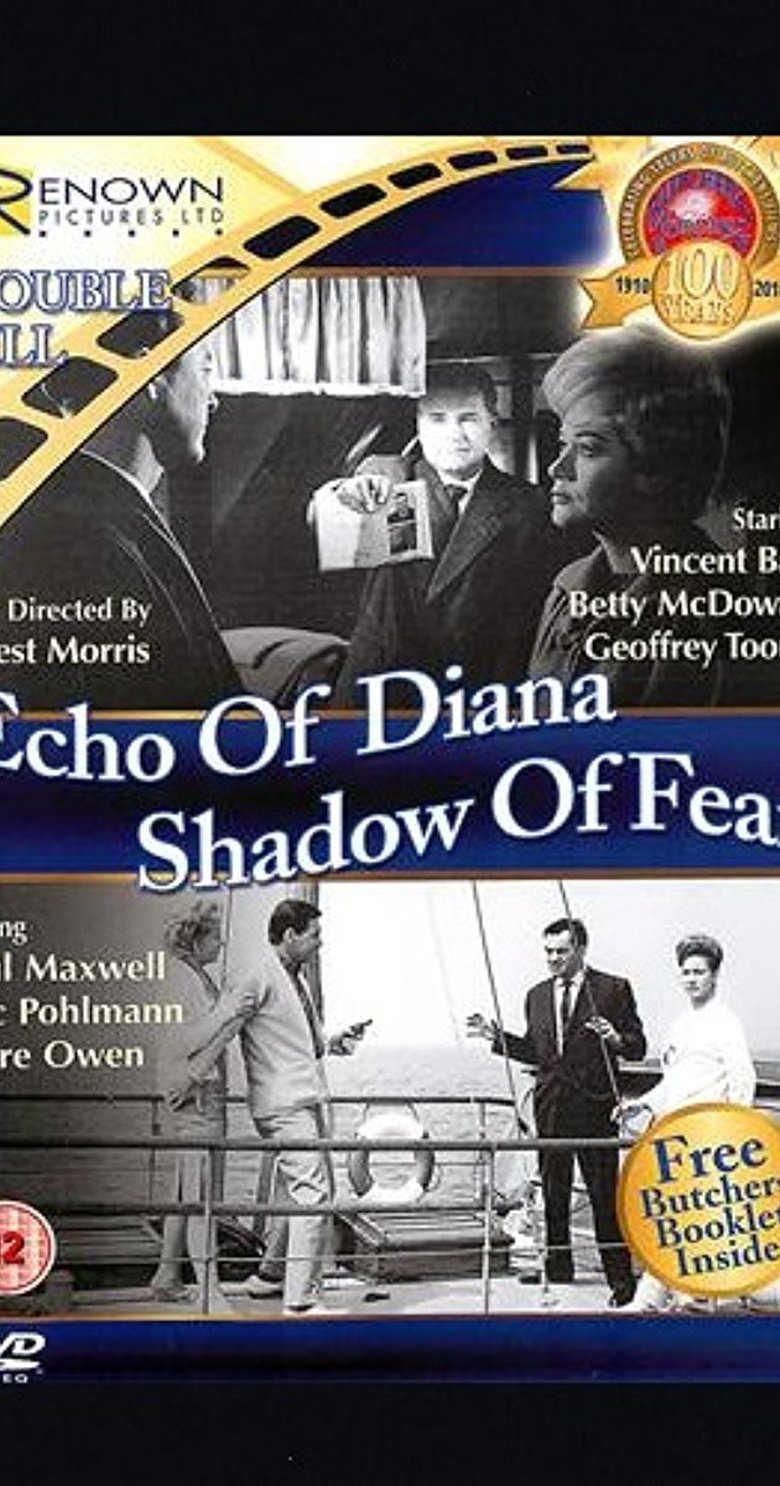
Bill Martin, an American working in London, becomes entangled in a web of suspicion when he witnesses something he cannot fully explain and finds himself drawn into the orbit of Ruth Graydon, a woman whose connections to dangerous men run deeper than she admits. Barbara, closer to Bill and more loyal, watches the situation deteriorate with a clarity he lacks. The world the film inhabits is one of rented rooms, cautious telephone calls, and meetings held in places where no one asks questions.
As the investigating presence of Sharp closes in and the shadowy Warner maneuvers from the edges of the story, allegiances shift in ways that complicate any straightforward reading of guilt or innocence. Henry Spiroulos, a heavyset operator played with practiced menace by Eric Pohlmann, represents the kind of organized criminal interest that reduces individuals to liabilities. Peter Halliday occupies an ambiguous middle ground, his loyalties never fully declared, his motives left deliberately obscure.
Shadow of Fear works within the compressed economy of the British quota quickie, trading in the genre's essential currency – the wrong man, the unreliable ally, the tightening net – without the resources of its American counterparts. What it offers instead is a stripped-down procedural anxiety that, at its best, feels less like limitation than discipline.
Shadow of Fear belongs to a specific and underexamined stratum of British noir: the late-cycle supporting feature produced for a domestic market by studios like Butcher's Film Service, whose output has been largely neglected by serious genre scholarship. Directed by Ernest Morris, a reliable hand at this format, the film compresses noir's structural grammar into under an hour without entirely sacrificing its moral atmosphere. The casting of Paul Maxwell, an American actor working extensively in British television and film during this period, gives the narrative a transatlantic friction that the script uses economically. Eric Pohlmann, a Viennese-born character actor whose bulk and accent made him a fixture in British crime pictures of the era, carries the film's weight of menace efficiently. What Shadow of Fear reveals about its moment is the degree to which noir had, by 1963, become a portable idiom available to productions well outside Hollywood's reach – absorbed, domesticated, and deployed in service of modest but functional genre entertainment.
– Classic Noir
The scene is composed with the sparse efficiency that low-budget British production demands and occasionally rewards. A single practical light source establishes one side of the frame in relative clarity while the opposite side recedes into flat shadow. The camera holds at a slight low angle, giving the figure behind the desk a compressed authority that the dialogue alone would not achieve. Depth is minimal – the background is close and undifferentiated – which forces the eye to read the scene through posture and the small geometry of hands on a surface.
What the scene argues, visually, is that power in this world is a function of position rather than character. The man behind the desk is dangerous not because of anything revealed about his interior life but because of where he sits and how the frame places everyone else in relation to him. It is a spatial argument about hierarchy and threat that the noir tradition inherits from expressionism and deploys here with unpretentious competence.
The cinematographer for Shadow of Fear remains unconfirmed in available production records, which is not unusual for Butcher's Film Service productions of this period, where technical credits were inconsistently preserved. What the film's visual approach suggests is a practitioner accustomed to working quickly on confined studio interiors with limited lighting resources. The dominant strategy is functional rather than expressive: key light placed to isolate faces, minimal fill to preserve shadow density in backgrounds, and a reliance on tight framing to substitute for production depth. Location work, where it appears, is handled with the documentary plainness common to British second-feature noir of the late fifties and early sixties – streets and exteriors used for establishing credibility rather than atmospheric elaboration. The result is a visual register that serves the story's moral logic by flattening the world to a series of enclosed spaces from which escape appears structurally unlikely.
Public domain prints of Butcher's Film Service productions from this era occasionally surface here; search availability before relying on a specific upload.
TubiFreeTubi carries a rotating selection of British second-feature noir from the early 1960s; availability for this title should be confirmed directly.
Amazon Prime VideoSubscriptionLow-budget British crime pictures of this period appear intermittently through third-party channels on Prime; verify current licensing before seeking the film here.