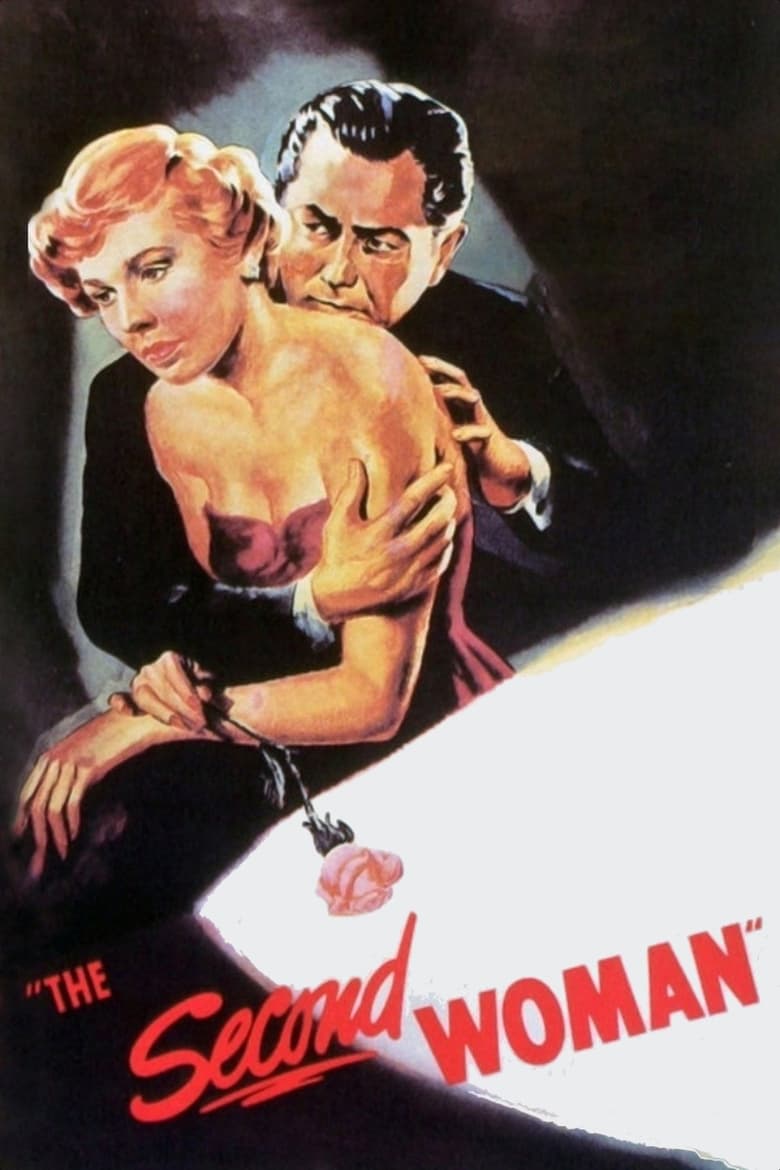
Jeff Cohalan, an architect still hollowed out by the death of his fiancée, retreats to a small California coastal town to rebuild his practice and, with less certainty, his life. There he meets Ellen Foster, a quietly observant young woman who rents space in a house belonging to her sharp-tongued aunt Amelia. Ellen is drawn to Jeff despite – or perhaps because of – the damage she recognizes in him. From the outset the film establishes two registers: the sunlit domestic surface of postwar small-town life, and the darker current running beneath it, embodied in Jeff's inexplicable episodes of memory loss and his growing suspicion that someone is engineering his ruin.
Those suspicions acquire form when Jeff's professional projects begin to collapse under circumstances he cannot explain – structural failures, missing funds, sabotaged relationships. The presence of Keith Ferris, a sleek and proprietary figure from the town's social establishment, complicates matters considerably, as does the intervention of Dr. Raymond Hartley, whose psychiatric counsel Jeff accepts with reluctant desperation. Ellen's loyalty is tested as the evidence against Jeff accumulates and the people around her begin to treat her affection for him as a symptom of poor judgment. The film uses the mechanics of the noir frame-up to explore how thoroughly a reputation, and a man, can be dismantled by patient, invisible malice.
Second Woman belongs to the strand of postwar noir concerned less with criminal milieu than with psychological erosion – films in which the protagonist's greatest antagonist is his own fractured perception of events. The mystery of who is destroying Jeff Cohalan, and why, is less important finally than the question of whether a man this far gone can still be believed, by others or by himself.
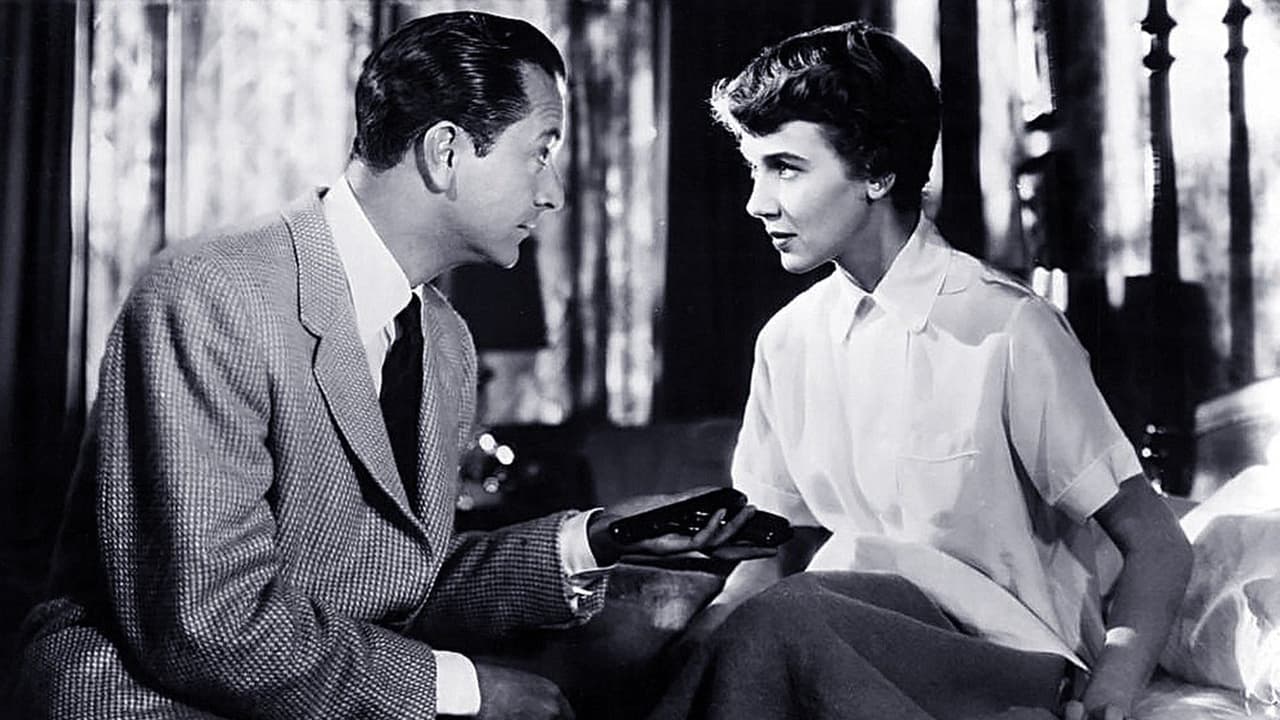
Second Woman occupies a position at the quieter, more psychologically focused edge of early-1950s noir, closer in temperament to Sleep My Love or Whirlpool than to the decade's harder crime pictures. James V. Kern was primarily a director of comedies, and that background is both the film's liability and, intermittently, its asset: the pacing is careful and the performances are allowed room to breathe in ways that harder-edged work from the period rarely permits. Robert Young, trading on the same coiled restraint he brought to Crossfire, plays collapse not as performance but as erosion, and Morris Carnovsky's psychiatrist carries genuine ambiguity about whose interests he ultimately serves. The film is less interested in the mechanisms of the plot it constructs than in the texture of paranoia experienced from the inside – the way a man begins to distrust his own account of his days. It does not fully resolve the tension between its noir architecture and its domestic romance, and that irresolution is part of what makes it worth examining.
– Classic Noir
Hal Mohr frames Jeff alone at the lip of a coastal cliff, the horizon dissolving into undifferentiated dark so that the boundary between sea and sky ceases to exist. The camera holds at a middle distance, refusing the close-up that would externalize his interiority too readily. What light there is comes from an angle that throws the left half of his face into complete shadow, the right half pale and exposed, a division the composition sustains without comment. The effect is less expressionist than clinical – a man photographed as a problem to be read rather than a spectacle to be experienced.
The scene condenses the film's central argument into a single image: Jeff Cohalan standing at a threshold he has not consciously chosen, uncertain whether he arrived there by his own volition or someone else's design. His amnesia is not metaphorical here but operational – he genuinely does not know how he came to be standing at this edge. That uncertainty is the film's real subject, and Mohr's refusal to resolve the frame into either menace or pathos forces the viewer to sustain the same unresolved attention the character cannot escape.
Hal Mohr, a cinematographer whose career stretched back to the silent era and whose technical command of low-key lighting was among the most sophisticated in Hollywood, brings a restrained but purposeful visual scheme to Second Woman. Working largely on studio sets dressed to suggest the California coast, Mohr avoids the baroque shadow-play associated with urban noir in favor of something more insidious: light that appears natural and even welcoming but is arranged to deny characters any stable visual ground. Windows become sources of ambiguity rather than illumination, casting flat grey light that flattens depth. Interiors are lit with a consistency that should read as comfort but instead registers as surveillance. Mohr uses longer focal lengths selectively to compress space around Jeff, making environments that should feel open feel enclosing. The cumulative effect is a visual argument that danger in this film is not lurking in darkness but embedded in ordinary daylight – which is precisely the psychological condition the narrative explores.
Second Woman is in the public domain and available in full on the Internet Archive, though print quality varies across uploads; seek the highest-resolution file listed.
TubiFreeTubi has carried public-domain noir titles from this period with reasonable streaming quality; availability may shift, so confirm before visiting.
Amazon Prime VideoSubscriptionPublic-domain prints of Second Woman have appeared through Prime Video channels specializing in classic cinema; check current listings, as catalogue rotation applies.