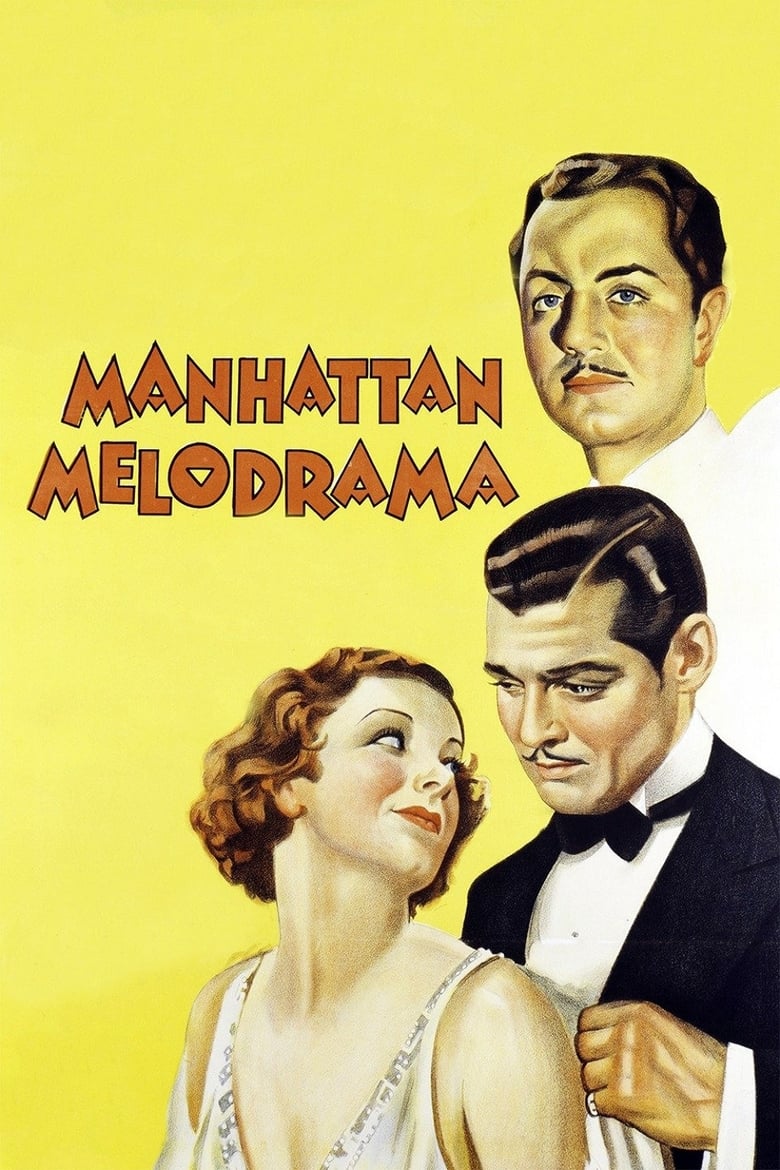
In the teeming tenements of turn-of-the-century New York, two orphaned boys – Jim Wade and Edward 'Blackie' Gallagher – are bound together by a shared tragedy and the informal guardianship of a kindly Jewish pawnbroker, Poppa Rosen. As they grow into men, their paths diverge with a quiet inevitability: Jim becomes a district attorney of clean ambition, while Blackie drifts into the gambling houses and rackets of the underworld, acquiring a reputation and a loyal entourage in equal measure.
The bond between the two men is tested when Eleanor Packer, a woman of practical intelligence and genuine feeling, moves from Blackie's orbit into Jim's life and eventually into his home as his wife. The triangle is drawn without melodramatic excess – Eleanor is not a prize to be contested but a person making choices under constraint. When Blackie commits murder to protect Jim's political career, the friendship that has sustained both men through decades becomes the very mechanism of its own destruction.
Manhattan Melodrama occupies a transitional position in American crime cinema – predating the hardened pessimism of classical noir but carrying its essential architecture: the doomed man who knows his fate, the woman caught between two versions of the same world, and an institution that demands sacrifice to sustain itself. The film asks whether loyalty and the law can coexist, and offers an answer that is less a resolution than a reckoning.
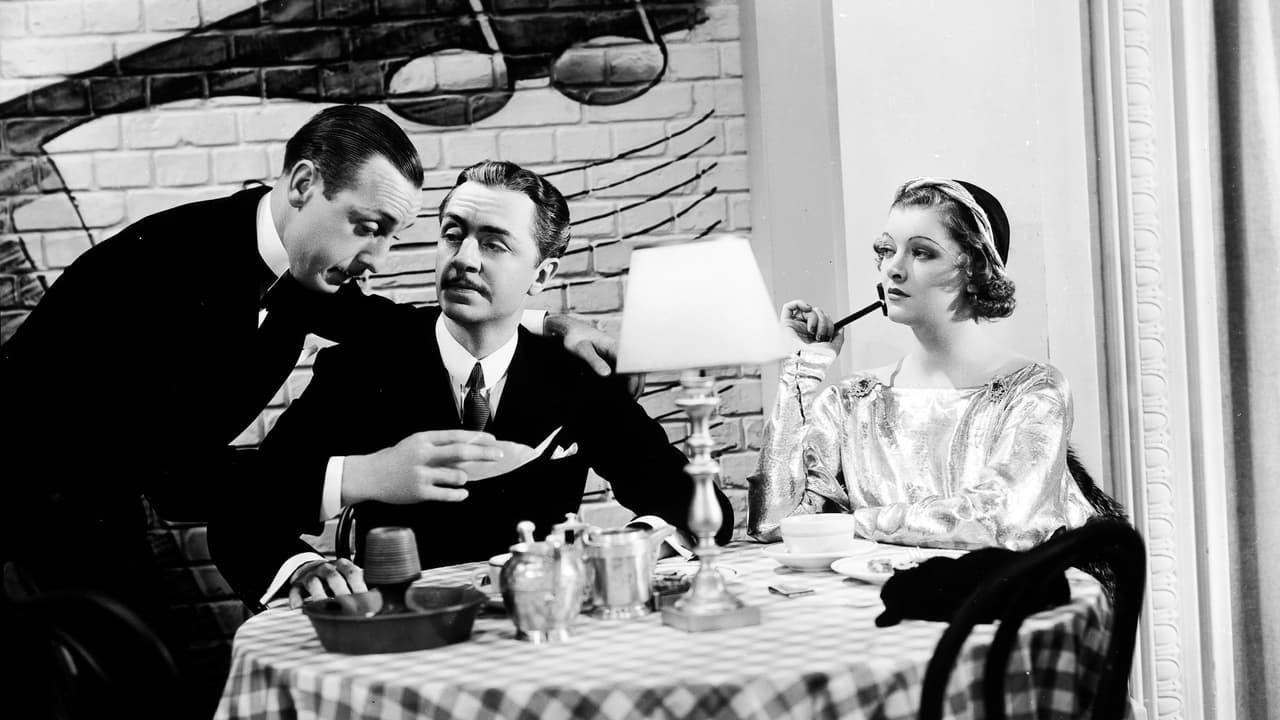
Manhattan Melodrama arrives four years before the Production Code enforcement that would reshape Hollywood's moral grammar, and its relative candor about criminal life gives it a texture that later crime films would struggle to recover. Van Dyke works with the efficiency for which he was known, but the film's durability owes more to its principals than its direction: Gable's Blackie is charming without sentimentality, a man who has chosen his life with open eyes, while Powell's Jim registers the cost of rectitude in every careful gesture. The film is historically notable as the picture John Dillinger attended the night he was shot outside the Biograph Theater, a piece of lore that has attached itself to it like a footnote that refuses to stay in place. What the lore obscures is that the film itself engages seriously with the idea of two men whose fates are structurally intertwined – the racketeer and the reformer as mirror images of a city that produces both and requires both to function.
– Classic Noir
James Wong Howe lights the prison meeting room with a hard overhead source that carves deep shadows beneath the eyes of both men, flattening the space between them into something close and airless. The bars of the cell door cast a horizontal grid across the foreground, a compositional choice that places Jim as much inside the frame's cage as Blackie. The camera holds on two-shots longer than sentiment requires, refusing the easy cut to reaction that would let the audience settle into a comfortable emotional position.
The scene concentrates the film's central argument into a few minutes of held breath: that the institutions Jim has built his career defending require, at some level, the expenditure of men like Blackie. The warmth between the two actors is real and it works against the scene's formal coldness – the friendship is entirely credible, which makes the machinery of the law feel all the more impersonal. Blackie does not ask to be saved. That refusal is the film's moral spine.
James Wong Howe was among the most technically inventive cinematographers working in Hollywood during the 1930s, and Manhattan Melodrama shows his understanding of how light can carry moral weight. Shooting on studio sets at MGM, Howe uses deep shadow not for atmospheric excess but for precision – pools of light that isolate faces and let the surrounding darkness suggest a world that presses in from the edges. His lens choices tend toward the normal range, avoiding the distortion of wide-angle work that would later characterize hard-boiled cinematography, keeping the visual register grounded and social. The period settings allow him to work with practical-source lighting logic – gas lamps, bare bulbs, street light filtered through grime – which gives the frame a textural density uncommon in the polished MGM house style. Where Howe's work here anticipates the noir decade to come is in his willingness to let principal faces fall partially into shadow, withholding the full read of a character's expression at moments when the narrative most demands clarity.
TCM holds deep MGM catalogue rights and airs Manhattan Melodrama periodically in original broadcast quality – check the schedule or stream via the TCM app with an authenticated cable login.
Archive.orgFreeA public domain print circulates on Archive.org; picture quality is serviceable though not authoritative – suitable for a first viewing if no other option is available.
Amazon Prime VideoRentalAvailable for digital rental in a cleaner transfer than the Archive.org print; confirm current availability as catalogue licensing for pre-Code MGM titles shifts periodically.