Films People Pull a Fast One Night Beat Reading Room On TV Shop
Scarf 1951
1951 Gloria Productions Inc.
★★★☆☆ Notable
Film Noir · 93 minutes · Black & White

Scarf

Directed by E.A. Dupont
Year 1951
Runtime 93 min
Studio Gloria Productions Inc.
TMDB 5.7 / 10
"A man without memory is a man without alibi."

John Howard Barrington wakes in a carnival sideshow with no recollection of who he is or how he arrived. The carny operator who takes him in, the weathered and watchful Ezra Thompson, asks few questions – a courtesy that suits them both. When Barrington begins to piece together fragments of a past involving a scarf and a woman's death, the comfortable amnesia he has been living inside starts to collapse around him.

A psychiatrist named Dr. David Dunbar enters the picture with credentials that seem just credible enough to be suspicious, and Connie Carter – sharp, self-possessed, and not entirely forthcoming about her own interests – attaches herself to Barrington's search for the truth. The investigation winds back toward a sanitarium, a wealthy family patriarch named Cyrus Barrington, and the question of whether John committed a murder he cannot remember or is being made to believe he did.

The Scarf belongs to the postwar cycle of noir that locates its dread not in criminal enterprise but in the unstable architecture of the self. The carnival setting places the film in a tradition of displaced, rootless protagonists, and the asylum sequences invoke the era's anxious fascination with psychiatric authority and its capacity for both liberation and manipulation.
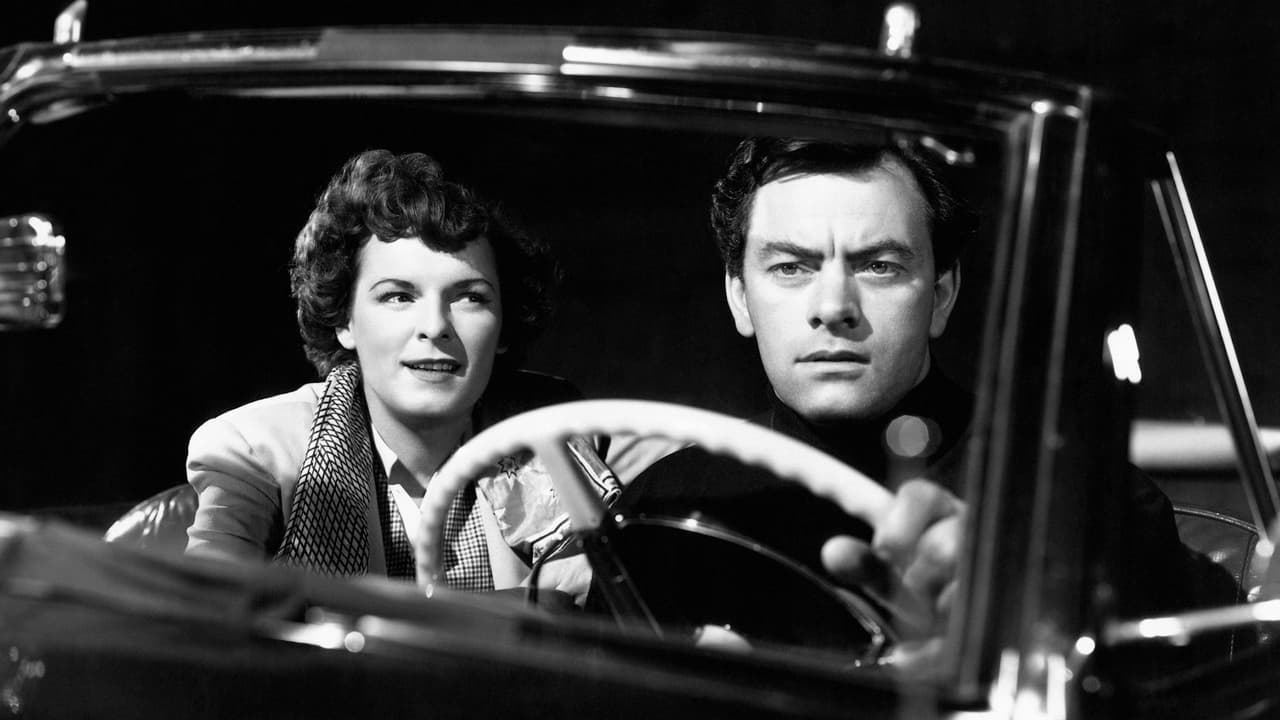
Classic Noir

E.A. Dupont, a German expatriate whose silent-era reputation rested on the kinetic visual intelligence of Variety (1925), brings to The Scarf a measured interest in enclosure – psychological and physical – that fits the material better than a more commercially minded director might have managed. The film is not a procedural; it is a study in epistemological uncertainty, asking how much a man can trust his own reconstruction of experience. John Ireland carries that weight with characteristic understatement, and Mercedes McCambridge, fresh from her Academy Award for All the King's Men, supplies a counterforce of controlled volatility. Emlyn Williams, himself a playwright with a lifelong interest in criminal psychology, lends the psychiatrist a faint ambiguity that the script wisely never fully resolves. The carnival milieu is handled without condescension, and James Barton's Ezra Thompson functions as a moral anchor the protagonist neither deserves nor refuses. The film does not sustain its tension uniformly across ninety-three minutes, but its central argument – that identity is a story told under duress – is coherent and, for 1951, unusually clear-eyed.

– Classic Noir
3 ★★★☆☆ Notable
Credits

The Crew

DirectorE.A. Dupont
ScreenplayIsadore Goldsmith
CinematographyFranz Planer
MusicHerschel Burke Gilbert
EditingJoseph Gluck
ProducerIsadore Goldsmith
Performances

The Cast

Close Reading

The Signature Scene

Scarf – scene
The Asylum Corridor Light Through Institution Glass

Franz Planer frames the corridor in a long, receding perspective that flattens depth while multiplying shadow. The overhead practical fixtures cast pools of pale light at intervals, leaving the space between them in a gray that reads as neither safety nor outright threat. Barrington moves through the frame at medium distance, the camera holding rather than tracking, so that he must walk toward it – and toward confrontation – without the grammar of pursuit to explain his urgency.

The composition makes the asylum less a place of confinement than a diagram of the film's central problem: the past recedes in one direction, the truth waits in another, and the geometry between them is hostile to straight lines. That Barrington is both patient and investigator in this space – at once subject to its authority and attempting to subvert it – crystallizes the film's argument about how institutions define sanity in terms that serve their own continuity.

Visual Language

The Cinematography

🎞️
Franz Planer – Director of Photography

Franz Planer, whose work across this period ranged from the burnished melodrama of Letter from an Unknown Woman to the spare location photography of later productions, brings to The Scarf a lighting strategy organized around the opposition between exterior openness and interior threat. The carnival sequences are shot with a flattened, dusty naturalism – wide angles that emphasize the horizontal expanse of a landscape without shelter – while the sanitarium and domestic interiors are rendered in tighter focal lengths with hard side-lighting that carves the actors' faces into zones of knowledge and concealment. Shadow work in the asylum scenes is architectural rather than decorative: bars of light across walls and floors that function as visual cages without recourse to literal ironwork. Planer resists the deep-focus compositions that had become a noir convention by 1951, preferring a middle-range depth that keeps the background present but slightly soft, as though memory itself is losing resolution. The cumulative effect supports the film's moral logic – that clarity is provisional and the visible world is not to be trusted.

In the Catalogue

Themes & Motifs

Availability

Where to Watch

Also in the Directory

See Also