Films People Pull a Fast One Night Beat Reading Room On TV Shop
Road to the Big House 1947
1947 Somerset Pictures Corp.
★★★☆☆ Notable
Film Noir · 74 minutes · Black & White

Road to the Big House

Directed by Walter Colmes
Year 1947
Runtime 74 min
Studio Somerset Pictures Corp.
TMDB 6.8 / 10
"One wrong turn, and the road only leads one way."

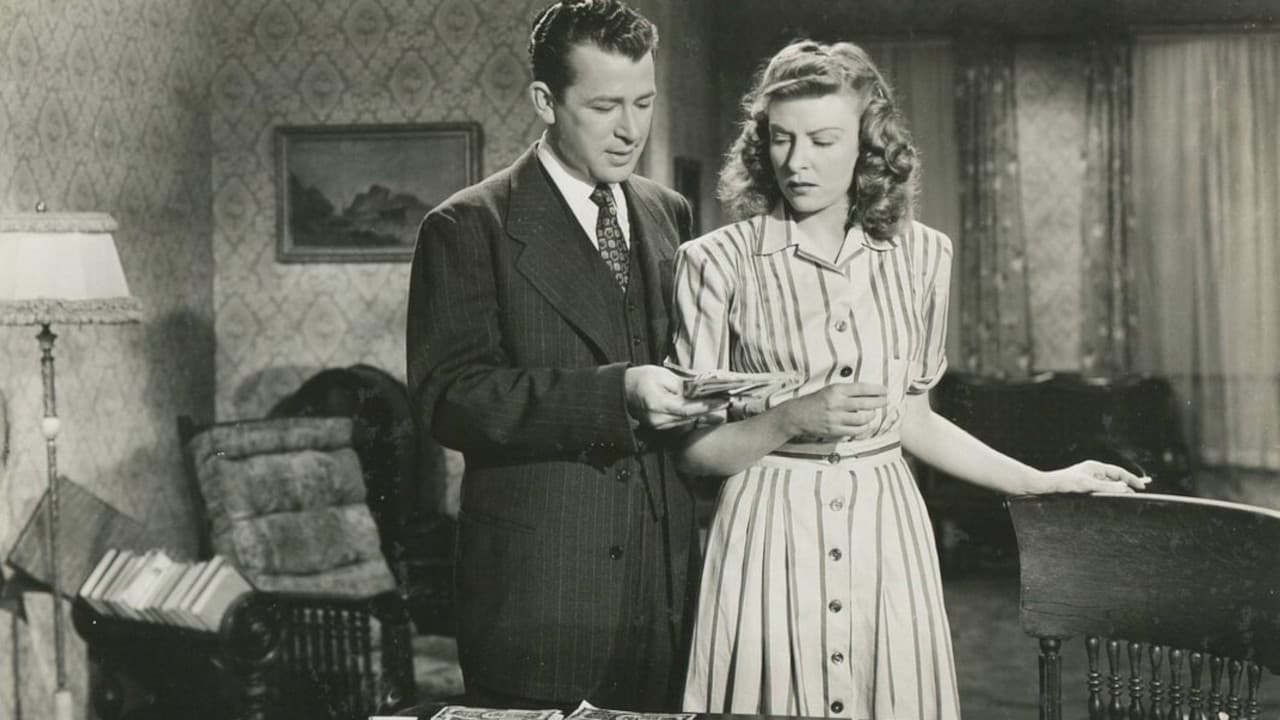
Eddie Clark is a small-time man with a respectable enough life – until a single act of desperation pulls him into the orbit of Butch McQuinn, a blunt-force criminal who treats loyalty as a transaction. When Eddie becomes entangled in a crime he did not plan and may not fully understand, his wife Agnes watches the man she married begin to disappear, replaced by someone who lies by instinct and moves in shadows. The film opens in the register of domestic ordinariness before methodically closing every exit.

As Eddie sinks deeper into McQuinn's operation, the circle of complicity widens to include Clyde Sutter and George Bates, men whose allegiances shift with the available pressure. The law, embodied in a prosecutor who treats the courtroom as a killing floor, begins to close in. Agnes, who might have been the one person capable of pulling Eddie back, finds herself holding information that could either save him or confirm his guilt. The film treats her not as decoration but as the story's moral center – the person who must decide what survival actually costs.

Road to the Big House works within the fallen-man tradition that defined a significant strand of late-1940s noir – the ordinary citizen undone not by femme fatale scheming but by economic desperation and bad company. At 74 minutes, it moves with the efficiency of a B-picture that knows exactly what it is, locating its tension in procedural inevitability rather than baroque plot construction. The question the film poses is not whether Eddie will be caught, but what the catching will have destroyed along the way.
Classic Noir

Road to the Big House is a Somerset Pictures production – which is to say it arrives with all the constraints of the Poverty Row adjacency that defined mid-tier noir in the late 1940s: modest budgets, compressed schedules, and casts assembled from reliable contract players rather than marquee names. What Walter Colmes achieves within those constraints is a film that understands its own economy. John Shelton's Eddie Clark is not a tragic hero in the classical sense; he is a recognizable postwar type – the man who wants stability badly enough to compromise for it, then compounds each compromise with the next. Ann Doran, an actress whose career was built on exactly this kind of precisely observed supporting work, gives Agnes a gravity the film depends on. The picture's value to the genre lies less in formal ambition than in its fidelity to a particular social texture: the way criminality in these films is not gothic or exotic but domestic, arriving through the same door as everything else.

– Classic Noir
3 ★★★☆☆ Notable
Credits

The Crew

DirectorWalter Colmes
ScreenplayAubrey Wisberg
CinematographyWalter Strenge
MusicRaoul Kraushaar
EditingJason H. Bernie
ProducerWalter Colmes
Performances

The Cast

Close Reading

The Signature Scene

Road to the Big House – scene
The Interrogation Anteroom Agnes Waits in Half-Light

Cinematographer Walter Strenge frames Agnes in a corridor outside the official spaces where Eddie's fate is being decided – a narrow composition that places her against a wall sectioned by architectural shadow, the light source positioned high and to one side so that half her face is in near-total darkness. The camera holds at a slight remove, declining to move in for consolation. The frame is static, and the stillness is the point: she has no leverage here, no movement available to her.

The scene does not announce itself as significant. It occurs in a pause between procedural events, which is precisely why it carries the film's central argument. Agnes in that corridor is not waiting for rescue; she is waiting to learn the cost of a decision already made by someone else. Strenge's composition – the divided face, the institutional wall, the absence of any softening fill – makes the visual case that the road of the title runs through this woman as surely as it runs through her husband.

Visual Language

The Cinematography

🎞️
Walter Strenge – Director of Photography

Walter Strenge was a journeyman cinematographer whose career ran from silents through the television era, and Road to the Big House is representative of the controlled economy he brought to low-budget productions. Shooting on studio interiors with limited equipment, Strenge relies on hard single-source lighting to do the moral work that larger productions might assign to location atmosphere – shadows fall at angles that suggest enclosure and judgment rather than mystery or romance. There is little of the elaborate chiaroscuro that marks prestige noir, but that restraint is appropriate to the material: this is a film about ordinary spaces turned oppressive, and Strenge photographs them as such. Corridor scenes, interrogation rooms, and domestic interiors are lit with a functional harshness that refuses to glamorize the proceedings. The lens choices stay conventional, avoiding expressionist distortion, which means that when the frame does tighten or the shadow does encroach, it registers as consequence rather than style.

In the Catalogue

Themes & Motifs

Availability

Where to Watch

Also in the Directory

See Also