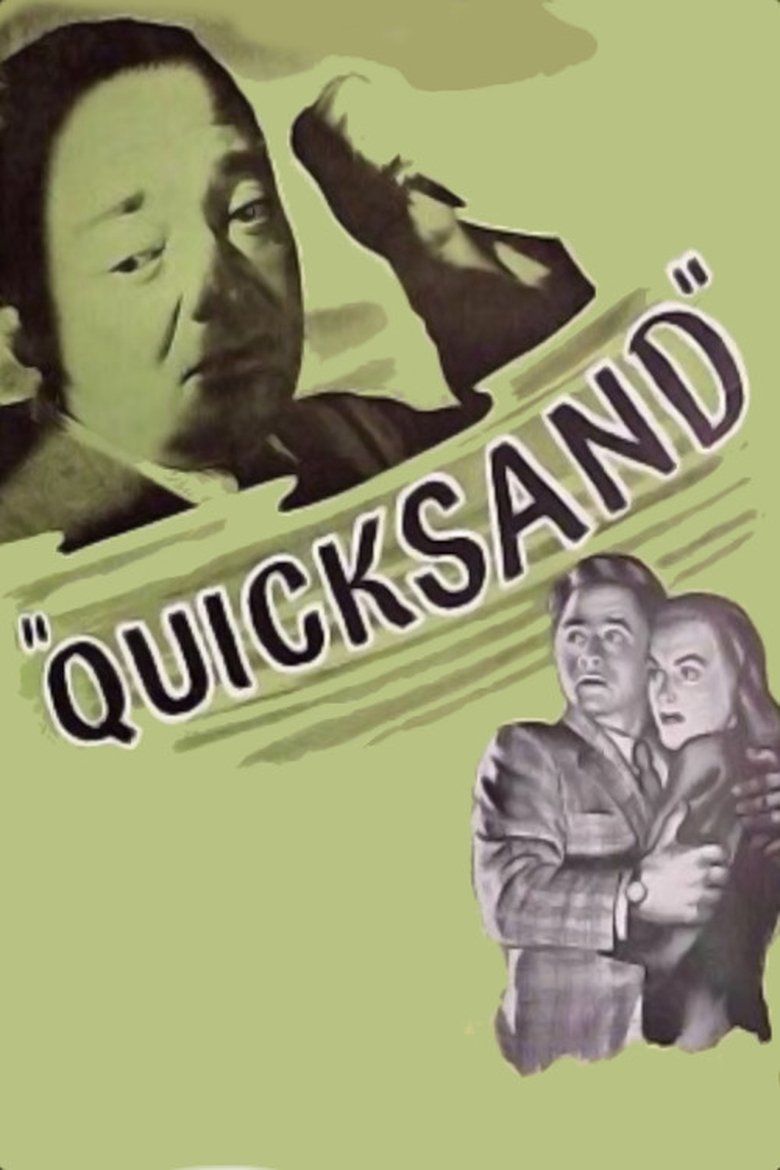
Dan Brady (Mickey Rooney) is a young auto mechanic in a Santa Monica garage, living paycheck to paycheck and dating the steady, sensible Helen Calder (Barbara Bates). When he impulsively takes twenty dollars from the till to impress Vera Novak (Jeanne Cagney), a calculating amusement-park cashier, he sets in motion a chain of debts and deceptions he lacks the character to arrest. The theft is small; the logic it initiates is not.
To cover the first theft Brady commits a second, then a third, each transgression larger than the last and each drawing him deeper into Vera's orbit and away from Helen's. The film's secondary world is populated by figures who understand the machinery of exploitation: Nick Dramoshag (Peter Lorre), a seedy arcade owner who holds paper on Vera and recognizes leverage when he sees it, and Harvey (Taylor Holmes), a wealthy mark whose complacency invites predation. Brady is not a villain constructing a scheme; he is a weak man being constructed by his own evasions.
Quicksand belongs to the postwar cycle of noir that locates catastrophe not in criminal organization or wartime trauma but in the ordinary failure of self-discipline. Its Santa Monica locations – the beachfront, the garage bays, the neon-lit amusements – give a mundane Californian backdrop to a story about how quickly a man can mortgage his future on an impulse he mistakes for desire.
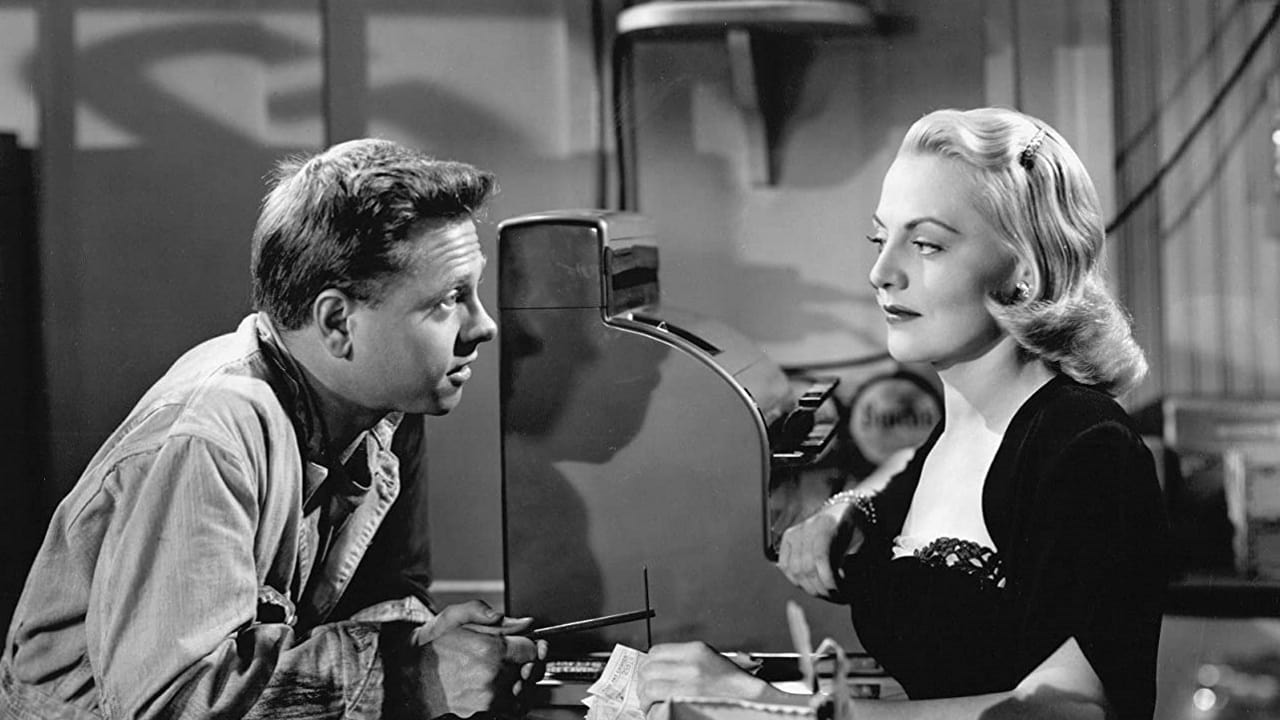
Quicksand is a minor but instructive entry in the postwar American noir cycle, distinguished less by plot than by casting against type. Mickey Rooney, whose screen persona was built on energy and likability, turns those qualities toward a portrait of weakness: Dan Brady is not a calculating criminal but a man who refuses, at each decision point, to absorb the cost of his own mistakes. The film's moral logic is almost schematic – each theft generates a larger one, each lie a more entangling one – but Irving Pichel keeps the rhythm taut enough that the schematism reads as inevitability rather than contrivance. Peter Lorre operates in his familiar register of insinuating menace, and Jeanne Cagney brings a cool self-interest to Vera that resists easy classification as femme fatale. What the film captures faithfully is the postwar anxiety around masculine adequacy and economic precarity – Brady's crime begins not with greed but with the need to perform a version of himself he cannot afford.
– Classic Noir
The camera holds on Nick Dramoshag in the interior of his arcade, placing Lorre slightly off-center in a frame cluttered with the paraphernalia of cheap entertainment – glass cases, prize displays, artificial light that falls flat and without warmth. Lionel Lindon shoots the space as a trap before it functions as one: the geometry of counters and cases subdivides the frame into compartments, and Brady moves through them without registering their enclosing logic.
The scene argues, quietly, that Brady is constitutionally unable to read the room he is standing in. Dramoshag's stillness is the stillness of a man who has conducted this interview many times; Brady's animation is the animation of someone who believes negotiation is still possible. The film's central argument – that the weak are not victimized by the corrupt so much as they present themselves to be used – finds its clearest image here, in the space between Lorre's watchful composure and Rooney's barely suppressed panic.
Lionel Lindon, who would later shoot Around the World in Eighty Days and earn an Academy Award for it, brings a practiced economy to Quicksand's visual construction. Working on a modest independent budget for Samuel H. Stiefel Productions, Lindon makes disciplined use of the Santa Monica locations – the beach highway, the garage interiors, the amusement strip – to anchor the film's moral descent in recognizable, unglamorous geography. Interior scenes rely on hard-source lighting that casts shallow, functional shadows rather than the expressionist pools associated with studio noir; this restraint is itself a choice, suggesting a world too mundane for dramatic darkness. The garage sequences are lit with the flat overhead logic of a working space, which makes Brady's transgressions feel prosaic rather than operatic. Lindon's lens choices favor moderate focal lengths that keep faces readable and space legible, denying Brady the cover of ambiguity. The cinematography serves the film's moral position: there is nowhere to hide in this light.
Quicksand has circulated on Tubi as a public-domain title; picture quality varies by source but the film is fully accessible at no cost.
Archive.orgFreeMultiple transfers are available for streaming or download, making this the most reliable fallback for viewers unable to locate a cleaner print elsewhere.
Amazon Prime VideoSubscriptionAvailable intermittently through Prime's rotating catalog of classic public-domain titles; confirm availability in your region before seeking.