Films People Pull a Fast One Night Beat Reading Room On TV Shop
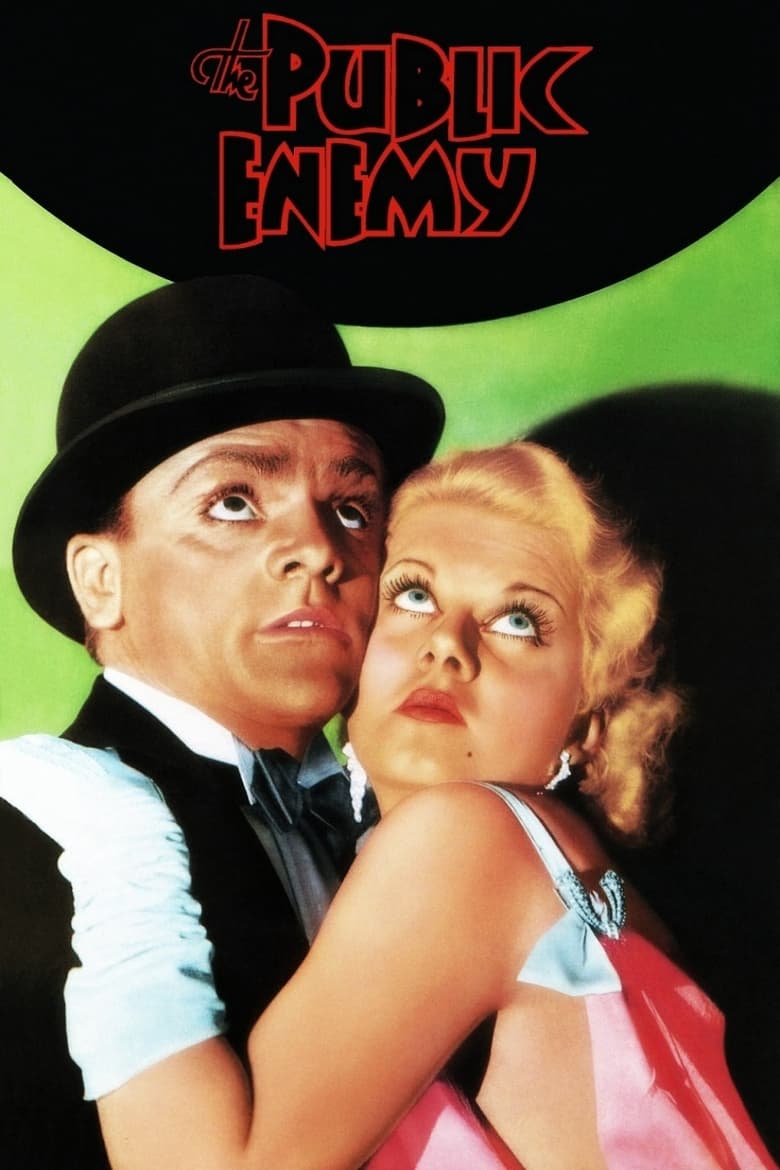
Public Enemy 1931
1931 The Vitaphone Corporation
★★★☆☆ Notable
Film Noir · 84 minutes · Black & White

Public Enemy

Directed by William A. Wellman
Year 1931
Runtime 84 min
Studio The Vitaphone Corporation
TMDB 7.2 / 10
"A boy from the Chicago streets learns that ambition and loyalty are rarely the same thing."

In the working-class neighborhoods of Chicago, Tom Powers and his friend Matt Doyle graduate from petty theft to organized crime with a ease that indicts their environment as much as their character. Tom, played by James Cagney with a coiled, almost cheerful violence, is the sharper of the two – faster to anger, faster to act – while his older brother Mike represents the straight path Tom has no interest in walking. Their mother, Ma Powers, refuses to see her younger son clearly, a blindness the film treats with sympathy and quiet unease.

As Prohibition transforms street-thuggery into serious money, Tom and Matt attach themselves to Paddy Ryan's bootlegging operation, then rise further under the influence of Samuel 'Nails' Nathan. Tom acquires women – most notably the platinum-blonde Gwen Allen, played by Jean Harlow with knowing detachment – and enemies in roughly equal measure. The film is careful to show that Tom's brutality is not exceptional within his world; it is simply more visible, more concentrated. His confrontation with Mike over the source of the household's prosperity sits at the film's moral center without resolving it.

Public Enemy belongs to the cycle of early sound gangster films that treated criminality as a social phenomenon rather than a personal aberration. Where later noir would internalize corruption, pushing it into psychology and shadow, Wellman keeps the machinery external and visible: the streets, the speak-easies, the supply chains of illegal liquor. The film is candid about the attractions of the life it condemns, and that candor gives it a tension that no closing title card can fully neutralize.

Classic Noir

Public Enemy arrived in 1931 as part of Warner Bros.' run of socially-inflected crime pictures, and it remains the most kinetically honest of them. William A. Wellman directs with a plainness that borders on reportage – there is little expressionist flourish here, and that restraint is a choice, not a limitation. The film's argument is that the gangster is produced, not born, and Wellman trusts the accumulation of observed detail over dramatic underlining. Cagney's performance is the central achievement: he inhabits Tom Powers as a man whose energy has no legitimate outlet and whose charm is inseparable from his capacity for harm. The famous grapefruit scene works precisely because it is not telegraphed; it arrives as Tom's moods always arrive, without transition. The film's place in noir's prehistory is secure, not because it deploys the genre's iconography – it largely predates that visual vocabulary – but because it understands that American ambition, unchecked by opportunity, turns inward and then outward as violence.

– Classic Noir
3 ★★★☆☆ Notable
Credits

The Crew

DirectorWilliam A. Wellman
ScreenplayKubec Glasmon
CinematographyDevereaux Jennings
EditingEdward M. McDermott
Art DirectionMax Parker
ProducerDarryl F. Zanuck
Performances

The Cast

Close Reading

The Signature Scene

Public Enemy – scene
Tom's Breakfast Table Grapefruit Against the Wall

The scene is shot in close to medium range, the domestic space of the breakfast table filling the frame with mundane detail – crockery, morning light from a practical window, the ordinary textures of a shared apartment. Devereaux Jennings keeps the lighting flat and functional, which is exactly the point: there is nothing expressionistically ominous in the setup, no shadow falling across Kitty's face to warn the viewer. The camera holds on Cagney's expression for a beat – the irritation registering as something colder than irritation – before the action that follows.

The scene's violence is domestic, impulsive, and entirely in character, which is what makes it more disturbing than any staged confrontation. It reveals that Tom's anger has no hierarchy of appropriate targets; proximity and annoyance are sufficient. Wellman frames the aftermath without editorializing: Kitty remains at the table, the grapefruit has done its work, Tom rises and leaves. The film's argument about power and contempt is made not through dialogue but through the space between people at a breakfast table.

Visual Language

The Cinematography

🎞️
Devereaux Jennings – Director of Photography

Devereaux Jennings shoots Public Enemy in a style that owes more to contemporary newsreel practice than to the Expressionist tradition filtering in from German cinema of the preceding decade. Working mostly on Warner Bros.' Burbank stages with occasional location inserts, Jennings uses high-key, even lighting across many interior scenes, a choice that keeps the film's world legible and unromantic. The moral logic of this approach is precise: shadow is not needed to signal corruption when the corruption is structural and operates in daylight. Where Jennings does use contrast – the dim interiors of speak-easies, the rain-wet street in the film's closing sequence – the effect is earned rather than decorative. Lens choices favor the medium shot, keeping actors in spatial relation to their environments and resisting the close-up glamorization that might soften Tom Powers into a figure of sympathy rather than analysis. The cinematography serves Wellman's sociological intent: this is a world rendered without distortion, which makes its violence harder to dismiss.

In the Catalogue

Themes & Motifs

Availability

Where to Watch

Also in the Directory

See Also