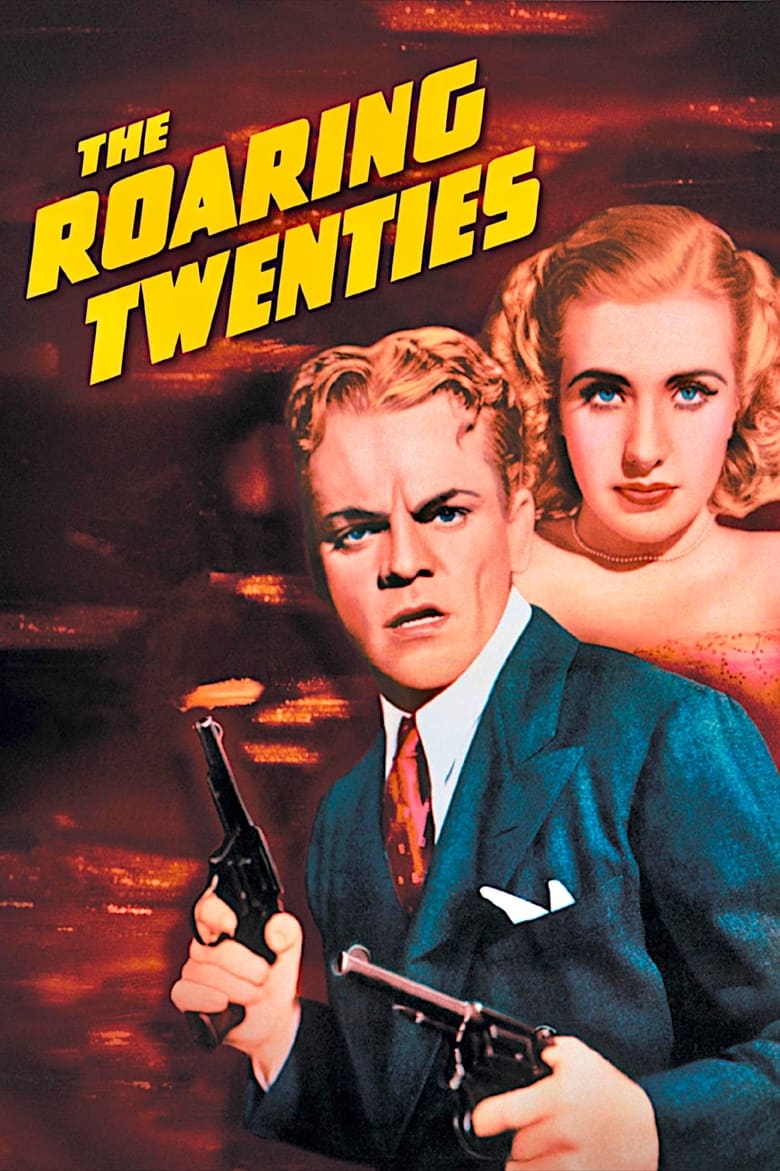
Returning from the First World War with no prospects and fewer illusions, Eddie Bartlett drifts into bootlegging almost by accident, finding that Prohibition-era New York rewards nerve and indifference to the law far more generously than legitimate employment ever did. He partners with the calculating George Hally, a fellow veteran whose wartime taste for violence has only sharpened in peacetime, and recruits idealistic lawyer Lloyd Hart to keep their operation at arm's length from the courts. Panama Smith, a taxi-dancer who has loved Eddie from the beginning and understands him far better than he understands himself, watches the whole enterprise from the margins, loyal and clear-eyed.
Eddie's attachment to Jean Sherman, a young woman who sings in one of his clubs, exposes the limits of what he has built. Jean gravitates toward Lloyd, whose legal career Eddie has quietly subsidized, and the triangle that forms among the three of them erodes whatever code of loyalty had held the partnership together. Hally, never constrained by sentiment, moves to consolidate power by aligning with the syndicate boss Nick Brown, and when that alliance turns lethal, Eddie finds himself on the outside of an organization he helped construct, his fortune evaporated and his authority dissolved.
Walsh frames the story as a kind of social autopsy, tracing the arc from wartime sacrifice through Prohibition prosperity to Depression-era ruin with the detachment of a coroner's report. The film belongs to the tradition of the gangster-as-American-everyman that Warner Bros. had been developing since the early sound era, and it positions Cagney's Eddie somewhere between tragic protagonist and cautionary emblem – a man whose fate is inseparable from the decade that made and then discarded him.
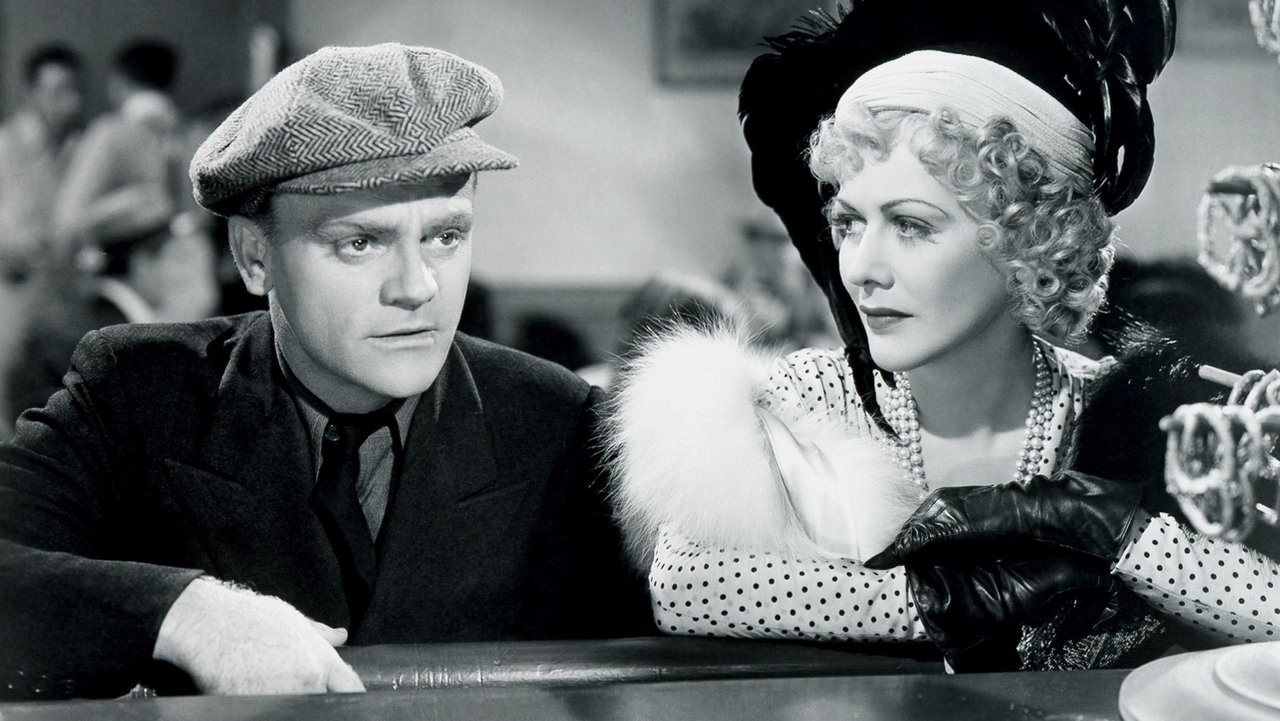
The Roaring Twenties arrives at the end of the Warner Bros. gangster cycle and functions, knowingly, as the cycle's elegy. Raoul Walsh is less interested in the mechanics of crime than in the specific American conditions that produce men like Eddie Bartlett: a soldier who returns to find his country indifferent to his service and then discovers that the same indifference permits him to operate outside the law without moral consequence, for a time. What distinguishes the film from its predecessors is that retrospective quality – the framing device of a narrator historicizing events already past – which gives it the gravity of documentary while permitting the emotional intimacy of melodrama. Cagney, at this point in his career, brings a physical intelligence to the role that resists both sentimentality and abstraction; his Eddie is neither a monster nor a victim but a man of genuine competence whose competence has been channeled, by circumstance, into the wrong work. Bogart's Hally, cold and functional beside Cagney's volatility, prefigures the more fully developed noir antagonists Bogart would inhabit in the following decade. The film does not quite reach the moral complexity of its best successors, but it maps the terrain they would inherit.
– Classic Noir
Walsh and cinematographer Ernest Haller frame the conclusion on rain-slicked stone steps, the camera pulling back to a high angle as Eddie's body settles into the cold geometry of the staircase. The light is flat and merciless, the kind of overcast city-night illumination that removes all romantic shadow and leaves only the fact of the figure on the ground. Haller holds the wide shot long enough for the architecture – stone columns, empty street, receding darkness – to become as present as the characters, the church itself a mute institutional witness.
When the patrolman asks Panama who the dead man is, her reply – 'He used to be a big shot' – compresses the entire film's argument into a single sentence spoken without bitterness. The scene does not mourn Eddie so much as it classifies him, and that act of classification is the film's final moral gesture: a man reduced by the passage of time and the withdrawal of historical conditions to a fact requiring a brief notation. Panama's steadiness in the moment reveals that she has long known how this would end.
Ernest Haller's work on The Roaring Twenties is less showy than his contributions to other Warner productions of the period, and that restraint is itself a choice that serves the film's argument. Haller shoots the Prohibition sequences with a brightness that carries a note of unreality – nightclub interiors lit generously, faces legible and confident – and then gradually withdraws that light as Eddie's fortunes contract, so that the Depression-era passages feel genuinely colder and more constricted. The studio sets are used without apology for their artificiality; Haller makes no effort to disguise the constructed quality of the streets and warehouses, which gives the film a quality closer to fable than to social realism. Lens choices are conventional by later noir standards – no aggressive low angles or distorting close focal lengths – but the consistency of the scheme, and Haller's discipline in holding to the visual logic of decline, gives the cinematography a coherence that a more ostentatious approach would have undermined.
Warner Bros. titles from this era are core holdings on Max, and the film typically streams here in a clean transfer derived from the studio archive.
TCMBroadcast / StreamingTCM airs the film periodically and it is available on-demand through the TCM app for subscribers; the network's presentation includes contextual programming notes.
Archive.orgFreePublic domain or freely uploaded versions may be available, though transfer quality varies and this should be treated as a fallback option.