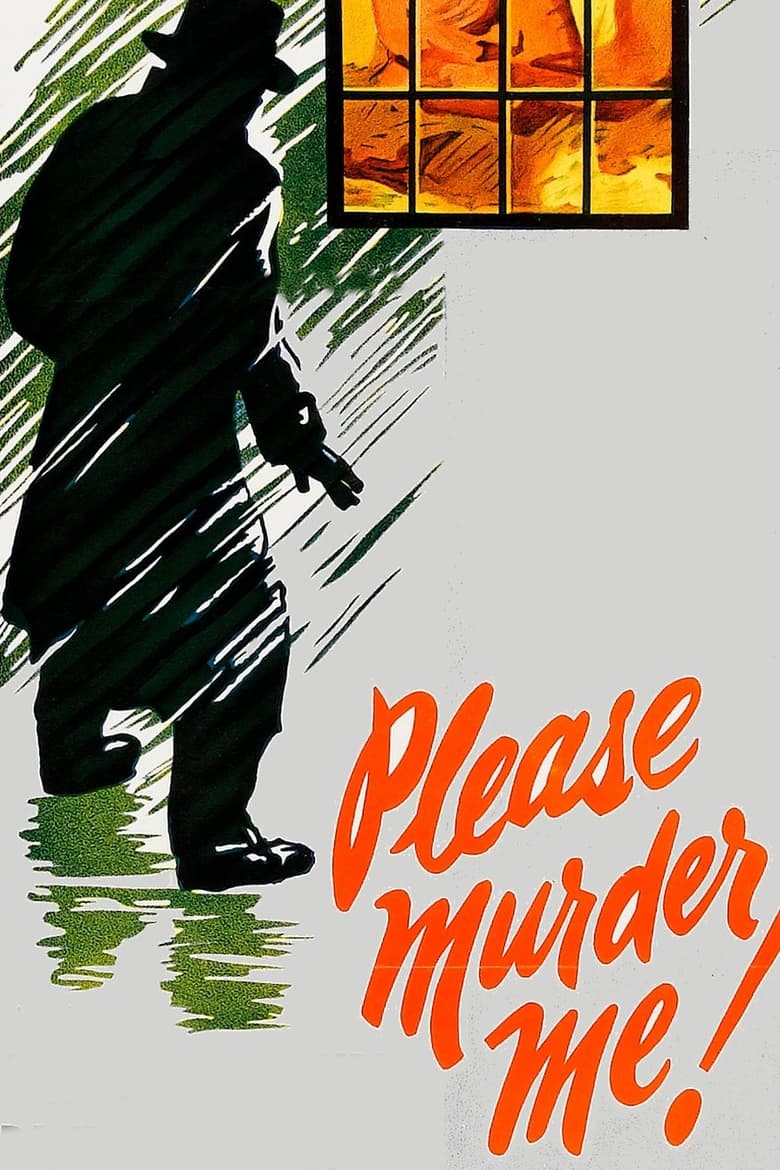
Craig Carlson is a San Francisco attorney who has spent years defending Myra Leeds, a woman he loves, only to watch her marry his closest friend, Joe. When Joe turns up dead and Myra stands accused of his murder, Carlson takes her case and wins her acquittal – knowing, with the full weight of professional certainty, that she is guilty.
With Joe buried and Myra free, Carlson expects the relationship he sacrificed everything to secure. What he finds instead is a woman whose capacity for manipulation extends well beyond the courtroom, and a romantic rival in Carl Holt who makes plain that Carlson was never more than an instrument. As the district attorney begins to circle and Carlson's own guilt hardens into something close to self-loathing, the attorney devises a strategy that turns the law he mastered into a weapon aimed at himself.
Please Murder Me belongs to the small, particular subset of noir in which the protagonist engineers his own ruin with full foreknowledge, placing it alongside films that treat legal procedure not as a mechanism for justice but as a system easily bent by those who understand its grammar. Carlson is both perpetrator and detective of his own undoing, and the film's structure – moving from crime to courtroom to a final ironic inversion – gives that premise a formal elegance that its modest budget does not otherwise promise.
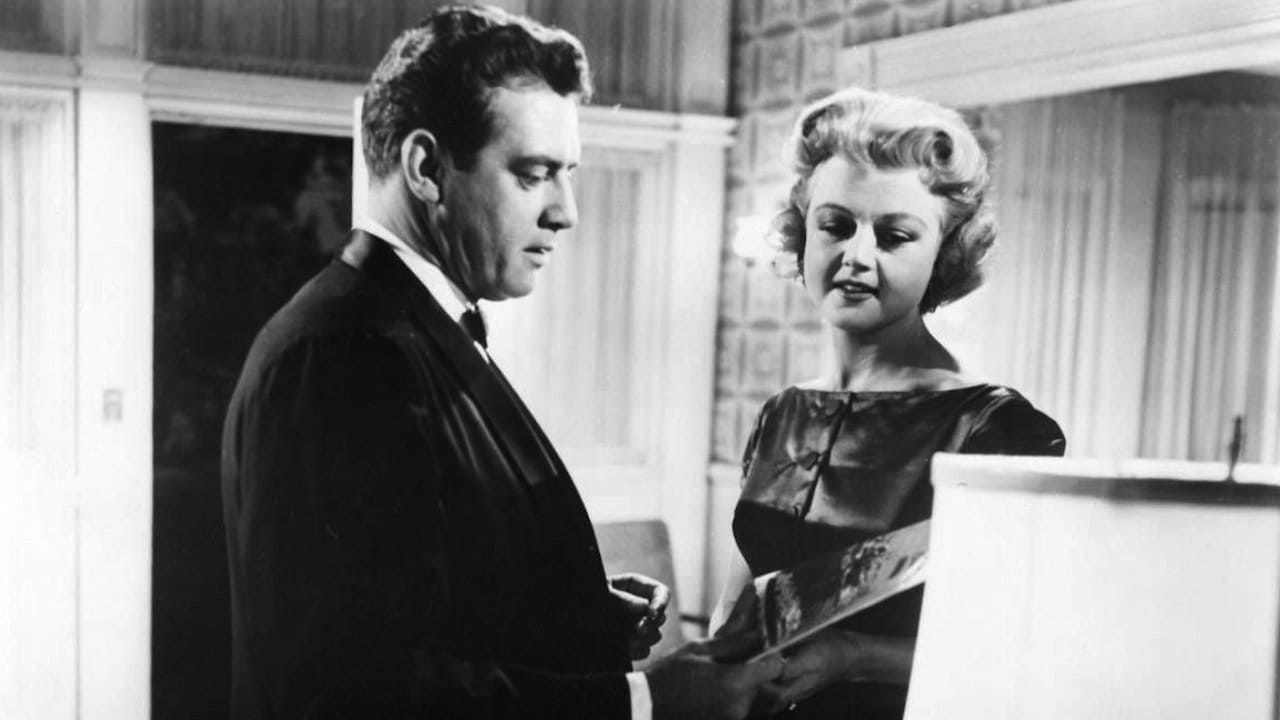
Please Murder Me arrives late in the classic noir cycle and carries the slightly tired efficiency of a programmer that knows exactly what it is. What lifts it above its station is the casting: Raymond Burr, two years before Perry Mason would fix him permanently as a defender of the innocent, plays a lawyer whose legal skill becomes an instrument of self-destruction, and the irony lands cleanly. Angela Lansbury, still a decade away from her theatrical triumphs, plays Myra with a controlled coldness that never tips into caricature – she is not a femme fatale so much as a woman of total pragmatism. Peter Godfrey's direction is functional rather than expressive, but the script's central conceit – a man constructing a legal trap baited with his own life – gives the film a structural integrity that compensates for its visual modesty. As a document of the era, the film reflects a postwar disillusionment with professional competence as a moral guarantee: expertise, here, guarantees nothing except the precision of one's own fall.
– Classic Noir
The camera holds on a recording device as Carlson speaks his confession into it, the frame keeping him partially in shadow while the machine itself sits in an island of flat, functional light. There is no dramatic chiaroscuro here – the choice is deliberate: the light is bureaucratic, the light of evidence rooms and deposition transcripts. Carlson's face is readable but distant, the composition placing him at the same visual level as the object that will outlast him.
The scene crystallizes the film's central argument about agency and the law. Carlson is not confessing out of guilt in any conventional moral sense; he is filing a brief against himself, using the procedural tools of his profession to guarantee an outcome the law would otherwise deny him. The recording transforms speech into evidence, and evidence into fate – which is, the film suggests, precisely what the law has always done to everyone else Carlson ever represented.
Cinematographer Alan Stensvold works within the tight constraints of an independent production that cannot afford the elaborate setups of a major studio noir, and his response is a functional but considered visual scheme that leans on available architecture rather than constructed shadow. Interiors are lit with a low-key pragmatism – highlights are kept narrow, backgrounds allowed to fall into an undemonstrative gray – that suits a story about institutional spaces: law offices, courtrooms, living rooms where middle-class respectability papers over lethal intent. Stensvold avoids the more theatrical expressionism of mid-decade noir in favor of a flatter, slightly affectless look that, whether by design or budget, reinforces the film's portrait of a man who has drained himself of surprise. The courtroom sequences use depth of field to keep both witness and attorney sharp, denying the audience a comfortable focal hierarchy – everyone in that room, the image insists, is equally implicated.
Please Murder Me entered the public domain and is available as a free stream and download here, making it the most accessible option for most viewers.
TubiFreeTubi has carried public domain noir titles of this vintage with reasonable transfer quality; availability may vary by region.
Amazon Prime VideoSubscriptionThe film has appeared through Prime's free-with-subscription tier via third-party channels, though availability should be verified at time of viewing.