Films People Pull a Fast One Night Beat Reading Room On TV Shop
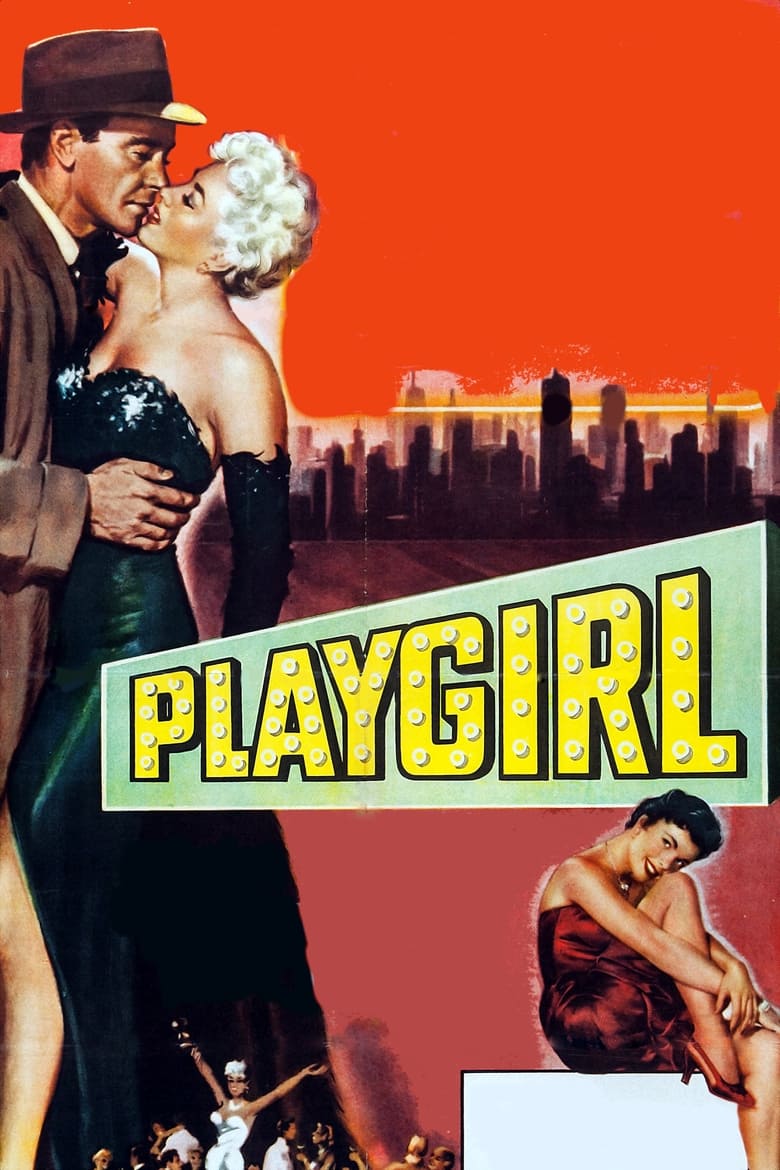
Playgirl 1954
1954
★★★☆☆ Notable
Film Noir · 85 minutes · Black & White

Playgirl

Directed by Joseph Pevney
Year 1954
Runtime 85 min
Studio
TMDB 4.3 / 10
"A small-town girl trades her innocence for the city's glittering lies, and finds the bill comes due."

Fran (Shelley Winters) arrives in New York from a quiet Midwestern town, determined to escape the narrowness of her origins and find something larger – money, glamour, a life that matches her ambitions. She lands in the orbit of Mike Marsh (Barry Sullivan), a connected man with a smooth manner and dangerous associations, and quickly discovers that the city's rewards are inseparable from its obligations. Her younger sister Phyllis (Colleen Miller) watches from a careful distance, aware that Fran's climb carries a cost neither of them has yet calculated.

As Fran moves deeper into a world of nightclubs, wealthy admirers, and transactions dressed up as romance, the men around her – Marsh, the polished Barron Courtney (Richard Long), and the more straightforward Tom Burton (Gregg Palmer) – each represent a different bargain. Allegiances shift as Marsh's wife Greta (Jacqueline deWit) becomes an inconvenient complication, and Fran realizes that the life she has constructed is held together by the goodwill of people who deal in leverage. The distinction between choice and entrapment grows harder to locate.

Playgirl belongs to that strand of early 1950s noir preoccupied with female ambition as both survival strategy and moral hazard – films that scrutinize the economics of aspiration for women without access to conventional routes of security. The film positions Fran not as a simple femme fatale but as a protagonist navigating a system that offers few clean exits, making her ultimate reckoning as much a structural verdict as a personal one.
Classic Noir

Playgirl arrives at the tail end of noir's classical period, when the genre had grown self-conscious enough to fold social observation into its melodrama without quite resolving the tension between the two. Joseph Pevney, a competent studio craftsman whose work rarely drew critical attention, handles the material with enough economy to keep the film's contradictions visible rather than smothered. Shelley Winters carries the film on the strength of her ability to make calculation and vulnerability coexist in a single expression – a performance that resists the usual softening of the ambitious-woman archetype. Barry Sullivan's Marsh is precisely calibrated: persuasive without charm, controlling without overt menace. What the film reveals about its era is the degree to which postwar prosperity generated its own anxieties about who could access it and at what price. Playgirl is not a film that resolves those anxieties; it stages them, assigns them consequences, and lets the audience sit with the discomfort. That seriousness of purpose, however modestly realized, earns it a place in the genre's secondary tier.

– Classic Noir
3 ★★★☆☆ Notable
Credits

The Crew

DirectorJoseph Pevney
ScreenplayRobert Blees
EditingCarl E. Guthrie
Art DirectionAlexander Golitzen
CostumesBill Thomas
ProducerAlbert J. Cohen
Performances

The Cast

Close Reading

The Signature Scene

Playgirl – scene
The Nightclub Confrontation Marsh Closes the Distance

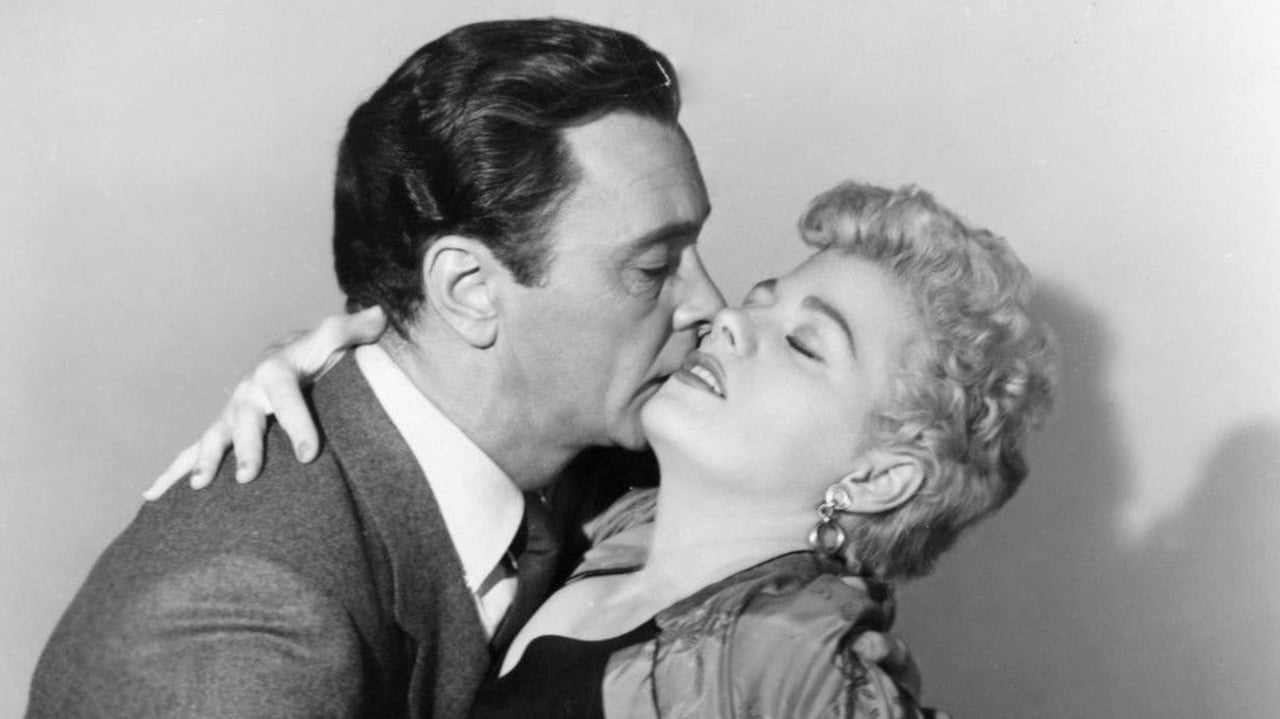
The camera holds Fran at the edge of the frame, the nightclub's practical lighting catching only half her face while Marsh advances from a shadow that the blocking treats as his natural habitat. The composition keeps the background figures – other patrons, the bar, the band – soft and indifferent, reducing the scene to a geometry of two people and the space between them that is visibly shrinking. Pevney cuts rarely here, allowing the tension to accumulate through sustained framing rather than editorial punctuation.

The scene makes the film's central argument in visual terms: Fran's partial illumination signals not ignorance but incomplete knowledge, a woman who can see what she has stepped into without yet seeing the way back out. Marsh's emergence from shadow is not a revelation – it is a confirmation. The scene functions as the film's moral center, the moment where the audience and the protagonist arrive at the same recognition simultaneously, and where any remaining ambiguity about the nature of her situation is quietly retired.

Visual Language

The Cinematography

🎞️
Director of Photography – Director of Photography

The cinematographer on Playgirl remains unconfirmed in surviving production records, a gap that frustrates precise attribution but does not obscure the film's visual approach. The work reflects the Universal-International house style of the early 1950s: controlled studio interiors lit with defined key sources that allow shadow to carry moral weight without overwhelming the frame, combined with occasional location inserts that give the New York milieu a texture the back lot cannot fully manufacture. The nightclub sequences rely on high-contrast setups that isolate figures from their environments, reinforcing the noir proposition that social spaces are fundamentally isolating. Lens choices favor the middle range, keeping faces readable while compressing backgrounds into an ambient murk. The cinematography does not call attention to itself, which is consistent with the film's strategy of grounding its melodrama in plausible surfaces – the visual language earns its restraint by making the moments of compositional pressure, when they arrive, register with proportional force.

In the Catalogue

Themes & Motifs

Availability

Where to Watch

Also in the Directory

See Also