Films People Pull a Fast One Night Beat Reading Room On TV Shop
Philo Vance's Gamble 1947
1947
★★★☆☆ Notable
Film Noir · 62 minutes · Black & White

Philo Vance's Gamble

Directed by Basil Wrangell
Year 1947
Runtime 62 min
Studio
TMDB 6.3 / 10
"A gentleman detective follows a trail of diamonds into rooms where trust has long since expired."

In postwar Los Angeles, Philo Vance (Alan Curtis) – the urbane amateur sleuth inherited from S.S. Van Dine's popular novels – is drawn into a case involving a stolen gem shipment and the circle of opportunists gathered around it. The principals include Laurian March (Vivian Austin), a woman whose loyalties remain carefully unreadable, and Oliver Tennant (Gavin Gordon), a polished schemer with interests in both the gems and the people holding them. Vance's regular contact, Inspector Walsh (Cliff Clark), represents the institutional law that Vance habitually outpaces.

As bodies accumulate and the gem trail grows colder, allegiances within the supporting cast – including the wisecracking Ernie Clark (Frank Jenks) and the Continental-accented Tina Cromwell (Tala Birell) – shift in ways that complicate every apparent motive. The film works a familiar formula: the detective as the one stable moral point in a field of competing deceits. Yet the screenplay strains that stability by placing Vance repeatedly in situations where his celebrated cool detachment looks less like intelligence than convenient distance from consequence.

Philo Vance's Gamble belongs to the twilight of the gentleman-detective cycle, produced at the moment when hardboiled sensibility was displacing drawing-room deduction as Hollywood's preferred mode of crime storytelling. The film's modest ambitions and compressed running time place it firmly in the B-picture tradition, yet its period textures and the quiet tension between Vance's aristocratic method and a world gone demonstrably rougher give it a documentary interest that outlasts its formulaic plotting.
Classic Noir

Philo Vance's Gamble arrives late enough in the detective-film cycle that its conventions read as self-conscious rather than confident. Alan Curtis, a capable journeyman actor better suited to tougher material, wears Vance's dandyish authority with some difficulty, and the tension between the character's S.S. Van Dine origins and the harder postwar world the film inhabits is never fully resolved. What the film does offer is a compact, efficiently staged illustration of how B-picture studios were processing the remnants of a once-dominant genre. Director Basil Wrangell keeps the running time disciplined and avoids the padding that afflicts many productions of this scale. Tala Birell, a veteran of 1930s European and Hollywood productions, brings an authentic ambiguity to Tina Cromwell that the script does not fully earn. As a document of genre transition – the gentleman detective giving ground to the trench-coated private eye – the film carries more period weight than its box-office ambitions intended.

– Classic Noir
3 ★★★☆☆ Notable
Credits

The Crew

DirectorBasil Wrangell
ScreenplayArthur St. Claire
CinematographyJackson Rose
MusicAlvin Levin
EditingW. Donn Hayes
Art DirectionPerry Smith
CostumesEugene Joseff
ProducerHoward Welsch
Performances

The Cast

Close Reading

The Signature Scene

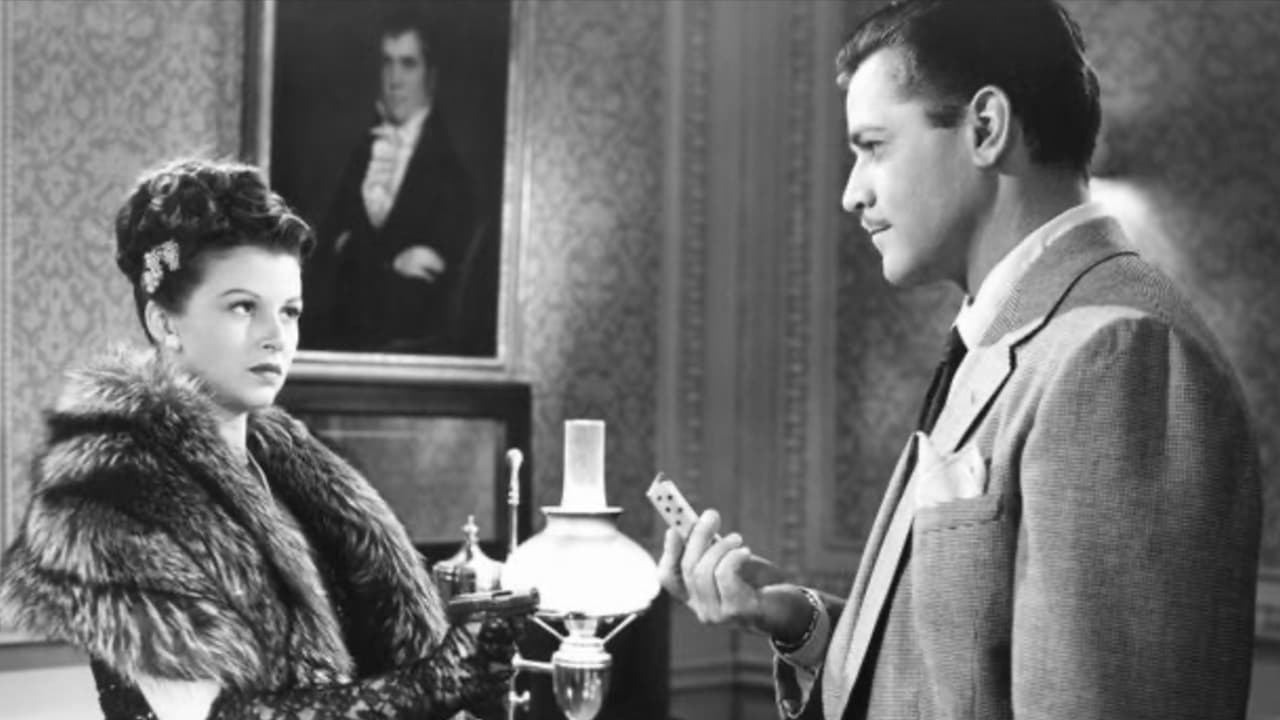
Philo Vance's Gamble – scene
The Confrontation at the Apartment Light Through Venetian Slats

Jackson Rose's camera holds at medium distance as Vance enters the apartment and the venetian blinds behind him divide the available light into parallel bars across the floor and lower walls. The composition is economical: Vance occupies the center of the frame while the woman he has come to question is placed slightly off-axis, her face half in shadow. Rose does not push the chiaroscuro to expressionist extremes – the budget would not support elaborate lighting rigs – but the striped light functions as a visual argument, suggesting enclosure and the bar-like geometry of a trap not yet sprung.

The scene crystallizes the film's central unease about Vance's method. He asks questions in the calm register of a man who already knows the answers, yet the barred light falling equally across both figures undermines his apparent advantage. The visual grammar implies that the detective and his suspect occupy the same moral latitude, caught in the same structural predicament. For a film that otherwise leans on genre convention, it is a rare moment of compositional argument.

Visual Language

The Cinematography

🎞️
Jackson Rose – Director of Photography

Jackson Rose, a reliable craftsman across several decades of B-picture production, brings a workmanlike but considered visual approach to Philo Vance's Gamble. Shooting on studio interiors with the compressed schedules typical of Poverty Row–adjacent productions, Rose relies on focused key lighting and selective shadow placement rather than full-scale noir expressionism. His lens choices favor moderate focal lengths that keep interiors legible without flattening them, and he consistently uses practical sources – lamps, windows, slatted blinds – to motivate shadow patterns that gesture toward noir's moral atmosphere without demanding the production resources of a major-studio picture. Where the story's logic demands moral ambiguity, Rose darkens the background and allows faces to emerge partly unresolved from shadow; where Vance's authority needs reinforcing, the lighting is cleaner and the framing more stable. The result is a visual language that operates within strict material limits while still serving the story's epistemological argument: that in this world, complete illumination is never quite available.

In the Catalogue

Themes & Motifs

Availability

Where to Watch

Also in the Directory

See Also