Films People Pull a Fast One Night Beat Reading Room On TV Shop
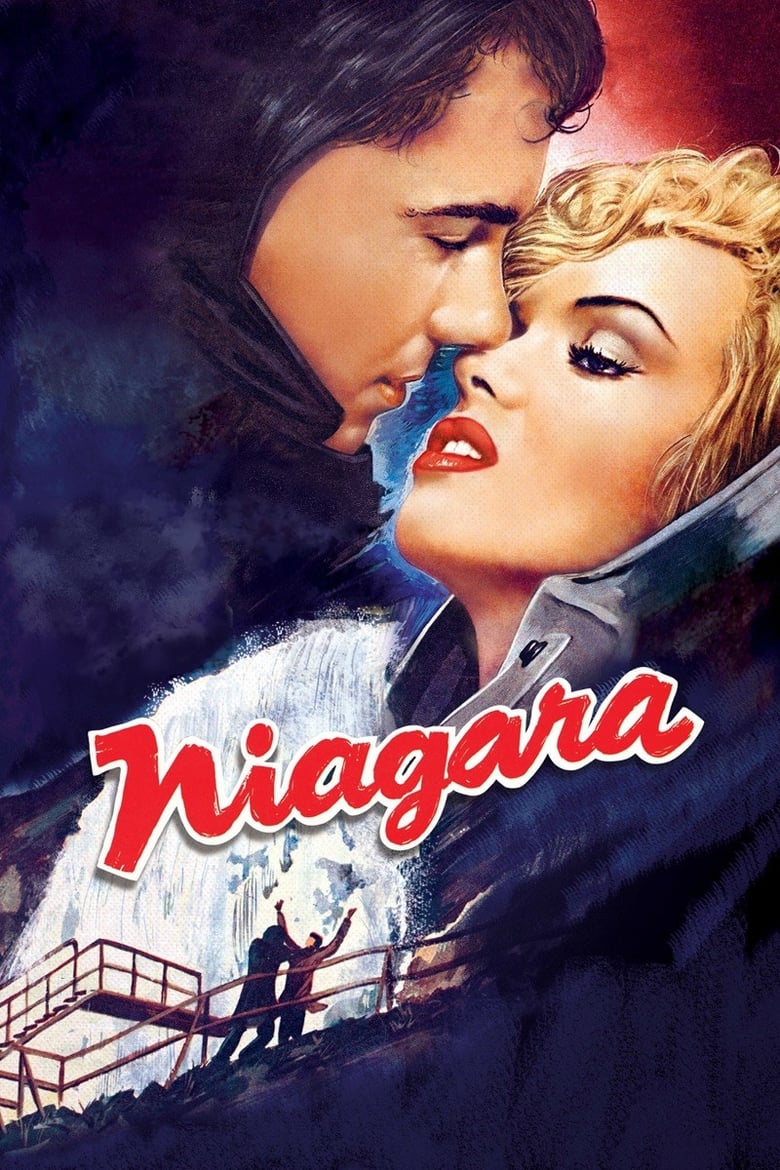
Niagara 1953
1953 20th Century Fox
★★★☆☆ Notable
Film Noir · 92 minutes · Black & White

Niagara

Directed by Henry Hathaway
Year 1953
Runtime 92 min
Studio 20th Century Fox
TMDB 6.8 / 10
"At the edge of the falls, a marriage dissolves into something colder than water."

Honeymooners Ray and Polly Cutler arrive at Niagara Falls to find their cabin already occupied by George and Rose Loomis, a couple whose tension is visible from the first exchange. George is a brooding, shell-shocked veteran whose silences carry the weight of a man who has stopped trusting the world. Rose is younger, restless, and conducting an open secret of an affair with a man named Patrick – a liaison she barely bothers to conceal from her husband or from the increasingly unsettled Polly.

When a plan to murder George appears to miscarry, the situation inverts in ways that implicate the innocent alongside the guilty. Polly, an essentially decent woman drawn into the orbit of other people's catastrophe, becomes a reluctant witness to the aftermath of violence. Inspector Starkey works the case with procedural patience, but the film's real inquiry is psychological: what drives a person past the threshold of desperate action, and who bears the cost when the calculation goes wrong.

Niagara operates at the intersection of the domestic thriller and the femme fatale picture, using its location – the most overdetermined symbol of natural force in North America – to externalise the pressure building inside its central marriage. The Falls function not as backdrop but as argument: something beautiful, relentless, and entirely indifferent to what human beings do at its edge. The film belongs to a cycle of early 1950s noirs in which postwar instability finds its expression in erotic violence and the failure of the couple as social unit.
Classic Noir

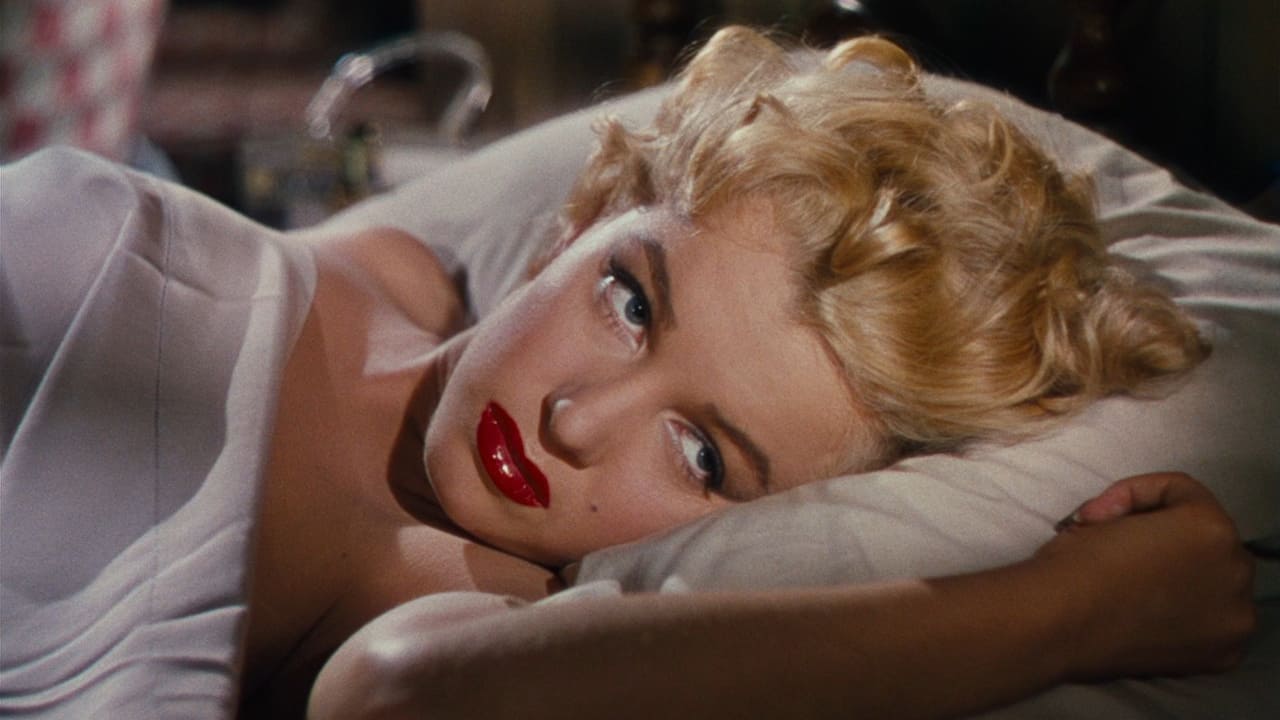
Niagara occupies an awkward but instructive position in the noir canon: it is simultaneously a CinemaScope location picture designed to sell a landscape and a studio star, and a genuinely dark examination of marital hatred and its consequences. Henry Hathaway directs with the economy of a craftsman who knows when spectacle serves narrative and when to pull back to a face. Joseph Cotten's George Loomis is the film's most considered performance – a man whose violence is inseparable from his humiliation, and whose paranoia the script treats with something close to sympathy. Monroe, working in a register she would complicate later in her career, is deployed here primarily as an object of the camera's attention, but the film is alert to the danger that attention represents. What Niagara reveals about its era is the degree to which postwar America's anxieties about masculinity, female sexuality, and domestic containment could be routed through genre without being resolved by it. The ending provides closure of a brutal, practical kind, but the questions the film asks remain open.

– Classic Noir
3 ★★★☆☆ Notable
Credits

The Crew

DirectorHenry Hathaway
ScreenplayCharles Brackett
CinematographyJoseph MacDonald
MusicSol Kaplan
EditingBarbara McLean
Art DirectionMaurice Ransford
CostumesDorothy Jeakins
ProducerCharles Brackett
Performances

The Cast

Close Reading

The Signature Scene

Niagara – scene
The Bell Tower Descending Into the Dark

Joseph MacDonald's camera follows Rose into the confined spiral of the bell tower staircase, the CinemaScope frame – unusual for an interior of this scale – pressing the architecture inward rather than outward. Light enters from above in a single narrow column; the walls are stone-coloured, undifferentiated. Rose moves into shadow with each step, the frame recalibrating her position against the geometry of the space so that she appears progressively smaller without the camera retreating. The composition works against the film's usual logic of Monroe-as-spectacle, refusing the viewer the comfortable distance of the wide exterior shots.

What the scene argues is that Rose's agency, which the film has coded as dangerous and transgressive throughout, has reached the limit of its usefulness. The tower is not a place of escape but of confinement dressed as verticality. Her descent into it anticipates rather than avoids what is coming. The scene repositions her from subject of desire to subject of consequence – a shift the film has been preparing since its opening image of her figure against the falls, beautiful and already, in some sense, falling.

Visual Language

The Cinematography

🎞️
Joseph MacDonald – Director of Photography

Joseph MacDonald, working here in the early period of CinemaScope adoption at Fox, uses the widescreen format with more discipline than many contemporaries managed during the format's first years. On location at Niagara Falls, he avoids the temptation to fill the frame with landscape for its own sake, instead using the horizontal expanse to establish spatial relationships between characters that would be harder to sustain in the Academy ratio – the Cutlers' proximity to the Loomises' disorder is a matter of literal framing. In studio interiors, MacDonald tightens the palette considerably: rooms are lit with a hard, institutional clarity that drains warmth from domestic space. Shadow falls not decoratively but diagnostically, marking the faces of characters in proportion to their guilt or their knowledge of guilt. The choice to shoot the falls themselves at multiple times of day gives the location an emotional variability – blue-grey at dawn, overexposed white at midday – that mirrors the film's tonal range between dread and the banal.

In the Catalogue

Themes & Motifs

Availability

Where to Watch

Also in the Directory

See Also