Films People Pull a Fast One Night Beat Reading Room On TV Shop
Muss 'Em Up 1936
1936 RKO Radio Pictures
★★★☆☆ Notable
Film Noir · 70 minutes · Black & White

Muss 'Em Up

Directed by Charles Vidor
Year 1936
Runtime 70 min
Studio RKO Radio Pictures
TMDB 6.0 / 10
"A detective with fists and few illusions navigates a city that rewards neither."

New York plainclothes detective Tip O'Neil operates in the blunt tradition of the hard-nosed cop who trusts his knuckles as readily as his badge. When a wealthy man named Jim Glenray is found murdered, O'Neil is assigned the case and quickly finds himself drawn into the orbit of Paul Harding, a respectable figure whose social standing masks a web of criminal connections. Amy Hutchins, a woman tied to the investigation, complicates O'Neil's footing from the start.

As O'Neil digs deeper, the line between the legitimate world and the underworld grows difficult to locate. Harding's associate Gene Leland and a pair of low-level operators known as Red Cable and Snake provide muscle and menace at the margins, while Nancy Harding's position within the household raises questions about complicity and self-preservation. Loyalties that seemed fixed begin to shift, and O'Neil finds that the crime has roots in arrangements that polite society prefers to keep undisturbed.

Muss 'Em Up sits at an early junction in the American crime film, predating the fully codified noir cycle yet sharing its skepticism about institutions and its preference for protagonists shaped by the pressures they work under. The film moves with the economy of the pre-war B-picture while already testing the moral ambivalence that would define the genre's maturity.
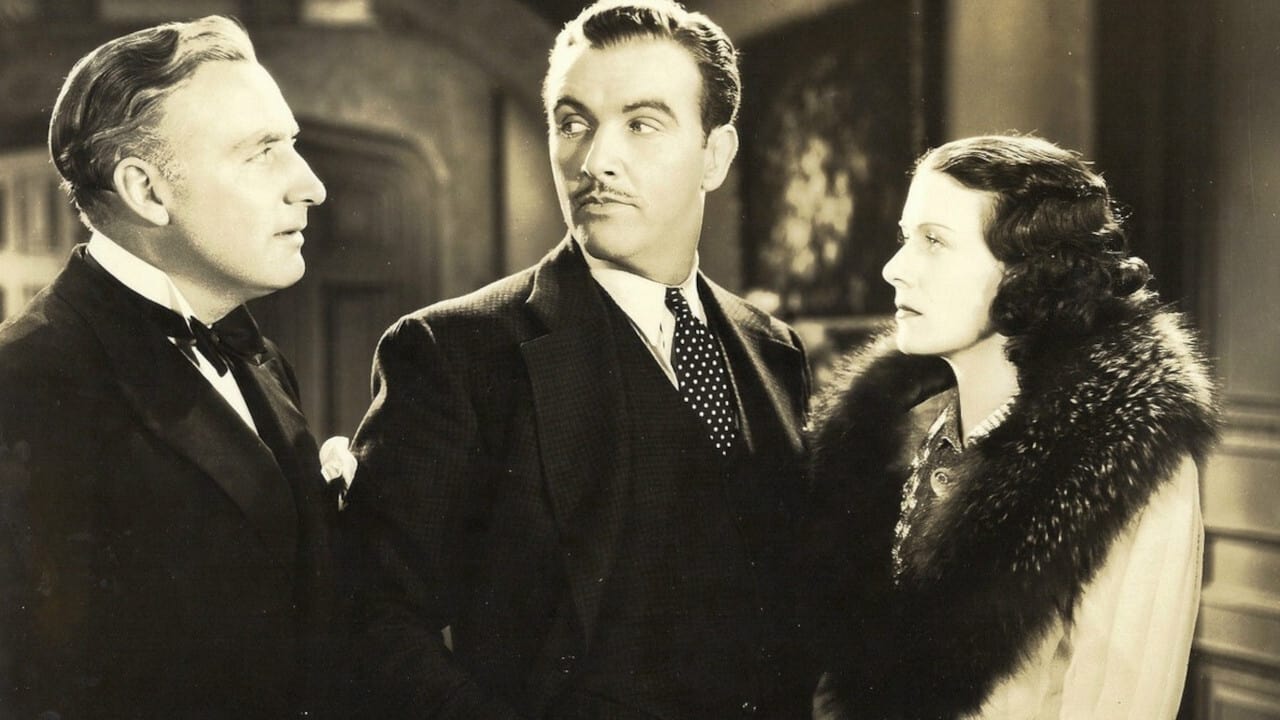
Classic Noir

Muss 'Em Up occupies the transitional terrain between the gangster pictures of the early 1930s and the properly noir cycle that crystallized after the war. Charles Vidor, two years before his more celebrated studio work, keeps the pacing tight and the sentiment low, and Preston Foster's Tip O'Neil is a useful corrective to the idealized detective: competent but coarse, effective through attrition rather than brilliance. The film's interest lies partly in what it anticipates – the corrupt social layer behind a respectable façade, the woman caught between competing male interests, the city as moral pressure system – and partly in what it reveals about the mid-1930s crime picture's particular appetite for authority figures who operate outside procedural niceties. RKO's B-unit productions of this period were doing genuinely experimental work within commercial constraints, and J. Roy Hunt's photography gives the film a texture that exceeds its budget. It is not a work of major ambition, but it is an honest one, and its place in the genealogy of American noir is more than incidental.

– Classic Noir
3 ★★★☆☆ Notable
Credits

The Crew

DirectorCharles Vidor
ScreenplayErwin S. Gelsey
CinematographyJ. Roy Hunt
ProducerPandro S. Berman
Performances

The Cast

Close Reading

The Signature Scene

Muss 'Em Up – scene
The Interrogation Room Light Against the Suspect

Hunt positions the camera at mid-range, letting the room's geometry do the compositional work: a single overhead source throws a hard cone of light onto the seated suspect while O'Neil moves at the frame's edge, partially obscured. The shadow of the chair slants across the floor in a clean diagonal, a device Hunt uses to bisect the image and suggest a moral partition between the two figures. The cutting here is restrained – Vidor holds on O'Neil long enough to register calculation before returning to the suspect's face, where the light is less forgiving.

The scene argues, in visual terms, that authority in this world is a matter of position rather than virtue. O'Neil commands the room not because he is right but because he controls the light and the space. It is an early articulation of the genre's core discomfort: the man enforcing order and the man resisting it are distinguished primarily by who holds the lamp.

Visual Language

The Cinematography

🎞️
J. Roy Hunt – Director of Photography

J. Roy Hunt, who had already demonstrated a facility for low-key studio photography through his RKO work in the early 1930s, brings a considered economy to Muss 'Em Up that lifts it above the routine B-picture. Working on studio-built sets that simulate New York interiors – offices, corridors, rooms in which the ceiling feels lower than it should – Hunt favors tight, angled lighting rigs that produce shadows with clean edges rather than the diffuse fill common to the era's more optimistic programmers. His lens choices tend toward moderate focal lengths that keep background detail legible while preserving a slight compression of depth, useful for suggesting environments in which escape routes are fewer than they appear. The shadow work anticipates the harder chiaroscuro of the postwar cycle without fully committing to it, occupying an intermediate register that suits the film's own position between the gangster picture tradition and the moral disorientation of mature noir. Hunt's photography consistently reinforces the film's argument that respectability is a surface condition.

In the Catalogue

Themes & Motifs

Availability

Where to Watch

Also in the Directory

See Also