Films People Pull a Fast One Night Beat Reading Room On TV Shop
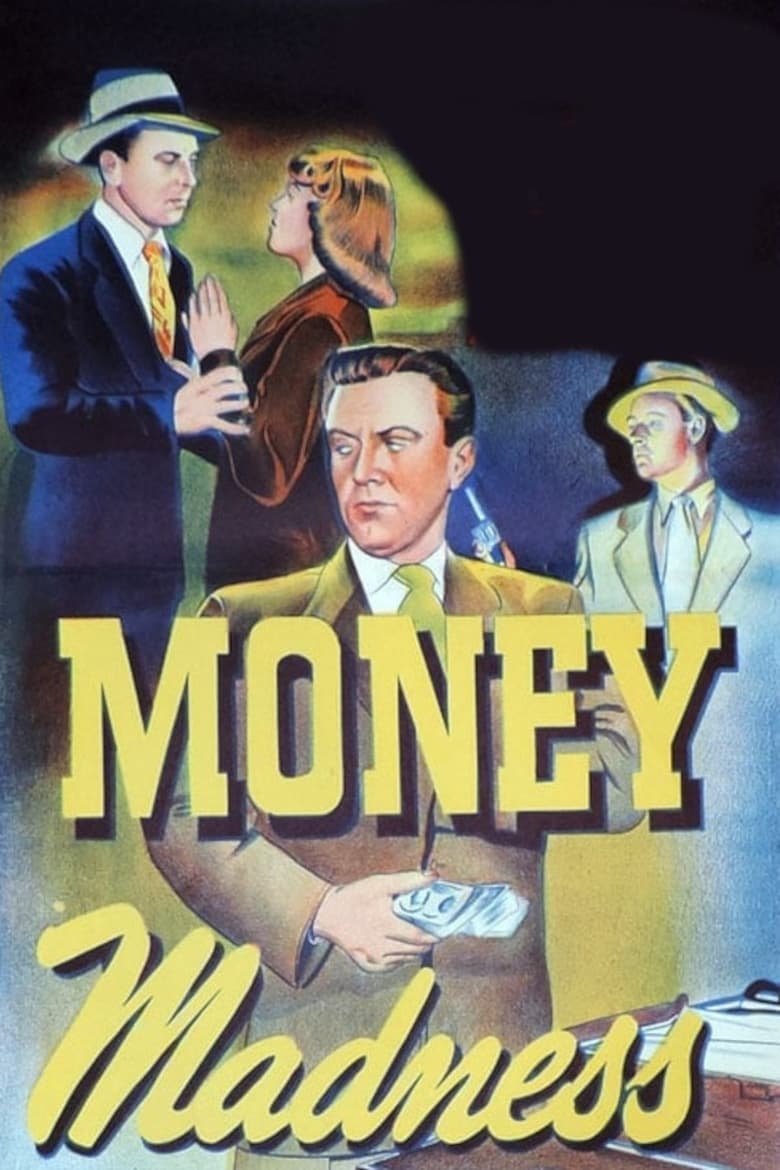
Money Madness 1948
1948 Sigmund Neufeld Productions
★★★☆☆ Notable
Film Noir · 73 minutes · Black & White

Money Madness

Directed by Sam Newfield
Year 1948
Runtime 73 min
Studio Sigmund Neufeld Productions
TMDB 4.7 / 10
"A man buries his crimes beneath a woman's trust, and waits for the ground to shift."

Steve Clark, a cab driver with a history he would rather not discuss, arrives in a small California town carrying a suitcase full of stolen money. He insinuates himself into the life of Julie Saunders, a young woman working to support her ailing aunt, Cora Hudson. The courtship is deliberate and cold-blooded: Steve needs a domestic cover, and Julie, lonely and sincere, mistakes calculation for affection.

When Steve and Julie marry, the money enters the household under a pretense, and Cora becomes an obstacle. Steve's solution is as blunt as the man himself, and Julie, now implicated by proximity and silence, finds the walls of her situation closing around her. Donald Harper, an insurance investigator with an interest in both the missing money and Julie herself, begins to apply pressure from the outside, complicating the question of where Julie's loyalties and survival instincts will finally lead her.

Money Madness belongs to the strand of postwar noir in which romantic love functions as a trap rather than a refuge. The film's domestic setting – ordinary rooms, ordinary furniture, an ordinary marriage gone quietly wrong – places its violence not in the shadows of the city but in the close, suffocating spaces of everyday life, where danger wears the face of a husband.

Classic Noir

Produced by Sigmund Neufeld on the economy end of the independent market, Money Madness is a lean, functional noir that deserves more attention than its poverty-row origins have generally earned it. Hugh Beaumont, later domesticated into television permanence on Leave It to Beaver, here plays against that image with notable discipline: his Steve Clark is not a man of grand menace but of persistent, bureaucratic evil, the kind that wears a pleasant face in public and calculates damage in private. Frances Rafferty gives Julie a credible interiority that the script does not always support. The film's real subject is economic desperation as a moral solvent – how the proximity of money, and the anxiety of its absence, bends ordinary people toward decisions they could not have imagined making. Sam Newfield, a director who worked at a pace that left no room for indulgence, keeps the machinery moving efficiently. The result is a minor film that earns its place in the genre by taking its premise seriously.

– Classic Noir
3 ★★★☆☆ Notable
Credits

The Crew

DirectorSam Newfield
ScreenplayAl Martin
CinematographyJack Greenhalgh
EditingHolbrook N. Todd
ProducerSigmund Neufeld
Performances

The Cast

Close Reading

The Signature Scene

Money Madness – scene
The Kitchen Confrontation Money on the Table

The camera holds at a medium distance as Steve places the suitcase on the kitchen table and opens it. Jack Greenhalgh lights the interior of the case so that the bills seem to generate their own pale luminosity, drawing the eye downward while the faces of the people surrounding it remain in a softer, more ambiguous light. The domestic space – the mundane surfaces of a working-class kitchen – throws the presence of the money into relief without any recourse to expressionist distortion. The composition is deliberately flat, which is itself an argument.

The scene encodes the film's central proposition: that greed does not require gothic architecture or rain-slicked streets to do its work. The ordinary room makes the money more dangerous, not less. Steve watches Julie's face with the patience of a man who has already decided what he will do next; Julie watches the money with an expression that moves, over several seconds, from surprise through something that cannot quite be named as desire but cannot be named as its opposite either. The scene establishes that she is already inside the trap, whether she knows it or not.

Visual Language

The Cinematography

🎞️
Jack Greenhalgh – Director of Photography

Jack Greenhalgh, a workhorse cinematographer of the independent sector who shot dozens of features under comparable budgetary constraints, brings to Money Madness a pragmatic but considered visual approach. Working almost entirely on studio interiors, Greenhalgh uses tight pools of practical-source lighting to confine characters within their domestic spaces rather than frame them against the open geometry of urban noir. Shadow work is applied selectively – concentrated at doorways and in the margins of rooms – to suggest enclosure without the expense of elaborate setups. The result is a visual grammar suited to the film's thematic concerns: what is threatening here is not the city outside but the house itself, the ordinary rooms that become containers for concealment. Greenhalgh's lens choices stay close to the normalized middle range, avoiding the wide-angle distortions associated with more expressionist productions of the period, a restraint that keeps the horror of the film grounded in the recognizable and the proximate.

In the Catalogue

Themes & Motifs

Availability

Where to Watch

Also in the Directory

See Also