Films People Pull a Fast One Night Beat Reading Room On TV Shop
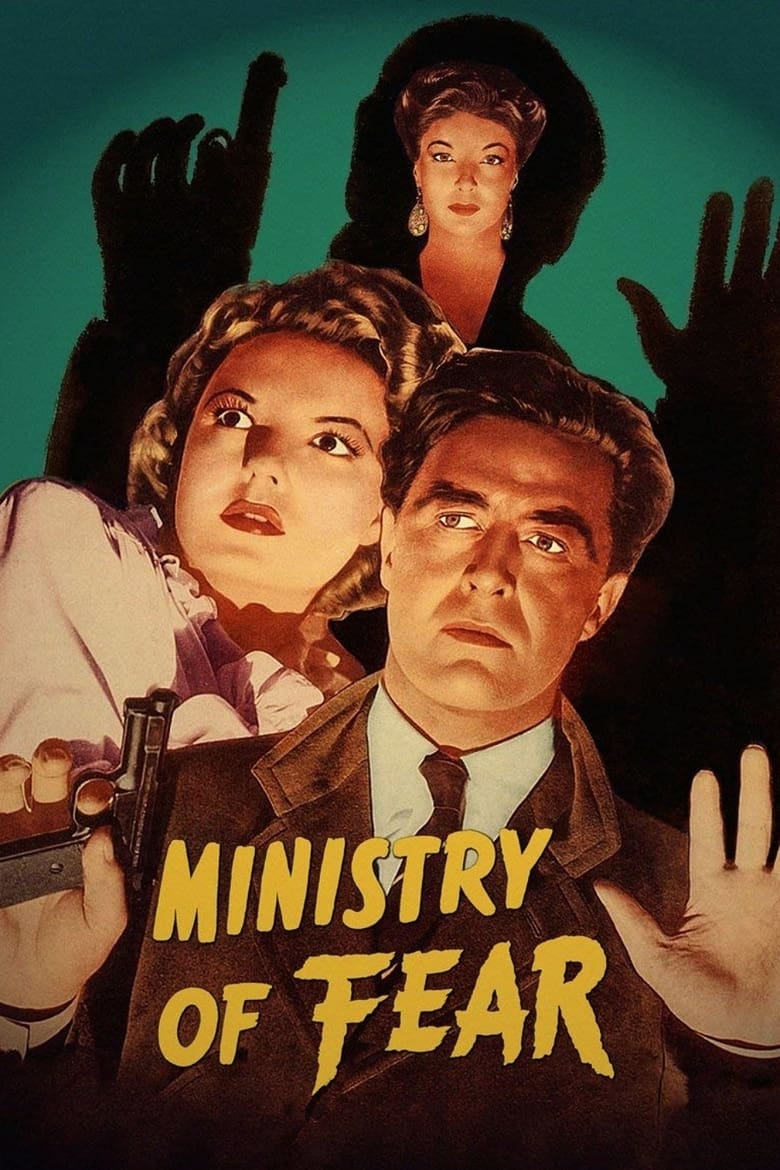
Ministry of Fear 1944
1944 Paramount Pictures
★★★☆☆ Notable
Film Noir · 86 minutes · Black & White

Ministry of Fear

Directed by Fritz Lang
Year 1944
Runtime 86 min
Studio Paramount Pictures
TMDB 6.9 / 10
"A man released from an asylum walks into a war, and cannot tell which is more dangerous."

Stephen Neale is released from a British psychiatric institution in 1944, having served two years after confessing to the mercy killing of his terminally ill wife. Boarding a train to London, he stops at a village fête run by a charitable organization called Mothers of the Free Nations and, by chance – or something arranged to look like chance – wins a cake concealing a strip of microfilm sought by enemy agents. Within hours, a man is dead, the cake has been stolen, and Neale is being followed through a blacked-out wartime London he barely recognizes.

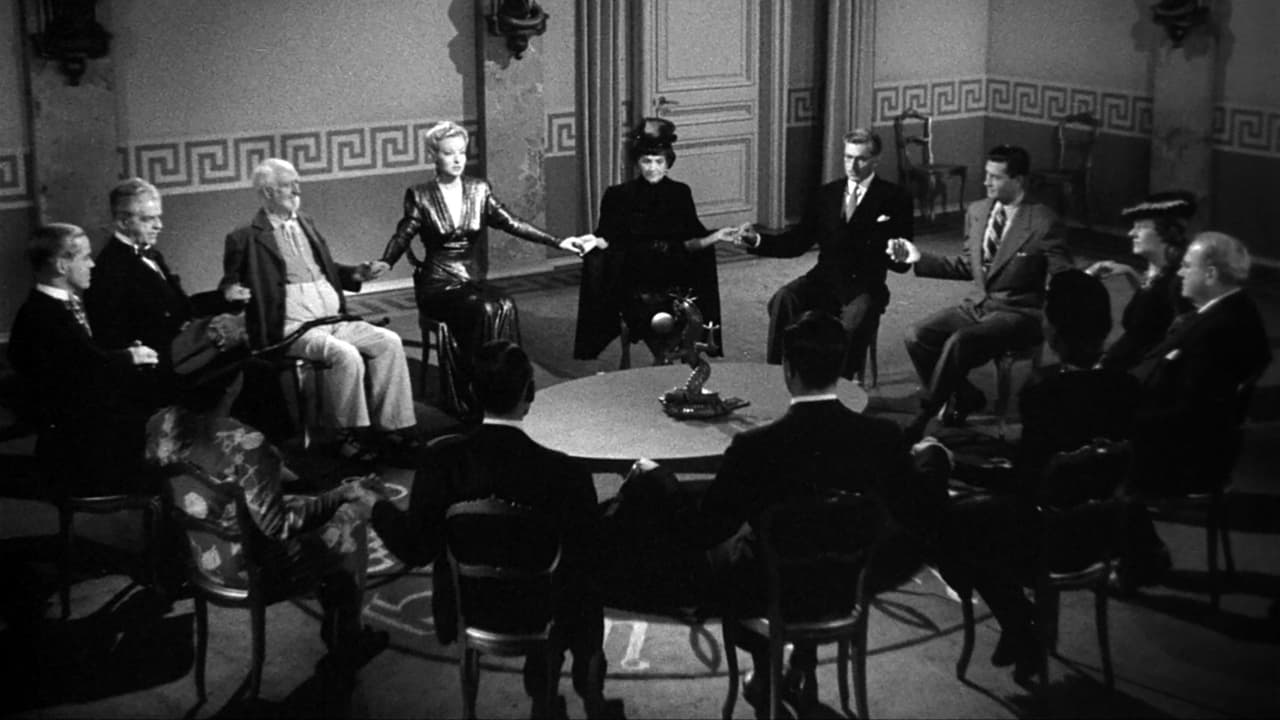
Drawn into the orbit of the Hilfes, a brother and sister running the charitable society, Neale finds in Carla the first human warmth he has known in years, while Willi reads as cultivated, helpful, and faintly suspect. A séance staged in a Mayfair drawing room ends in murder and further implicates Neale, who carries the additional burden of a mind not entirely certain of its own reliability. Inspector Prentice of Scotland Yard circles the case with methodical skepticism, and a tailor named Cost – later calling himself Travers – emerges as a figure whose quiet menace is more corrosive than any outright threat.

Fritz Lang transposes Graham Greene's wartime novel into a Paramount studio world of fog, shadow, and institutional dread, where the war functions less as backdrop than as moral weather. The film belongs to the strain of noir built on the wrong-man premise and the psychology of guilt: a protagonist who cannot be certain whether his suffering is punishment or accident, and who must reassemble a coherent sense of self while the world actively works to prevent him.
Classic Noir

Ministry of Fear occupies an instructive position in Lang's American period – not among his most precisely controlled works, but revealing in its discomfort. The screenplay, by Seton I. Miller, softens Greene's theological pessimism into something the studio system could package, and the concessions show: a romance too quickly warmed, a resolution too cleanly managed. What survives is considerable. Lang's grip on paranoid geography – the fête grounds, the séance room, the bombed-out church, the tailor's back room – gives the film a spatial unease that outlasts its plot mechanics. Ray Milland, two years before his career-defining work in The Lost Weekend, plays Neale's fragility with restraint, and Dan Duryea contributes one of his characteristic portraits of soft-spoken menace. The film's real argument is about guilt as a condition that makes men available for manipulation, an idea more disturbing in 1944 than the spy plot wrapped around it.

– Classic Noir
3 ★★★☆☆ Notable
Credits

The Crew

DirectorFritz Lang
ScreenplaySeton I. Miller
CinematographyHenry Sharp
MusicVictor Young
EditingArchie Marshek
Art DirectionHal Pereira
CostumesEdith Head
Performances

The Cast

Close Reading

The Signature Scene

Ministry of Fear – scene
The Village Fête Fortune-Teller, Cake, Chance

Lang frames the fête sequence in a low, flat light that gives the carnival grounds the quality of a stage set imperfectly lit – cheerful surfaces that do not quite persuade. The fortune-teller's tent is shot in close, the camera pressing toward the woman's face as she speaks, withholding the wider geography so that Neale, and the viewer, cannot orient themselves spatially. When the cake is named and handed over, Lang cuts to reaction shots that linger a beat too long, encoding ordinary transaction with the grammar of exchange between conspirators.

The scene establishes the film's controlling idea before the plot has formally begun: that innocence and implication are indistinguishable from the outside, and that a man already marked by one inexplicable act – his wife's death – is structurally unable to prove that a second suspicious event is coincidence. The cake is a trivial object made terrible by context, and the fête's bunting and good cheer become, in retrospect, the most sinister elements in the frame.

Visual Language

The Cinematography

🎞️
Henry Sharp – Director of Photography

Henry Sharp's cinematography for Ministry of Fear works within the constraints of Paramount studio production to construct a Britain that is less a physical place than a state of mind – fog-bound, interior, resistant to clarity. Sharp relies on high-contrast lighting with pronounced fall-off, placing characters at the edge of illumination rather than within it, so that faces are frequently half-readable and backgrounds dissolve into undifferentiated dark. The séance sequence uses a single practical candle as its nominal source, allowing Sharp to build surrounding shadow that swallows the room's geometry. Studio-bound exteriors are made plausible through selective backlighting and wet-look pavement, techniques common to the period but applied here with particular care for tonal consistency. The visual strategy serves the film's moral logic directly: in a world where memory is unreliable and allegiance is concealed, complete illumination becomes a form of dishonesty, and Sharp's refusal to fully light any space becomes an argument about the limits of what any man can know.

In the Catalogue

Themes & Motifs

Availability

Where to Watch

Also in the Directory

See Also