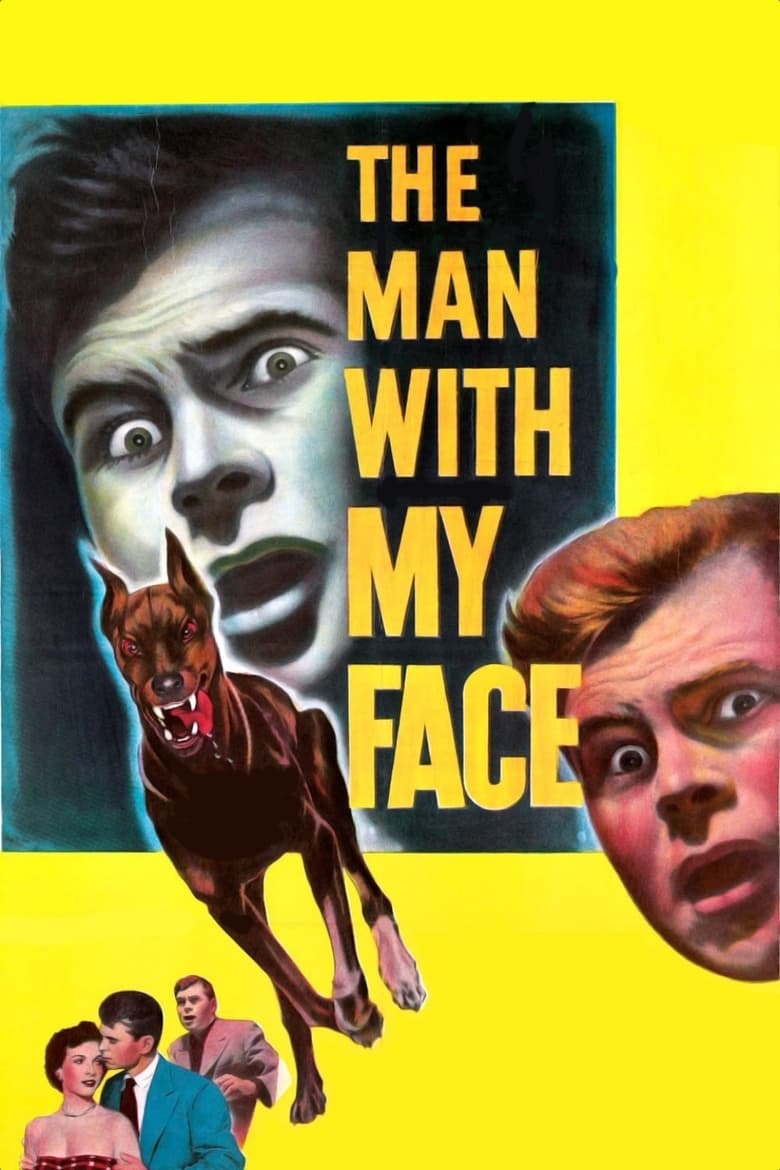
Charles 'Chick' Graham returns to Puerto Rico after a business trip expecting to resume his comfortable life, only to find a stranger named Albert 'Bert' Rand installed in his home, accepted by his wife Cora, and recognized by his associates as the real Chick Graham. The impostor is his physical double, and the substitution has been executed with a precision that leaves Chick without allies, without identity, and without legal standing to reclaim what was his.
As Chick attempts to expose the fraud, he discovers that the conspiracy reaches into his own household. Cora, his wife, is complicit, and the scheme is tied to Buster Cox and a plan to drain Graham's business interests. Chick finds uncertain support in Mary Davis and her brother Walt, but their involvement draws them into mounting danger. Each attempt to prove who he is collides with a system of false witnesses and manufactured evidence designed to erase him entirely.
Man with My Face belongs to the cycle of postwar noir built on identity displacement and institutional betrayal rather than urban crime. Shot largely on location in Puerto Rico, it uses the tropical setting to deepen Chick's isolation – a man unmoored in a landscape that should be familiar. The film asks not only who can be trusted but whether identity itself, stripped of documentation and social recognition, has any weight at all.
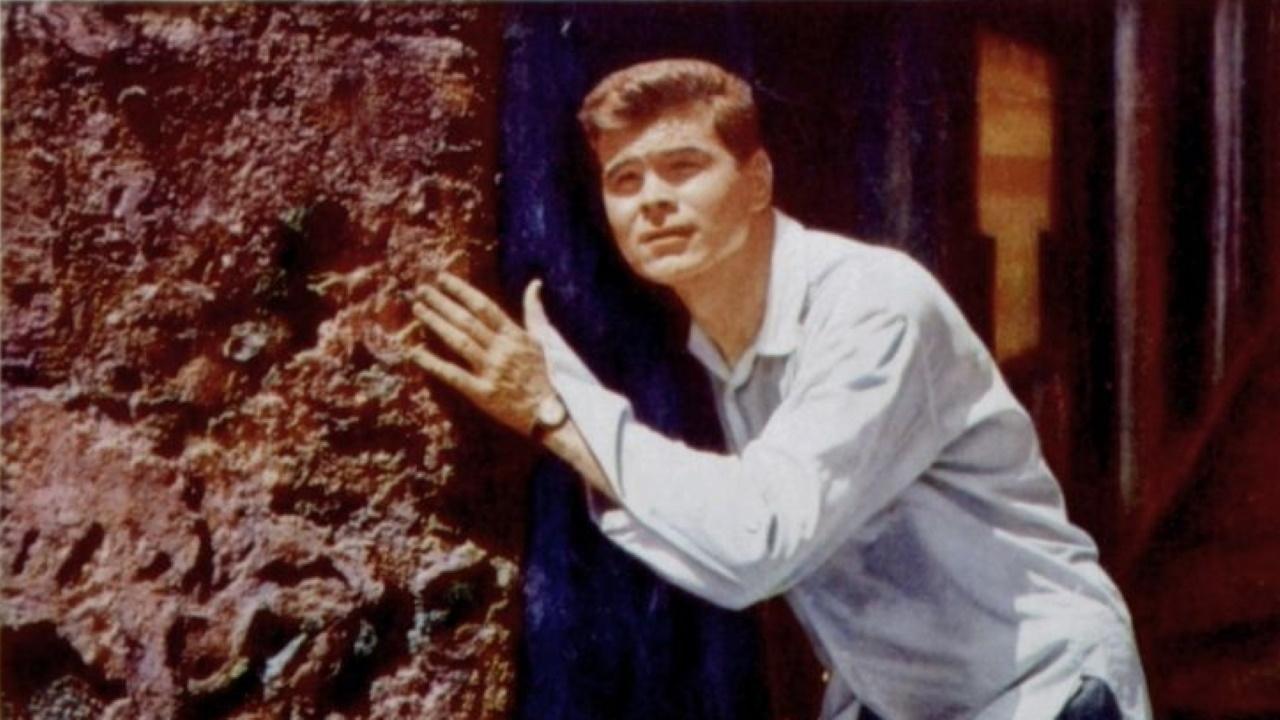
Man with My Face occupies a modest but legitimate position in the wrong-man tradition, distinguishing itself through location rather than studio convention. Puerto Rico in 1951 was rarely seen as a noir backdrop, and the film uses its heat and unfamiliarity to externalize Chick Graham's psychological condition – a man whose environment has turned against him as completely as the people in it. Barry Nelson brings an understated credibility to the dual role, avoiding the theatrical flourishes that sink lesser doppelgänger pictures. The script, adapted from Samuel W. Taylor's novel, is tidier than most B-picture sources of the period, with the conspiracy given coherent economic motivation rather than abstracted malice. Jack Warden, in an early screen appearance, registers with characteristic physical authority. The film does not transcend its budget, and some supporting performances lack weight, but its structural premise – identity as something that can be socially revoked – touches a genuine postwar anxiety about the self's fragility within institutions that are supposed to confirm it.
– Classic Noir
Fred Jackman Jr. frames the confrontation between Chick and his double in a sparse interior, the tropical light pressing hard through louvred shutters and laying parallel bars of brightness across the floor between them. The camera holds both men in the same medium shot for as long as possible before cutting, insisting that the audience perform the same disorienting visual labor that the other characters refuse to undertake. Shadow falls asymmetrically – Chick slightly darker in the frame, already half-erased.
The scene functions as the film's thesis statement: that resemblance, in the presence of money and social arrangement, is sufficient to override truth. Chick's agitation reads not as guilt or madness but as the reasonable panic of a man who has discovered that identity is not intrinsic but conferred, and that the people who confer it have already made their choice. The double's stillness is more damning than any argument.
Fred Jackman Jr.'s cinematography on Man with My Face earns attention for what it refuses as much as for what it deploys. Working on location in Puerto Rico rather than on a controlled studio lot, Jackman adapts noir's shadow grammar to conditions that resist it – equatorial light is flat and exposing, the opposite of the chiaroscuro that defined the genre's visual contract on sound stages in Los Angeles. His solution is architectural: he finds shade in colonnades, angles through jalousies, and uses the deep blacks of interior doorways against blown-out courtyards to construct the moral unease the story requires. Lens choices favour a moderate focal length that keeps space legible while compressing the psychological distance between characters who should be distinct. The location work gives the film an ethnographic texture absent from most B-noir of the period, and Jackman uses it purposefully – the unfamiliar setting amplifying Chick Graham's condition as a man who no longer belongs anywhere.
The film is in the public domain and available in full on Archive.org, though print quality varies by upload; seek the highest-resolution version available.
TubiFreeTubi has carried public domain noir titles of this period with reasonable streaming quality; availability may shift, so confirm before seeking.
Amazon Prime VideoSubscriptionOccasionally surfaces through Prime's catalogue of classic B-pictures via third-party channels; availability is not guaranteed and should be verified.