Films People Pull a Fast One Night Beat Reading Room On TV Shop
Man is Armed 1956
1956 Republic Pictures
★★★☆☆ Notable
Film Noir · 70 minutes · Black & White

Man is Armed

Directed by Franklin Adreon
Year 1956
Runtime 70 min
Studio Republic Pictures
TMDB 5.2 / 10
"A man with a dead man's face finds that the debt doesn't die with the debtor."

Johnny Morrison (Dane Clark), a drifter with a shady past, takes a job at a transport company and almost immediately finds himself entangled in a theft ring operating out of the firm's loading docks. When a murder occurs and the evidence points squarely at him, Morrison becomes the primary suspect of Detective Lieutenant Dan Coster (Barton MacLane), a tenacious and none-too-scrupulous cop who prefers a clean arrest to a careful investigation. Carol Wayne (May Wynn), a woman connected to the company, represents Morrison's only credible ally – and his only credible temptation.

The actual architects of the crime are Hackett (William Talman) and his associate Lew Mitchell (Richard Benedict), men who operate inside the legitimate business structure as cover for a more organized criminal enterprise. Dr. Michael Benning (Robert Horton) moves through the periphery of the conspiracy, his loyalties opaque and his motives mercenary. As Morrison attempts to clear his name, the frame tightens around him – each piece of exculpatory evidence seems to arrive a beat too late, and each new witness either recants or disappears.

Man is Armed belongs to the cycle of Republic Pictures crime programmers that placed working-class men inside bureaucratic and criminal machinery designed to grind them down. The film's concern is less with whodunit than with how institutions – the police, the corporation, the syndicate – collaborate to make guilt stick to the man with the least leverage. At seventy minutes, it moves without waste, which is itself a kind of argument about the speed with which an ordinary life can be dismantled.
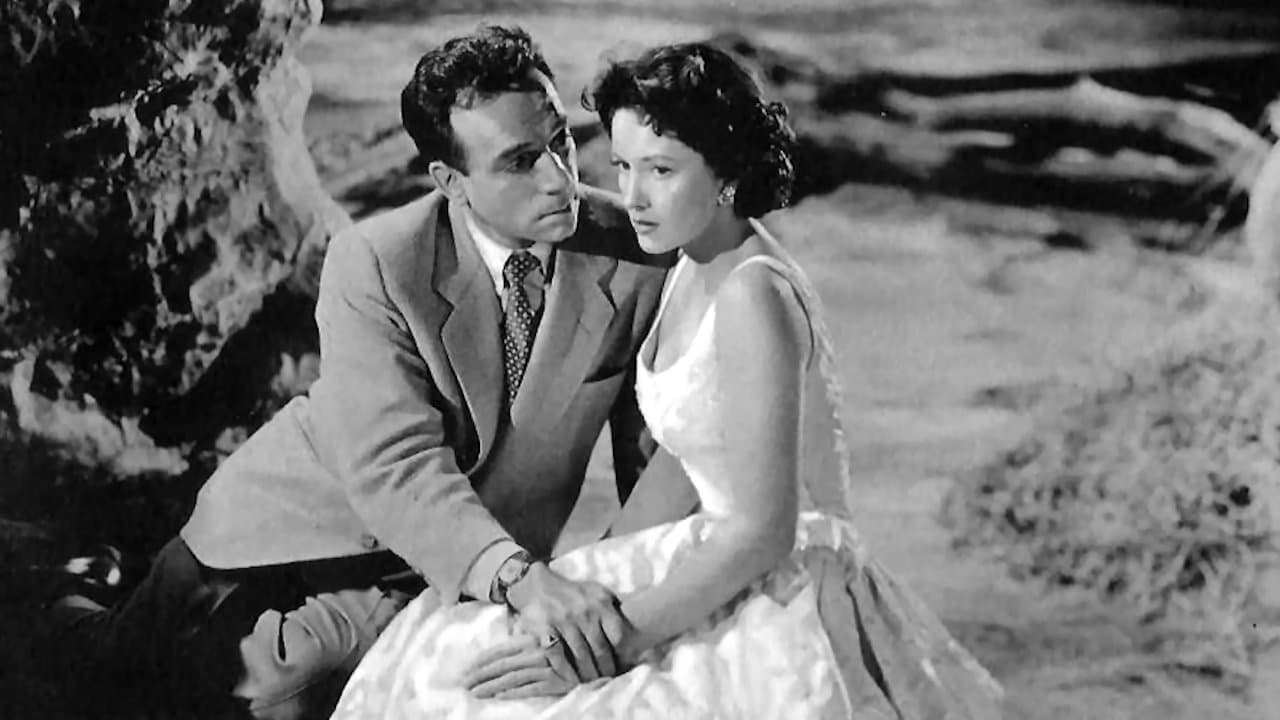
Classic Noir

Franklin Adreon was a director of serials and programmers, and Man is Armed reflects both the discipline and the limitations of that formation. Within a budget that permitted no excess, the film constructs a reasonably coherent argument about institutional bad faith: the police procedural and the criminal conspiracy are shown to operate by the same logic, which is that the man without connections absorbs the consequences of other men's actions. Dane Clark, who made a career out of playing men whose energy reads as either guilt or desperation depending on who is watching, is well-cast here precisely because that ambiguity is the film's subject. William Talman, shortly before his run on Perry Mason, demonstrates what he could do with a villain who keeps his cruelty inside professional courtesy. The film does not transcend its category, but it understands the category with clarity, and Bud Thackery's cinematography imposes a visual coherence that lifts it above mere efficiency. It is a minor entry in the wrong-man cycle, made with craft proportionate to its means.

– Classic Noir
3 ★★★☆☆ Notable
Credits

The Crew

DirectorFranklin Adreon
ScreenplayRobert C. Dennis
CinematographyBud Thackery
MusicR. Dale Butts
EditingTony Martinelli
Art DirectionWalter E. Keller
Performances

The Cast

Close Reading

The Signature Scene

Man is Armed – scene
The Warehouse Confrontation Light Cuts Across Crates

Thackery positions his camera low and back, using stacked cargo containers to fracture the warehouse into narrow corridors of usable space. A single overhead work light falls in a hard cone, carving out one illuminated pocket in an otherwise black frame. Morrison enters the light reluctantly, as though the illumination itself is a trap – which, structurally, it is. The figures of Hackett and Mitchell are kept at the frame's edges, never fully resolved, their faces catching just enough light to register threat without surrendering legibility to the audience.

The scene functions as a geometric argument about power: the man forced into the open, held in light, is the man without options. Hackett and Mitchell operate in the penumbra because the half-dark is where their kind of authority lives. What the scene reveals about Morrison is not heroism but exhaustion – he has run out of alternatives, and walking into that cone of light is less an act of courage than of arithmetic. The film's central argument, that visibility is vulnerability for the wrong man, is never more plainly stated.

Visual Language

The Cinematography

🎞️
Bud Thackery – Director of Photography

Bud Thackery, Republic's reliable contract cinematographer through much of the 1950s, brings to Man is Armed the hard-shadow grammar he had refined across dozens of genre assignments. Working within the studio's modest infrastructure, Thackery relies on high-contrast lighting setups that keep secondary characters partially obscured – a technique that doubles as an economy measure and as a moral statement, since the film's criminals are most threatening when least defined. Interior locations lean on practicals and single-source units to produce pools of workable light surrounded by genuine darkness rather than graduated shadow. The lens choices favor middle focal lengths that keep faces readable without flattering them; Clark's worn features are rendered with a fidelity that registers social condition as much as individual psychology. Thackery does not attempt anything formally ambitious here, but his consistency produces a visual world that coheres – one where light is scarce, distributed unequally, and never innocent.

In the Catalogue

Themes & Motifs

Availability

Where to Watch

Also in the Directory

See Also