Films People Pull a Fast One Night Beat Reading Room On TV Shop
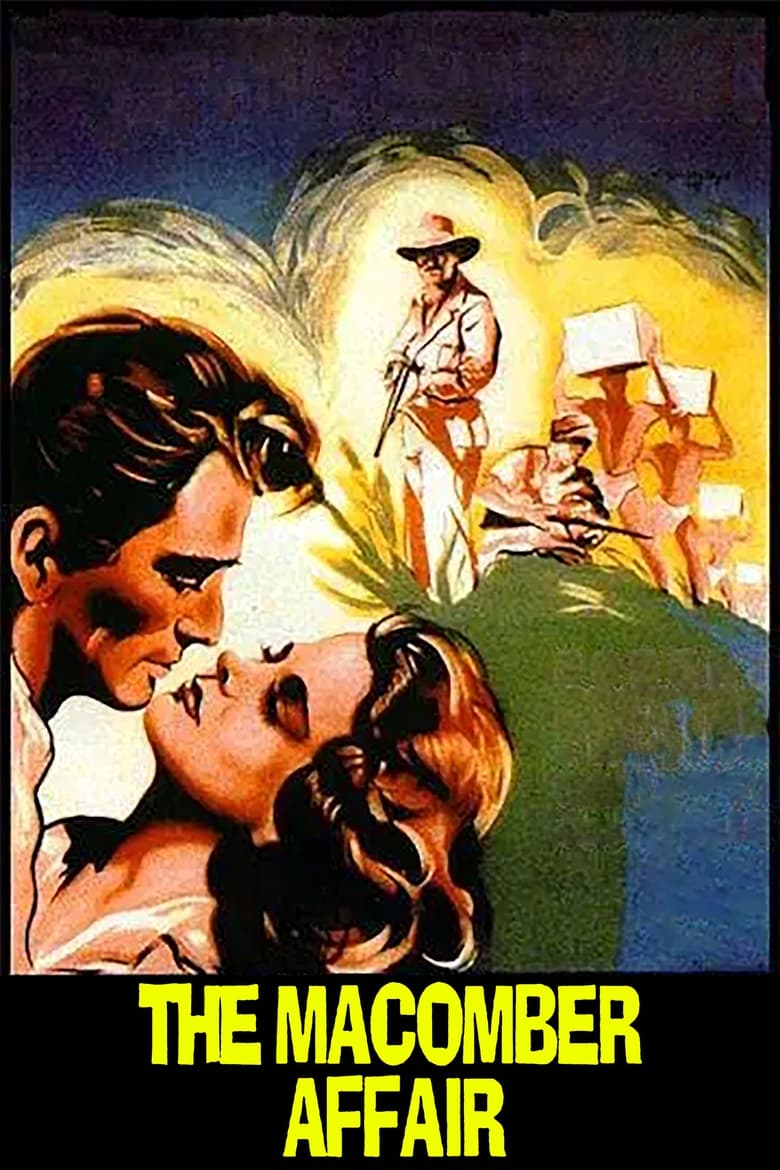
Macomber Affair 1947
1947 Benedict Bogeaus Production
★★★☆☆ Notable
Film Noir · 89 minutes · Black & White

Macomber Affair

Directed by Zoltan Korda
Year 1947
Runtime 89 min
Studio Benedict Bogeaus Production
TMDB 6.7 / 10
"In the African bush, a coward's death and a wife's silence tell two different stories."

In British East Africa, wealthy American Francis Macomber arrives on safari with his wife Margaret, accompanied by their hired white hunter Robert Wilson. The film opens not at the beginning of events but at their violent conclusion – a gunshot, a body – before doubling back to reconstruct what led there. Francis is a man of means and social position who has, on a lion hunt, broken and run in plain sight of his wife and his guide, an act of public cowardice that strips him of whatever authority he once held over his own life.

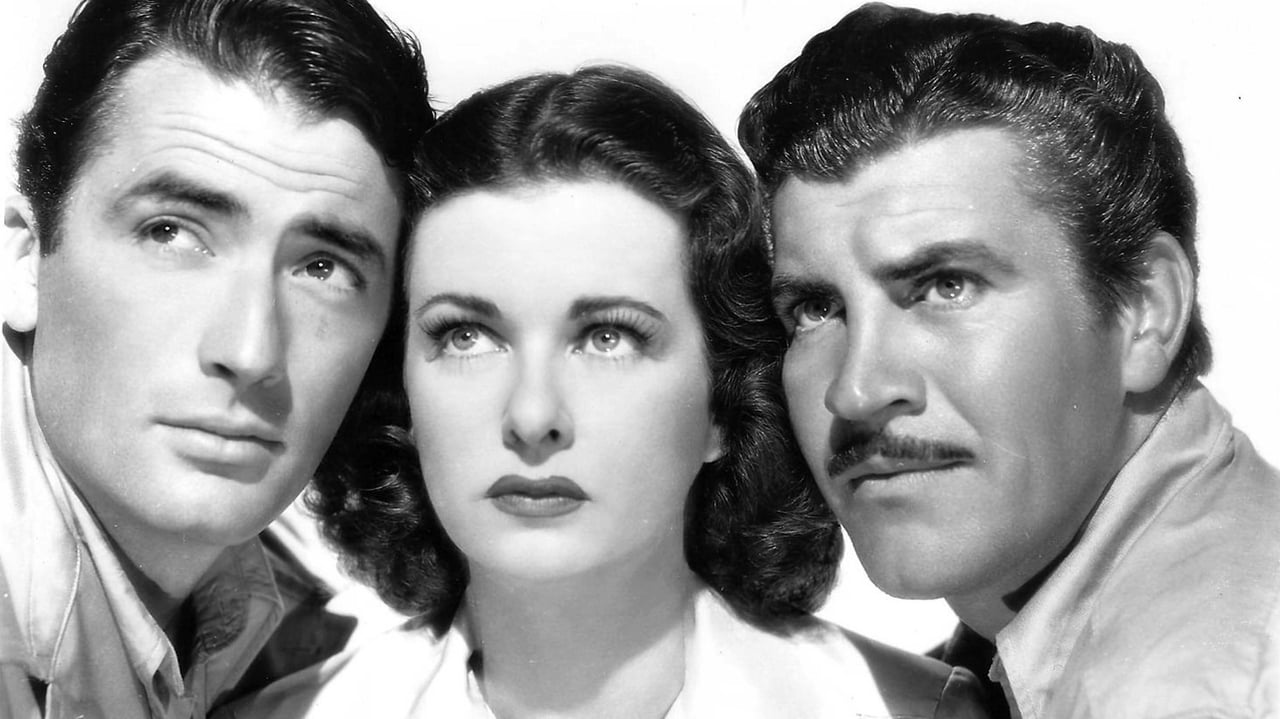
Margaret, cold and calculating beneath a composed surface, makes no effort to conceal her contempt for her husband. Her attraction to Wilson, a professional whose relationship to danger is entirely pragmatic, sharpens the tension within the small party. When Francis, on a subsequent hunt, finally locates something like courage in himself – facing a buffalo charge without flinching – the balance of power in the triangle shifts in ways that make Margaret suddenly, quietly afraid. Wilson watches both of them with the measured detachment of a man who has seen what Africa does to people who mistake self-deception for character.

Structured as a courtroom investigation folding back into an extended flashback, The Macomber Affair sits at the intersection of noir and colonial adventure – a study of guilt, dominance, and the question of whether a woman who fires a rifle at the right moment can also be said to have chosen her moment. The film uses the inquest framework to build retroactive dread, making every scene in the bush carry the weight of what the audience already knows is coming.
Classic Noir

The Macomber Affair is a carefully constructed minor work that earns its place in the noir canon less through visual bravura than through its structural intelligence and the precision of its performances. Adapted from Hemingway's 1936 short story, the film converts the original's impassive third-person irony into something more procedural: an inquest that frames the safari flashback and forces every gesture, every exchange of glances, to carry forensic weight. Joan Bennett, working in familiar femme fatale territory but on a more openly psychological register than her Lang collaborations, delivers a Margaret Macomber whose guilt or innocence the film is genuinely reluctant to adjudicate. Gregory Peck's Wilson is deliberately underplayed – a man whose professional ethics prohibit emotional investment even as he becomes the instrument of the marriage's destruction. What the film reveals about its postwar moment is the anxiety around masculine identity: Macomber's cowardice and his recovery are treated as a moral crisis the narrative cannot quite resolve, and the colonial setting functions less as exoticism than as a pressure chamber in which American social performance is stripped bare.

– Classic Noir
3 ★★★☆☆ Notable
Credits

The Crew

DirectorZoltan Korda
ScreenplayCasey Robinson
CinematographyKarl Struss
MusicMiklós Rózsa
EditingGeorge Feld
Art DirectionErnö Metzner
ProducerCasey Robinson
Performances

The Cast

Close Reading

The Signature Scene

Macomber Affair – scene
The Buffalo Hunt Courage Arriving Too Late

As the wounded buffalo charges through the tall grass, Karl Struss cuts between tight close-ups of Macomber's face – composed now, almost serene – and wide shots of the animal closing distance across broken terrain. The light is harsh and directional, the African sun flattening shadows and leaving nowhere for ambiguity to hide. The frame holds steady rather than moving with the action, a choice that isolates Macomber in the geography of the moment and makes his stillness the visual argument of the scene.

What the scene establishes is that Macomber's transformation is real – and that its reality is precisely what makes it dangerous. Margaret watches from the vehicle, and Struss cuts to her face with the same neutral attention he gives the charging animal. The juxtaposition is the film's thesis statement: a man who stops being afraid of dying becomes, for certain women in certain marriages, a man who needs to be stopped. The scene earns the film's ambiguity by refusing to editorialize.

Visual Language

The Cinematography

🎞️
Karl Struss – Director of Photography

Karl Struss, who had spent decades moving between prestige productions and genre assignments, brings to The Macomber Affair a pragmatic visual intelligence suited to its hybrid form. Shooting on a combination of location footage from Africa and studio reconstruction, Struss maintains a consistent tonal register by keeping his lighting schemes deliberately harsh – there are few of the deep shadow architectures associated with expressionist noir, because the film's moral world is one where things are seen clearly and interpreted dishonestly. His lens choices favor moderate focal lengths that preserve spatial relationships within the frame, keeping characters in the same plane of focus even as their emotional distances shift. In the inquest sequences, Struss moves closer, using tighter compositions and flatter light to suggest the airlessness of official inquiry. The cinematography's central achievement is its refusal to glamorize either the landscape or its inhabitants – the African setting is rendered as a factual place rather than a romantic projection, which keeps the film's noir logic from dissolving into adventure-picture atmosphere.

In the Catalogue

Themes & Motifs

Availability

Where to Watch

Also in the Directory

See Also