Films People Pull a Fast One Night Beat Reading Room On TV Shop
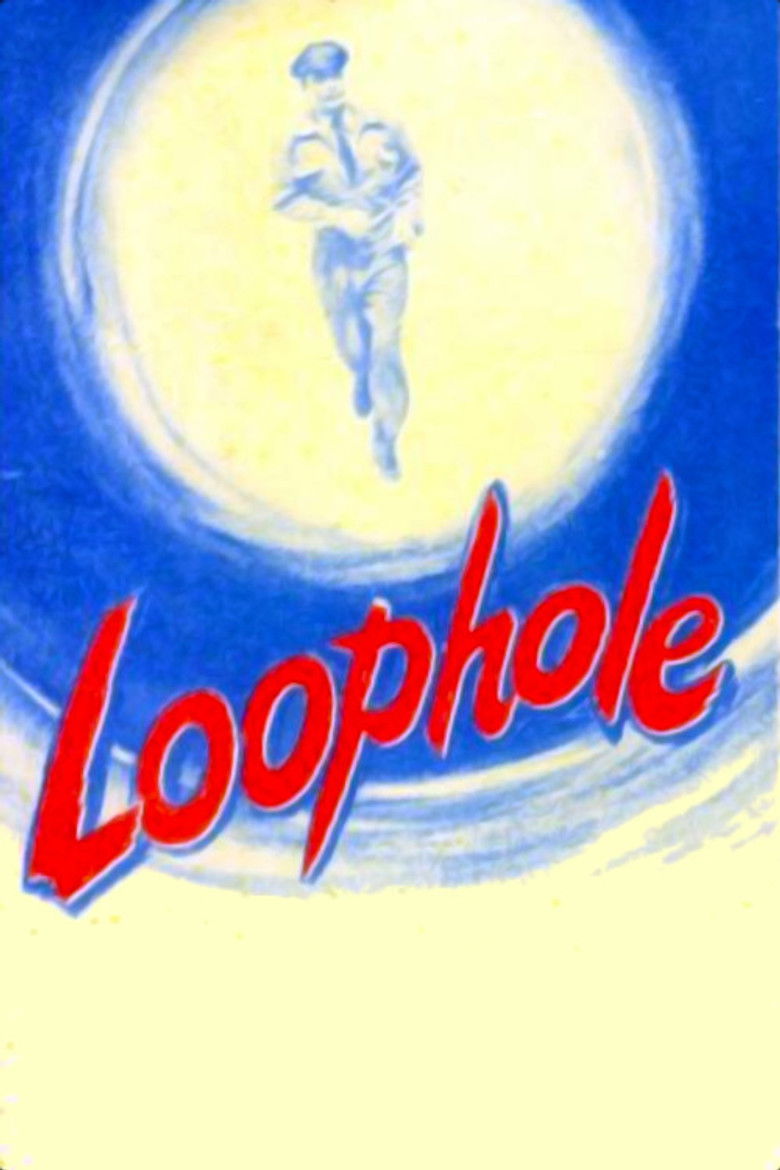
Loophole 1954
1954 Allied Artists Pictures
★★★☆☆ Notable
Film Noir · 80 minutes · Black & White

Loophole

Directed by Harold D. Schuster
Year 1954
Runtime 80 min
Studio Allied Artists Pictures
TMDB 6.9 / 10
"A man cleared of one crime finds himself hunted by a debt he never owed."

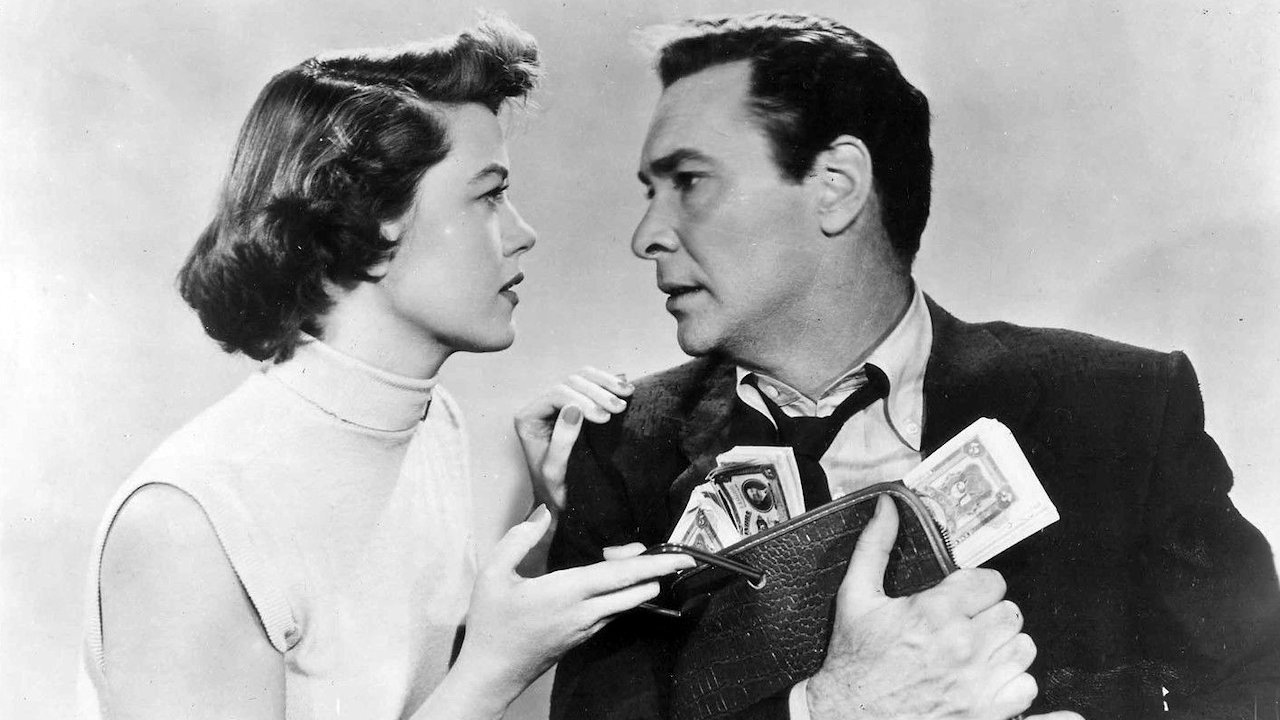
Mike Donovan is a bank teller whose quiet life unravels when a large sum of money goes missing on his watch. Though the evidence against him is circumstantial, an insurance investigator named Gus Slavin becomes convinced of his guilt and pursues him with the kind of institutional relentlessness that the law itself cannot always muster. Donovan's wife Ruthie stands by him, but their domestic stability is already showing the stress fractures that come with prolonged suspicion.

Fired and effectively blacklisted from the banking industry, Donovan takes work where he can find it while Slavin continues to shadow him. The investigation draws in a wider cast of figures – including the actual embezzler, whose identity shifts the film's moral geography – and forces Donovan into a position where proving his innocence requires becoming something closer to an investigator himself. Vera, a woman with her own entanglements, complicates the picture further, and the line between the wrongly accused and those who exploit his vulnerability grows difficult to fix.

Loophole belongs to the strand of postwar noir preoccupied less with crime itself than with the bureaucratic and social machinery that punishes the wrong man. It is a procedural of a particular kind – one in which the system's indifference is the antagonist as much as any individual villain – and it uses the modest scope of its Allied Artists production to keep the pressure claustrophobically close to its protagonist.
Classic Noir

Loophole occupies a recognizable place in the second tier of 1950s American noir: efficiently made, morally alert, and more psychologically coherent than its B-picture budget might suggest. Harold D. Schuster directs without flourish, which is appropriate – the film's argument depends on the ordinary texture of working life being disrupted by forces the protagonist cannot name or confront directly. Barry Sullivan brings a quality of controlled exhaustion to Mike Donovan that serves the material well; this is not a man broken by passion but by process, and the distinction matters. Charles McGraw, playing the insurance investigator Slavin, is characteristically blunt and physically imposing, and the film is shrewd enough to make him neither wholly corrupt nor sympathetic. What Loophole captures, with some precision, is the particular postwar anxiety about institutional power – the sense that the apparatus designed to protect the individual can, without malice, destroy him. It is a modest film, but its modesty is disciplined rather than impoverished.

– Classic Noir
3 ★★★☆☆ Notable
Credits

The Crew

DirectorHarold D. Schuster
ScreenplayWarren Douglas
CinematographyWilliam A. Sickner
MusicPaul Dunlap
Art DirectionDave Milton
ProducerLindsley Parsons
Performances

The Cast

Close Reading

The Signature Scene

Loophole – scene
The Insurance Office Confrontation Slavin Closes the Distance

Schuster and cinematographer William A. Sickner frame the scene with the investigator at a slight elevation, the desk functioning as both physical barrier and instrument of authority. The light is flat and institutional – fluorescent suggestion rather than dramatic shadow – which is its own kind of noir logic: the threat here is not concealed in darkness but exposed in the merciless clarity of an office interior. Donovan sits at an angle that keeps part of his face in soft shadow, a compositional choice that quietly signals his ambiguous status between guilt and innocence.

The scene does the film's central work in miniature. Slavin's certainty is not cruelty – it is procedure, and that is precisely what makes it so difficult to resist. Donovan has no dramatic revelation to offer, no alibi that will satisfy a man who has already decided. The exchange establishes that the film's conflict will not resolve through confrontation or violence but through the patient, grinding effort of demonstration – a structure that gives Loophole its particular, unglamorous tension.

Visual Language

The Cinematography

🎞️
William A. Sickner – Director of Photography

William A. Sickner's photography on Loophole makes deliberate use of the limitations imposed by an Allied Artists production schedule and budget. Shooting largely on modest interior sets, Sickner opts for a restrained chiaroscuro rather than the expressionist extremes associated with the genre's peak studio years – shadows are present but functional, used to mark moral ambiguity rather than manufacture atmosphere for its own sake. He favors medium shots that keep Donovan in relation to his environment, rarely isolating him in close-up in the manner that amplifies psychological distress; instead, the camera tends to place him within frames – doorways, office partitions, domestic interiors – that suggest containment. Location work, where it appears, is shot with a semi-documentary plainness that grounds the film's procedural concerns. The overall visual strategy reinforces the screenplay's central argument: that what menaces Donovan is not a shadowy criminal world but an ordinarily lit, bureaucratically furnished one, and the cinematography withholds expressionist relief accordingly.

In the Catalogue

Themes & Motifs

Availability

Where to Watch

Also in the Directory

See Also