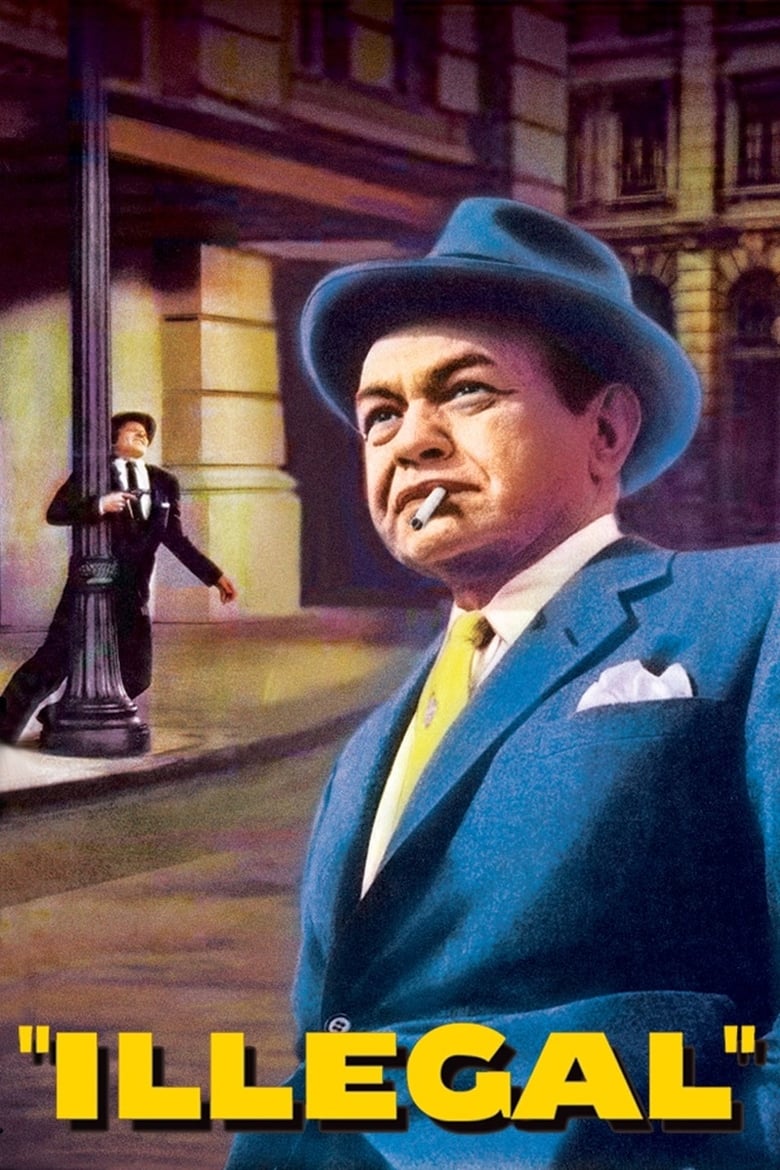
Victor Scott is a respected district attorney whose prosecutorial record has made him a symbol of law and order in the city. When a conviction he championed results in the execution of a man he later comes to believe was innocent, Scott's certainty in the system collapses. He resigns, drinks his way through the wreckage of his reputation, and surfaces on the other side of the courtroom as a defense attorney – not for the innocent, but for the criminal class he once hunted.
Scott's new employer is Frank Garland, a syndicate boss who needs a lawyer sharp enough to keep his organization insulated from prosecution. Scott proves useful, perhaps dangerously so, deploying the same legal instincts he once used against men like Garland to protect them. His former colleague Ellen Miles watches his descent with concern edged by loyalty, while Ray Borden, a younger attorney with his own ambitions, maneuvers in the spaces Scott's compromised position creates. The syndicate tightens around Scott in ways he is slow to recognize.
Illegal works within the tradition of the fallen professional – a figure noir returned to repeatedly in the postwar decade – tracing how institutional disillusionment opens the door to criminal compromise. The film is less interested in action than in the procedural mechanics of moral erosion, following Scott through courtrooms, back offices, and late-night meetings where the distance between law and crime narrows to a matter of which side of the table you occupy.
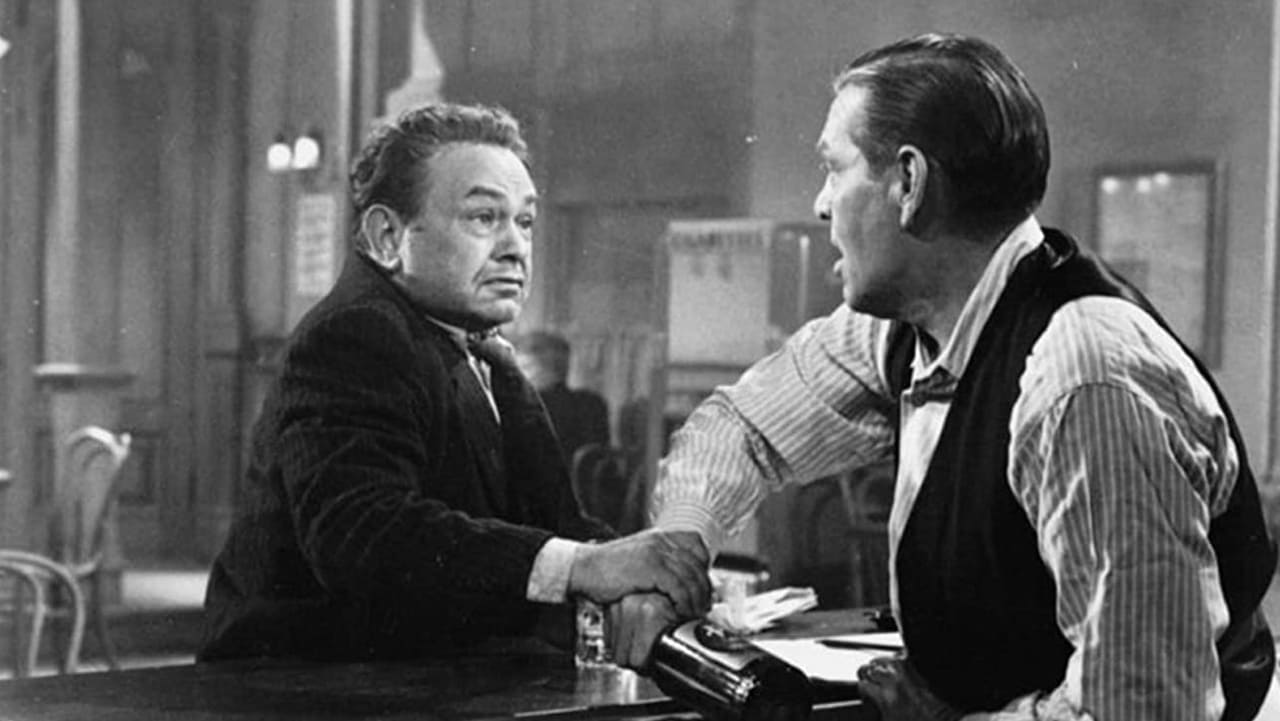
Illegal arrives in 1955 as a competent, unsentimental entry in Warner Bros.' long engagement with crime pictures, and its chief virtue is Edward G. Robinson's refusal to sentimentalize Victor Scott's disintegration. Robinson had spent decades navigating the boundary between legitimate authority and criminal power – in Little Caesar, Double Indemnity, Key Largo – and here he brings an exhausted precision to a man who knows exactly what he is becoming. Lewis Allen directs without flourish, which suits the film's procedural temperament. The screenplay, adapted from a stage play, is dialogue-heavy and occasionally stagey, but its central argument – that the legal system and organized crime are mirror institutions, equally reliant on leverage, reputation, and fear – retains genuine edge. Jayne Mansfield appears in an early supporting role that the film uses more economically than one might expect. Illegal will not displace the decade's major noirs in any serious ranking, but as a study of professional corruption and the institutional rot beneath civic order, it earns its place in the catalogue.
– Classic Noir
The camera positions Scott across a wide desk from Garland, the frame dividing the two men with deliberate symmetry – prosecutor and client, each reading the other's tells. J. Peverell Marley lights Garland's side of the room with a flatter, more diffuse source, while Scott occupies a deeper shadow despite being the ostensible legal authority in the conversation. The composition inverts the courtroom geography Scott once commanded, placing him in the chair where defendants sit.
The scene makes explicit what the film has been arguing by implication: Scott's legal expertise has not placed him above the syndicate's logic but inside it. His ability to read a room, assess risk, and construct a defense is now organizational infrastructure for Garland's operation. The irony is not lost on Scott, and Robinson plays it without melodrama – a man who understands his situation with complete clarity and has chosen it anyway, which is the film's quietly damning point.
J. Peverell Marley's work on Illegal is functional rather than expressive, which suits a film more interested in dialogue and procedure than in visual atmosphere. Marley, a veteran cinematographer whose career stretched back to the silent era, shoots primarily in studio interiors with tight, controlled lighting setups that emphasize the institutional quality of the spaces – offices, courtrooms, meeting rooms – where Scott's moral bargains are struck. He avoids the deep-focus expressionism and aggressive shadow work associated with canonical noir cinematography, favoring instead a flatter grayscale that registers faces and rooms with documentary directness. Where shadow does appear, it tends to fall on doorways and thresholds, marking moments of decision rather than states of being. This restraint is not a limitation so much as a stylistic argument: Scott's world is not mysterious or dreamlike, but fully visible, which makes his choices harder to excuse. The look of the film is civic and mundane, which is precisely the point.
TCM is the most reliable broadcaster for Warner Bros. titles of this period and presents Illegal in its correct aspect ratio without interruption.
TubiFree (Ad-Supported)Tubi has carried Illegal as part of its classic crime catalog – verify availability in your region, as titles rotate.
Archive.orgFreeA public domain print may be available via Archive.org; transfer quality varies and should be treated as a secondary option.