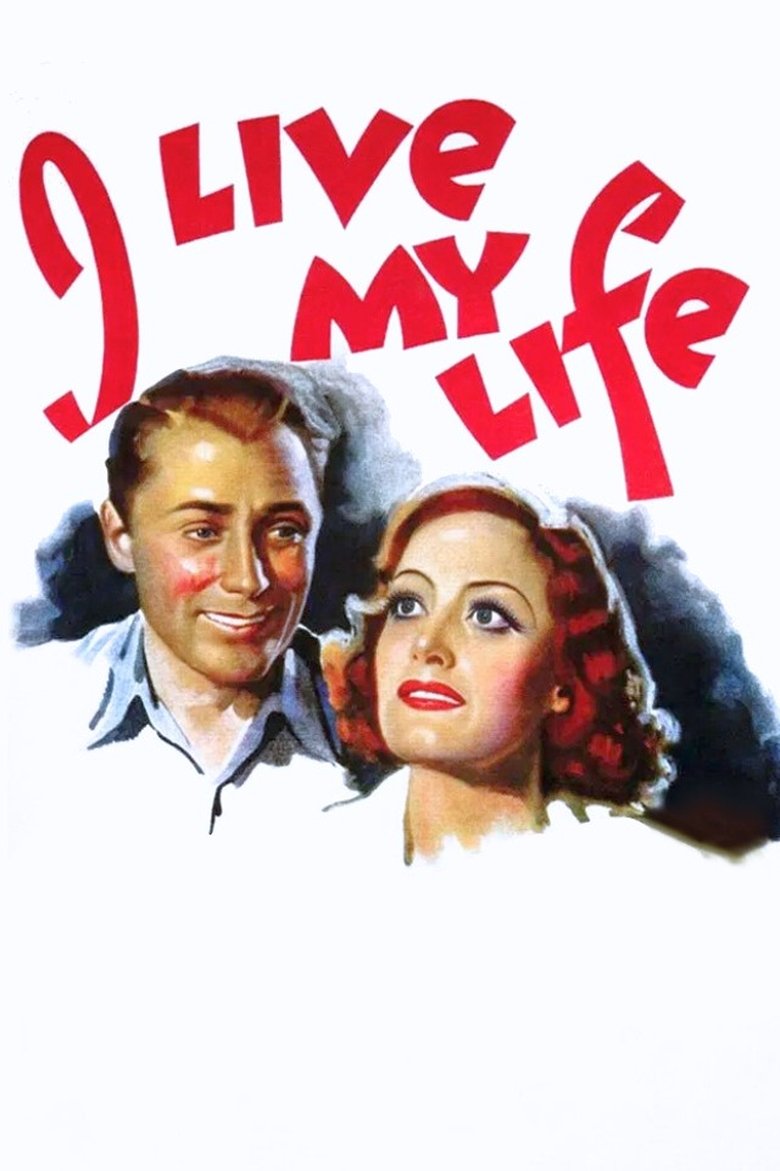
Kay Bentley is a wealthy, restless socialite trapped in a hollow marriage to G.P. Bentley, an older man whose fortune she inhabits but whose company she cannot endure. Her days are organized around dissatisfaction – parties, suitors, the performed ease of the very rich – until she encounters Terence O'Neill, an Irish engineer of modest means and uncompromised ideals. The contrast between his world and hers is immediate, and the attraction is equally immediate.
As Kay pursues O'Neill, the film complicates what first appears to be a simple romantic escape. O'Neill is not easily won and not easily managed; he holds Kay to a standard she has never been asked to meet. Meanwhile, G.P. Bentley – played by Frank Morgan with a pathos that cuts against easy villainy – is neither monster nor fool, only a man who bought what could not be bought. Betty Collins, Kay's sharper and more clear-eyed companion, watches the situation with the wariness of someone who understands what money costs.
I operates at the softer edge of noir – no corpse in the first reel, no femme fatale in the classical sense – but it shares the genre's core suspicion that desire, class, and self-deception form a combustible combination. Crawford's performance carries a genuine moral weight, and the film's central question – whether Kay is capable of the honesty that O'Neill demands – belongs entirely to the noir tradition of characters undone or redeemed by their own natures.
Released in 1935, I sits in the transitional territory between the pre-Code frankness that preceded it and the more regulated productions that would follow. W.S. Van Dyke directs with the efficient professionalism that defined his MGM work, keeping sentiment under pressure without entirely suppressing it. What distinguishes the film is its seriousness about class – not as backdrop but as moral architecture. Kay Bentley's wealth is presented not as glamour but as a kind of ethical corrosion, a condition that has trained her to avoid consequence. Crawford brings to the role a coiled intelligence that resists the softening the studio might otherwise have applied. Frank Morgan's Bentley deserves particular attention: the character could have been a cipher, but Morgan renders him with a dignity that forces the film's moral arithmetic to become genuinely complicated. Dimitri Tiomkin's score remains restrained, serving the drama rather than announcing it. The film does not fully commit to darkness – it is MGM, after all – but it looks at darkness steadily enough to earn a place in any serious survey of the period.
– Classic Noir
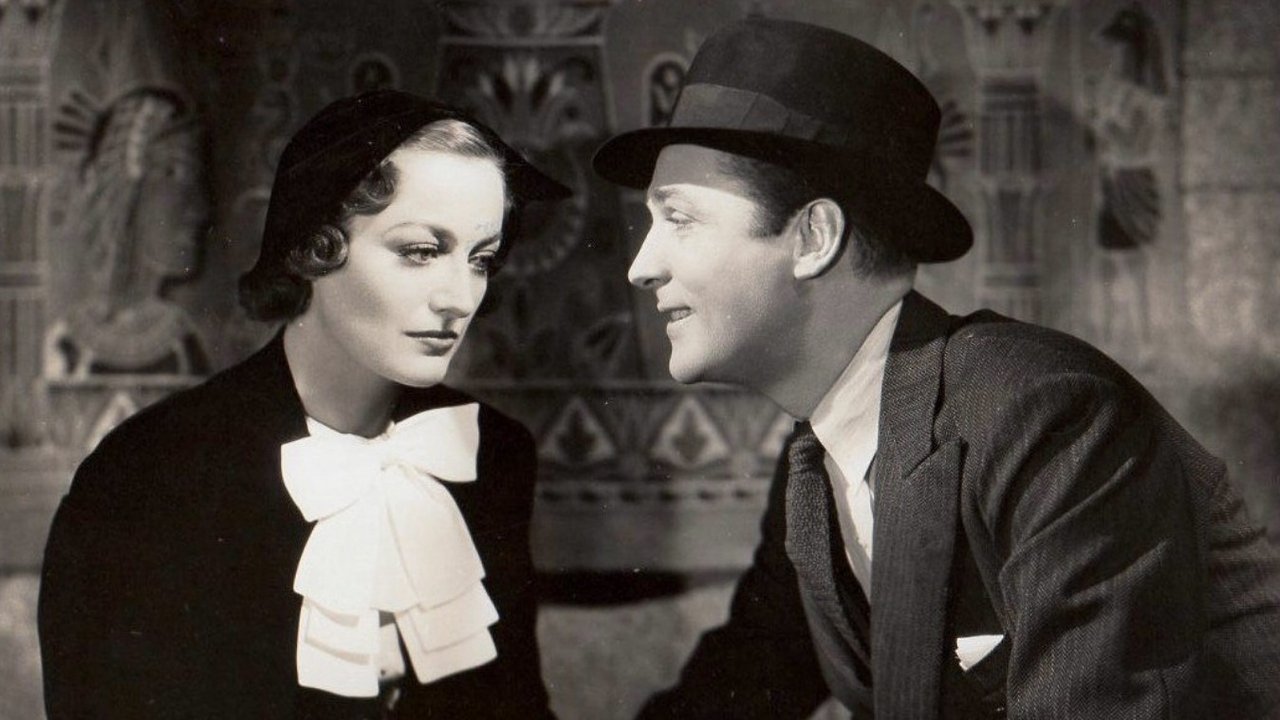
Van Dyke and cinematographer George J. Folsey frame the scene with a calculated plainness that distinguishes it from the film's more decorative interiors. The camera holds in a medium two-shot as O'Neill faces Kay across a room stripped of the ornamental clutter that has surrounded her throughout. Light falls from a single source to one side, leaving half of Crawford's face in shadow – not the theatrical shadow of expressionist noir, but a quieter division, as though the frame itself is withholding judgment.
The scene's function is to strip Kay of the social armor she has worn since the first reel. O'Neill does not argue or plead; he simply refuses to accept the version of herself she is offering. What the scene reveals is the film's central argument: that wealth, in this world, is primarily a mechanism for avoiding accountability, and that the only thing O'Neill can give Kay – or withhold from her – is the experience of being seen accurately. Whether she can survive that experience is what the film has been building toward.
George J. Folsey shoots I with the controlled elegance expected of MGM studio production, but he finds room within that house style for choices that serve the film's moral register. Working entirely on studio stages, Folsey constructs environments that signal class through light density – the Bentley interiors are bright and shadowless in a way that suggests exposure rather than comfort, wealth as a condition of being watched. Against these overlit spaces, the moments of genuine privacy or honesty are marked by a reduction of light and a tighter focal depth that draws the eye inward. Folsey avoids wide-angle distortion, keeping his lens choices in a range that flatters but does not idealize the principals, which suits a film about the gap between appearance and interior reality. Shadow work is selective rather than atmospheric, deployed at moments of decision rather than throughout – a technique that makes those darker frames register with proportionally greater force.
TCM remains the most reliable broadcaster for MGM titles of this era and periodically streams the film through the Max platform for subscribers.
Archive.orgFreePublic domain or unofficial uploads may be available; quality varies and availability should be verified before relying on this source.
KanopyFree via libraryKanopy's classic Hollywood holdings occasionally include MGM titles of this period; availability depends on your lending institution.