Films People Pull a Fast One Night Beat Reading Room On TV Shop
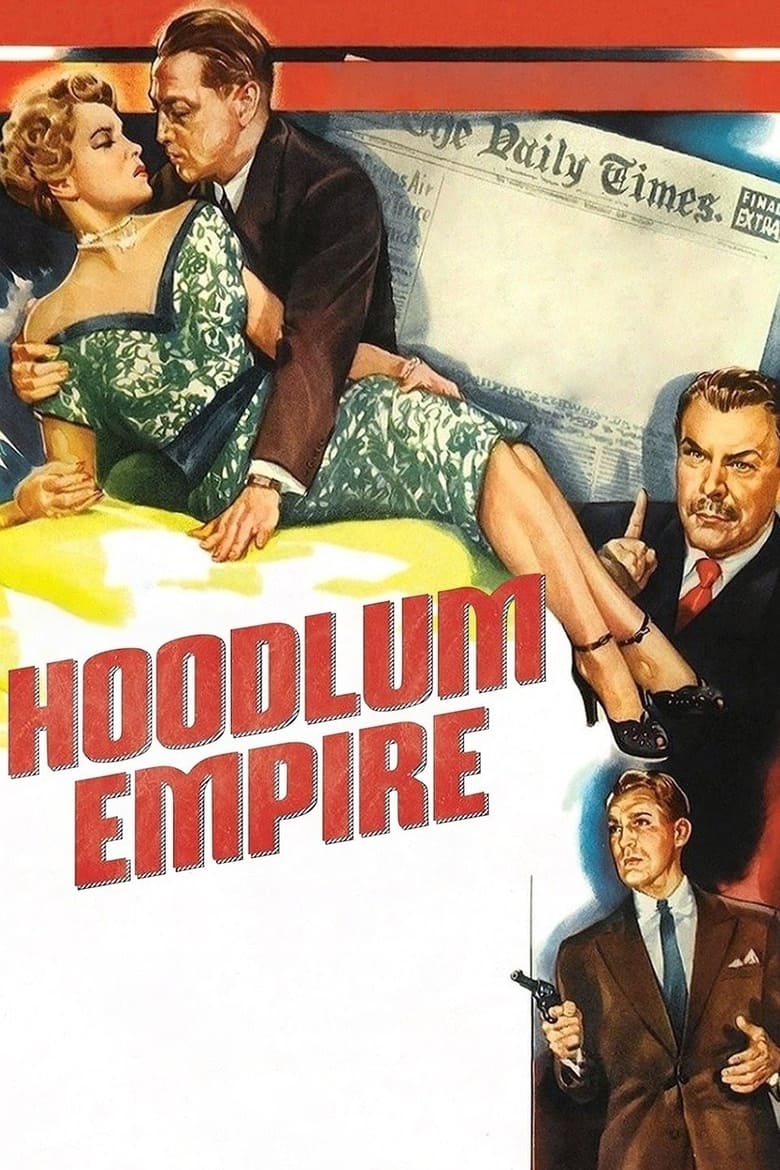
Hoodlum Empire 1952
1952 Republic Pictures
★★★☆☆ Notable
Film Noir · 98 minutes · Black & White

Hoodlum Empire

Directed by Joseph Kane
Year 1952
Runtime 98 min
Studio Republic Pictures
TMDB 6.5 / 10
"When the Senate turns its lights on organized crime, the shadows only deepen."

Senator William J. Stephens chairs a congressional investigation into a sprawling organized crime syndicate, targeting in particular the operations of Nick Mancani, a calculating mob figure who has spent years embedding himself in legitimate business. The inquiry pulls into its orbit Charley Pignatalli, a returning war veteran now caught between the criminal world he once served and the possibility of a cleaner life. Connie Williams, a woman with her own entanglements in the rackets, moves at the edges of both men's worlds, her loyalties never fully declared.

As the hearings progress, pressure mounts on those who might testify. Joe Gray, married to the quietly resilient Marte Dufour Gray, finds himself squeezed between loyalty to the syndicate and the weight of what he knows. Senator Tower, whose sympathies are less than transparent, complicates Stephens's efforts from within the committee itself. A local reverend, Simon Andrews, represents the moral community the syndicate has long since bought or bypassed, his presence a reminder of what civic life looks like when crime withdraws from it.

Hoodlum Empire draws its architecture from the televised Kefauver hearings of 1950–51, transplanting that specific national anxiety – organized crime as a systemic rot rather than a collection of individual villains – into the procedural framework of noir. The film is less interested in violence than in the bureaucratic texture of corruption, in the way institutions protect and expose in equal measure, and in the cost extracted from ordinary people caught inside machinery they did not build.
Classic Noir

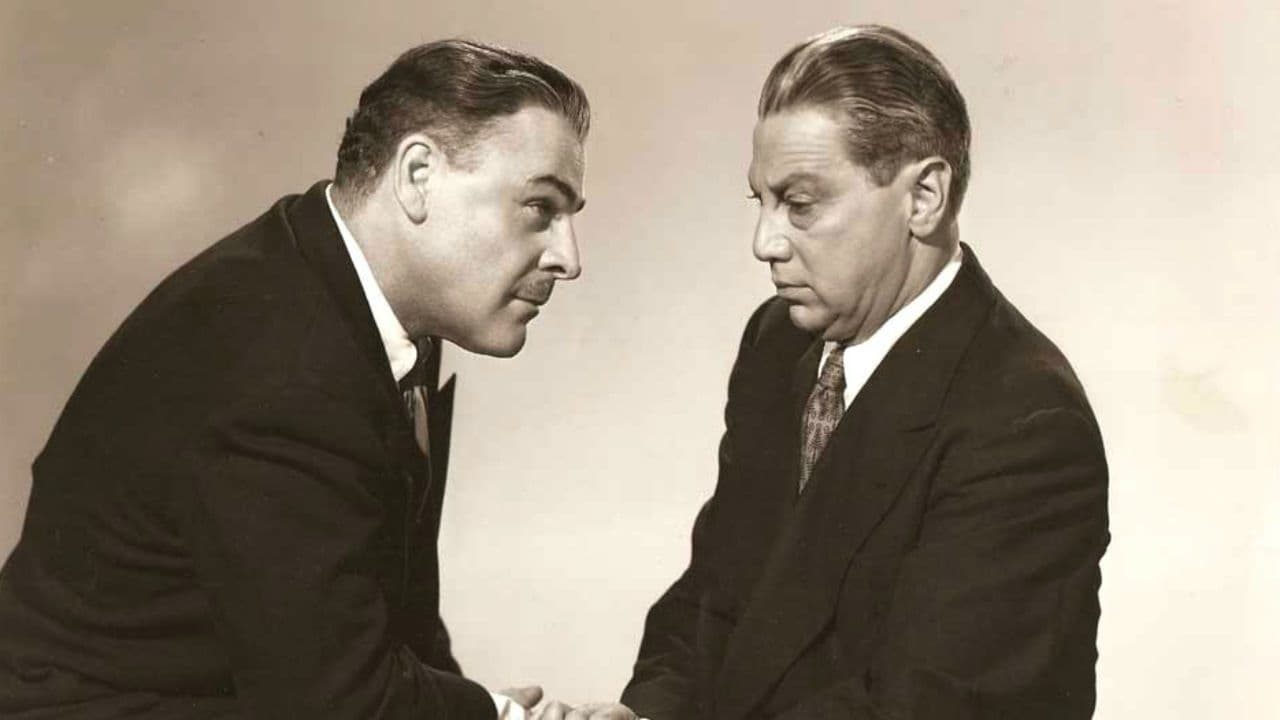
Hoodlum Empire arrives in the immediate wake of the Kefauver Committee hearings, and Republic Pictures understood the commercial weight of that timing. Joseph Kane, a director more associated with Westerns than with noir, brings a functional economy to the material rather than any signature visual ambition, which is perhaps why the film endures as document more than as art. What it captures is the procedural unease of an era discovering that organized crime was not a foreign import or a marginal menace but a structural feature of American civic life. Luther Adler's Mancani is the film's most persuasive element – composed, reasonable in manner, and utterly without scruple, he embodies the syndicate's ability to present a respectable face to the world. Brian Donlevy's senator functions as the institutional counterweight, but it is in the film's secondary characters – the veteran, the compromised spouse, the compliant clergyman – that the real social argument emerges. Hoodlum Empire is not among the more formally distinguished noirs of its decade, but as a period record of how America tried to narrate its own corruption to itself, it remains genuinely instructive.

– Classic Noir
3 ★★★☆☆ Notable
Credits

The Crew

DirectorJoseph Kane
ScreenplayRobert Considine
CinematographyReggie Lanning
MusicNathan Scott
Performances

The Cast

Close Reading

The Signature Scene

Hoodlum Empire – scene
The Committee Room Confrontation Mancani at the Microphone

Reggie Lanning frames Mancani in medium close-up, the committee table stretching behind him as a flat horizontal barrier, senators reduced to a row of dark shapes at the room's edge. The key light falls from a steep angle, cutting a hard line across Adler's face and leaving his eyes partly in shadow – an unusual choice for a testimony scene, which conventionally bathes witnesses in flat institutional light. The result is that the room's supposed transparency becomes visually suspect; this is not a space that reveals, but one that performs revelation.

The scene distills the film's central argument: formal accountability and actual power are not the same thing. Mancani answers every question with practiced calm, and the camera's restrained distance communicates that the hearings are a theater he has already mapped. The senator's authority is procedural; Mancani's is structural. What the frame withholds – any sign of fear, any flicker of exposure – is precisely the point.

Visual Language

The Cinematography

🎞️
Reggie Lanning – Director of Photography

Reggie Lanning, Republic's dependable in-house cinematographer, works within the studio's characteristic constraints – tight budgets, compressed schedules, standing sets – and turns those limits into a visual grammar suited to the material. His work on Hoodlum Empire favors mid-range focal lengths that keep characters legible within their institutional environments rather than isolating them expressionistically. Shadow work is selective rather than pervasive: darkness is reserved for moments of private negotiation, while the hearing room and office interiors are shot in a cooler, flatter light that carries its own form of menace – the menace of process, of record, of public accountability that somehow changes nothing. Lanning does not reach for the high-contrast baroque of, say, John Alton, but his restraint is purposeful. The film's argument is that corruption operates in plain sight, and the cinematography refuses to aestheticize it into something that belongs only to back alleys and wet pavements. The visual language insists on daylight complicity.

In the Catalogue

Themes & Motifs

Availability

Where to Watch

Also in the Directory

See Also