Films People Pull a Fast One Night Beat Reading Room On TV Shop
Fugitive Lady 1934
1934 Columbia Pictures
★★★☆☆ Notable
Film Noir · 66 minutes · Black & White

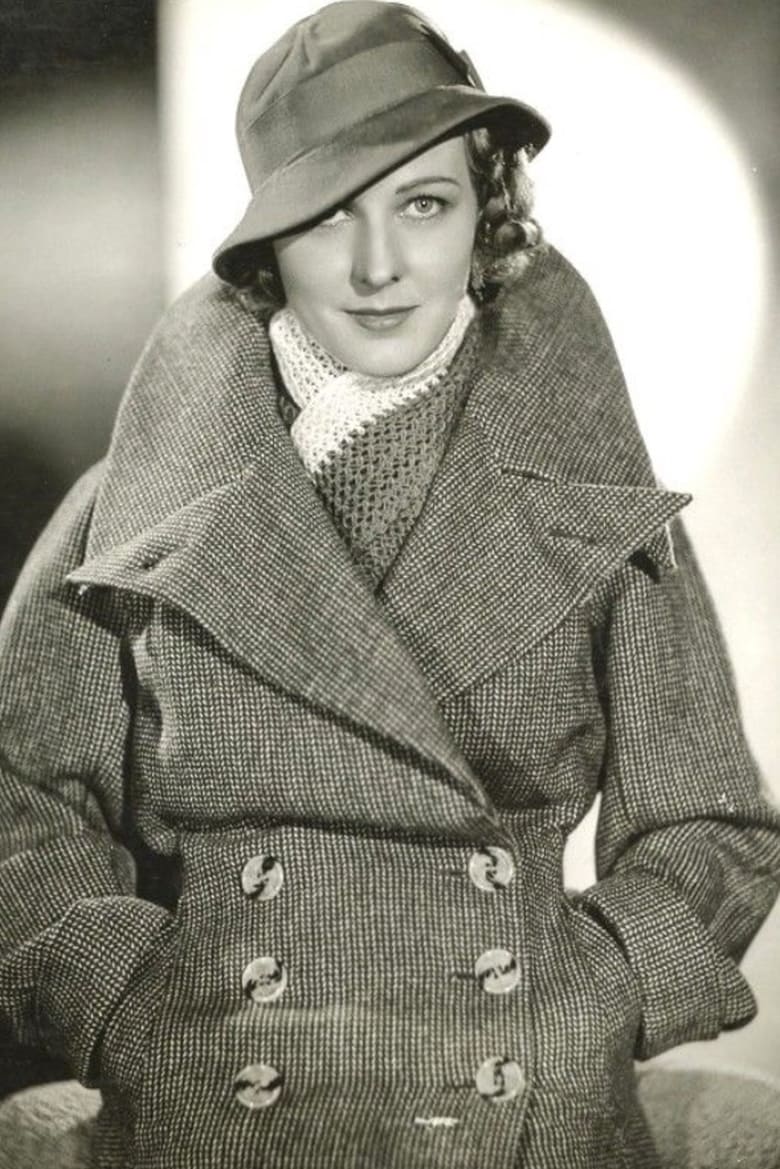
Fugitive Lady

Directed by Albert S. Rogell
Year 1934
Runtime 66 min
Studio Columbia Pictures
TMDB 8.0 / 10
"A woman running from one crime finds herself at the center of another."

Ann Duncan, a young American woman traveling abroad, becomes entangled with a jewel theft ring when she unknowingly carries stolen gems through customs. Before she can extract herself from the situation, a murder occurs and Ann finds herself the prime suspect – a fugitive from French authorities with no alibi and no allies she can fully trust. She flees to New York, where her troubles follow her across the Atlantic.

In New York, Ann crosses paths with Donald Brooks, a lawyer whose own family connections complicate his capacity for impartiality. His wife Sylvia, a sharp and self-interested woman, has ties to the criminal network that originally ensnared Ann, and the investigator Steve Rogers closes in from one side while the actual killers maneuver from another. Jack Howard, a figure from Ann's past, reappears with motives that shift with each scene, keeping allegiances unstable and the threat of exposure constant.

Fugitive Lady operates within the early sound era's template of the wrongly accused woman – a figure whose vulnerability is structural rather than merely personal. The film draws on the procedural conventions of the crime picture while leaning into the moral ambiguity that would become a defining feature of mature noir: guilt and innocence are less fixed categories than positions in a social arrangement that punishes the exposed.
Classic Noir

Fugitive Lady arrives in 1934 as Columbia Pictures was finding commercial footing with mid-budget crime programmers, and the film is best understood in that industrial context – efficient, professionally assembled, and more interested in plot mechanics than psychological depth. Albert S. Rogell keeps the pace tight within 66 minutes, and Florence Rice carries the central role with a controlled anxiety that avoids melodramatic excess. The film's interest for genre historians lies partly in its transitional position: it predates the full development of noir's visual grammar and moral fatalism, yet its central situation – a woman falsely implicated in a crime she did not commit, moving through a world where institutions offer no reliable protection – anticipates the genre's core anxieties. William Demarest's investigator provides procedural weight without tipping into caricature. The film does not press its darker implications as far as it might, settling for resolution over ambiguity, but as an early example of the wrongly-accused woman picture it documents the genre in formation.

– Classic Noir
3 ★★★☆☆ Notable
Credits

The Crew

DirectorAlbert S. Rogell
ScreenplayHerbert Asbury
CinematographyAllen G. Siegler
EditingJohn Rawlins
CostumesRobert Kalloch
ProducerSid Rogell
Performances

The Cast

Close Reading

The Signature Scene

Fugitive Lady – scene
The Hotel Confrontation Truth Extracted Under Pressure

The camera holds at a medium distance as Ann faces Howard in a cramped hotel room, the single practical lamp casting one side of each figure into near-darkness. Rogell and cinematographer Allen G. Siegler keep the frame spare – a bed, a window with drawn curtains, the door conspicuously in the background – so that every gesture reads against empty space. The light falls on Rice's face at an angle that emphasizes her alertness rather than her distress, a compositional choice that preserves the character's agency even in a scene structured around threat.

The scene concentrates the film's central argument about exposure and concealment. Howard's position in the frame – between Ann and the door – makes the spatial geometry of entrapment explicit without resorting to expressionist distortion. What the sequence finally establishes is that Ann's danger comes not from any single antagonist but from a network of self-interested parties, each of whom possesses a fragment of the truth she needs to survive. The room becomes a figure for that condition: enclosed, inadequately lit, with no exit that does not pass through someone else's calculation.

Visual Language

The Cinematography

🎞️
Allen G. Siegler – Director of Photography

Allen G. Siegler's work on Fugitive Lady reflects the practical cinematography of the early sound era, when studio lighting rigs were standardized and speed of production placed constraints on formal experimentation. Siegler works within those limits with quiet competence, using three-point setups that keep the frame readable while introducing enough shadow in the margins to sustain unease. Interior scenes favor a slightly compressed depth of field that keeps the background suggestive rather than legible – a technique suited to a narrative in which background information is precisely what the protagonist lacks. The lighting in scenes involving Sylvia Brooks favors harder key light, an implicit moral notation that the film never quite states aloud. There is no location photography to speak of; the film is a studio construction, and Siegler uses that artificiality to maintain a controlled, slightly airless atmosphere. The visual language does not yet carry the full expressive weight of classical noir cinematography, but the moral logic of shadow work is already present in embryonic form.

In the Catalogue

Themes & Motifs

Availability

Where to Watch

Also in the Directory

See Also