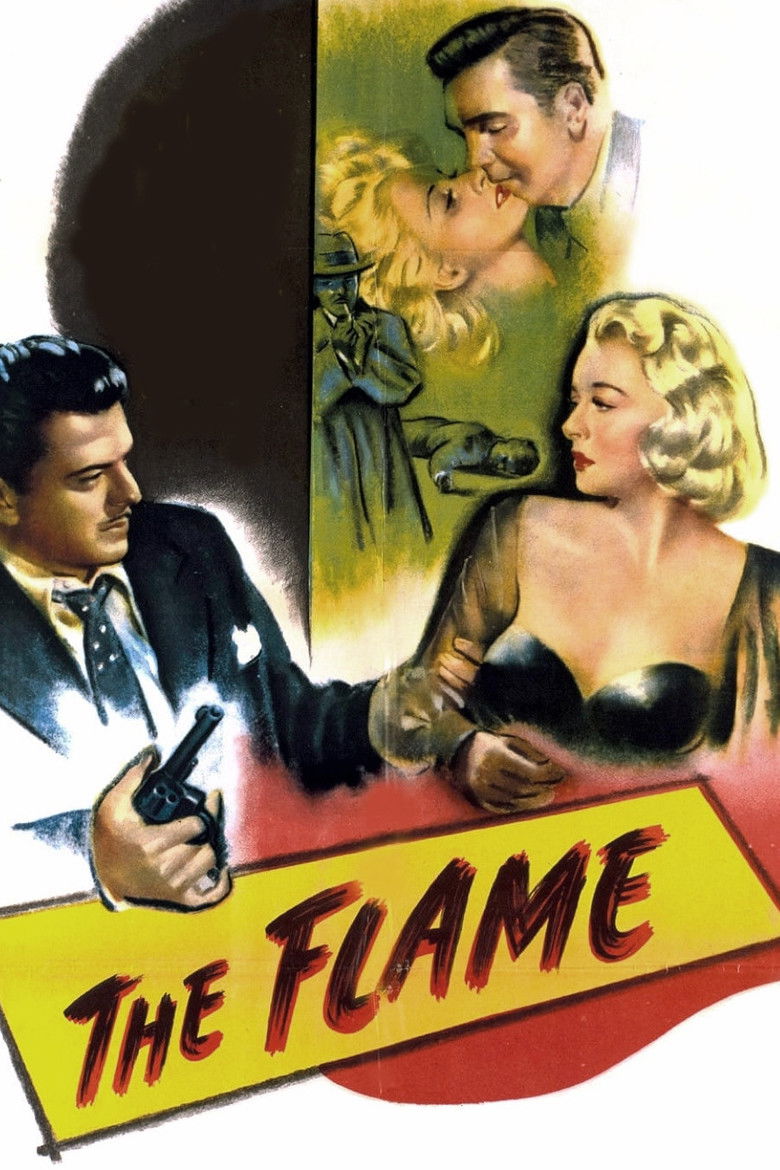
In a mid-sized American city, Carlotta Duval – a woman of uncertain origins and considerable ambition – maneuvers her way into the life of George MacAllister, a wealthy man whose fortune rests on a tangle of business dealings and family loyalty. George, steady and trusting, takes Carlotta at her word. His brother Barry, a lawyer with sharper instincts and a quieter conscience, is less convinced. Hovering at the edges of respectable society, the rough-edged Ernie Hicks carries his own claim on Carlotta's past.
As Carlotta's motives clarify, the MacAllister household fractures along lines of desire and suspicion. Barry's resistance to Carlotta shifts from professional caution to something more personal, while Helen Anderson – a woman with legitimate claim on Barry's attention – watches the family's moral center erode. Dr. Mitchell and Aunt Margaret represent the older order: observant, helpless, committed to proprieties that the film systematically dismantles. Ernie Hicks, blunt where others are evasive, becomes the instrument through which concealed arrangements are forced into the open.
Flame operates within the triangle-and-betrayal structure that Republic Pictures deployed throughout the mid-1940s, but its particular interest lies in the economics of marriage – the way financial security and emotional need become indistinguishable, and the way a household can become a closed system with its own logic of destruction. The film asks whether guilt is a matter of action or intention, and declines to answer cleanly.
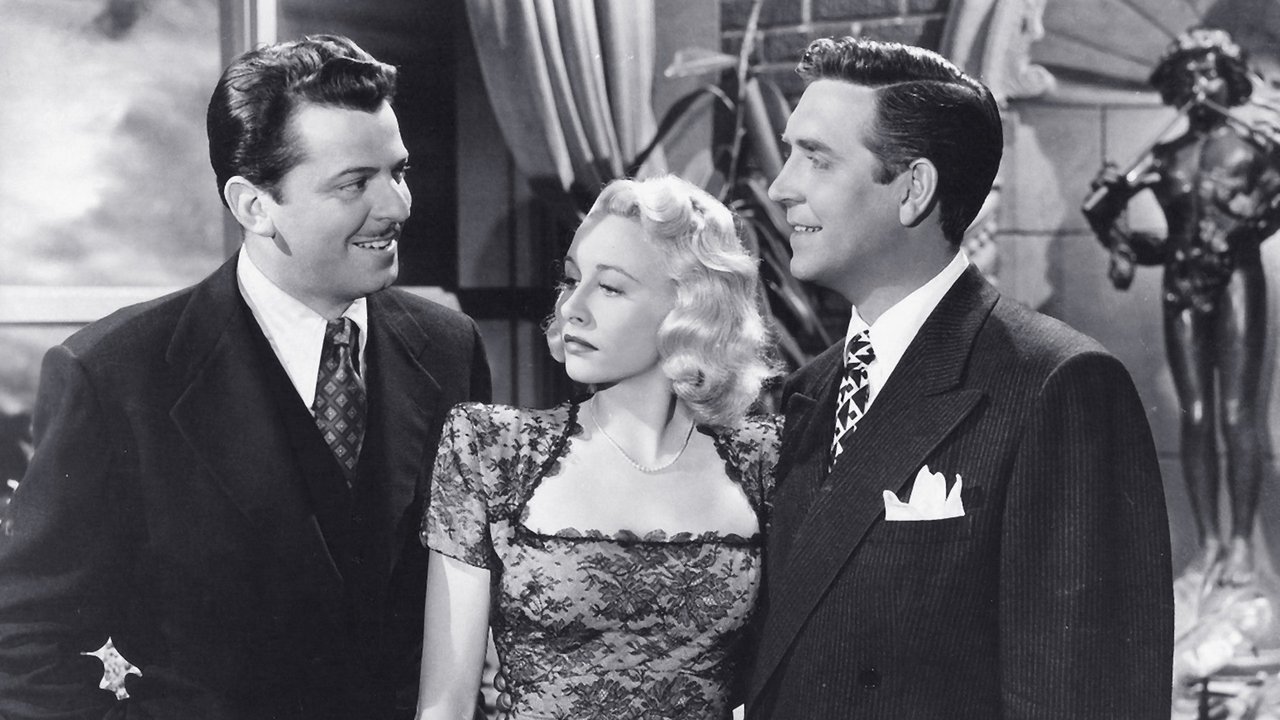
Flame is a Republic Pictures production that sits comfortably in the second tier of 1940s noir – competent, occasionally incisive, aware of its own genre obligations without transcending them. John H. Auer, a reliable studio craftsman, keeps the film's moral geometry legible without overexplaining it. Vera Ralston, whose Republic career was inseparable from her relationship with studio chief Herbert Yates, brings to Carlotta a quality of guarded opacity that suits the role even if her performance lacks the control a Barbara Stanwyck or Joan Bennett would have imposed. Broderick Crawford is more interesting: Ernie Hicks is not a villain in the Gothic sense but a man whose directness becomes destructive in a world organized around indirection. What Flame reveals about its era is the postwar reconfiguration of domestic space as a site of economic contest – marriage not as romantic resolution but as a legal and financial transaction with consequences that outlast sentiment. Hattie McDaniel, in a reduced role, is present but underused, a disproportion that is its own historical document.
– Classic Noir
Reggie Lanning frames the scene in a room defined by its furniture – heavy desk, bracketed bookshelves, a single practical lamp throwing lateral light across George's face while Barry occupies the darker half of the frame. The camera does not move dramatically; it holds a medium two-shot that refuses to privilege either brother, then cuts to close-ups timed to silences rather than speeches. The shadow cast by the desk lamp bisects the space between the men in a way that feels less decorative than diagnostic.
The scene's argument is about knowledge and its costs. George possesses legal title to what he believes is his life; Barry possesses the information that would revoke that belief. Lanning's flat division of the frame – illuminated versus shadowed – makes visible a moral distinction the brothers cannot yet articulate. The film's central thesis, that domestic trust is a form of financial instrument and therefore vulnerable to the same frauds, is nowhere stated more plainly than in this quiet room where no one raises his voice.
Reggie Lanning, Republic's dependable house cinematographer, works Flame in the mid-budget register where studio efficiency and atmospheric ambition produce an uneasy compromise. His lighting favors the high-contrast interior setups standard to the period – hard sources raking across faces, fill light suppressed enough to suggest moral shadow without committing to expressionist excess. Lanning does not indulge in the canted angles or deep-focus compositions that mark the era's prestige noir; his grammar is declarative rather than rhetorical. What this costs in visual intensity it partly recovers in consistency of tone: the film's domestic spaces feel genuinely enclosed, the exteriors functional rather than liberated. The choice to keep Carlotta frequently front-lit – unusually clear for a figure the narrative codes as duplicitous – works as counterintuitive characterization, suggesting that her danger lies not in concealment but in plain sight. Lanning's restraint, read against the moral logic of the screenplay, becomes its own form of argument.
Tubi has carried a number of Republic Pictures titles from this period and is the most likely free streaming source; availability should be confirmed before visiting.
Archive.orgFreeRepublic Pictures titles from the 1940s with lapsed or ambiguous copyright status sometimes appear here; search by full title for the most current availability.
Amazon Prime VideoSubscriptionClassic Republic and B-noir titles appear periodically in Prime's rotating catalog; availability varies by region and should be verified.