Films People Pull a Fast One Night Beat Reading Room On TV Shop
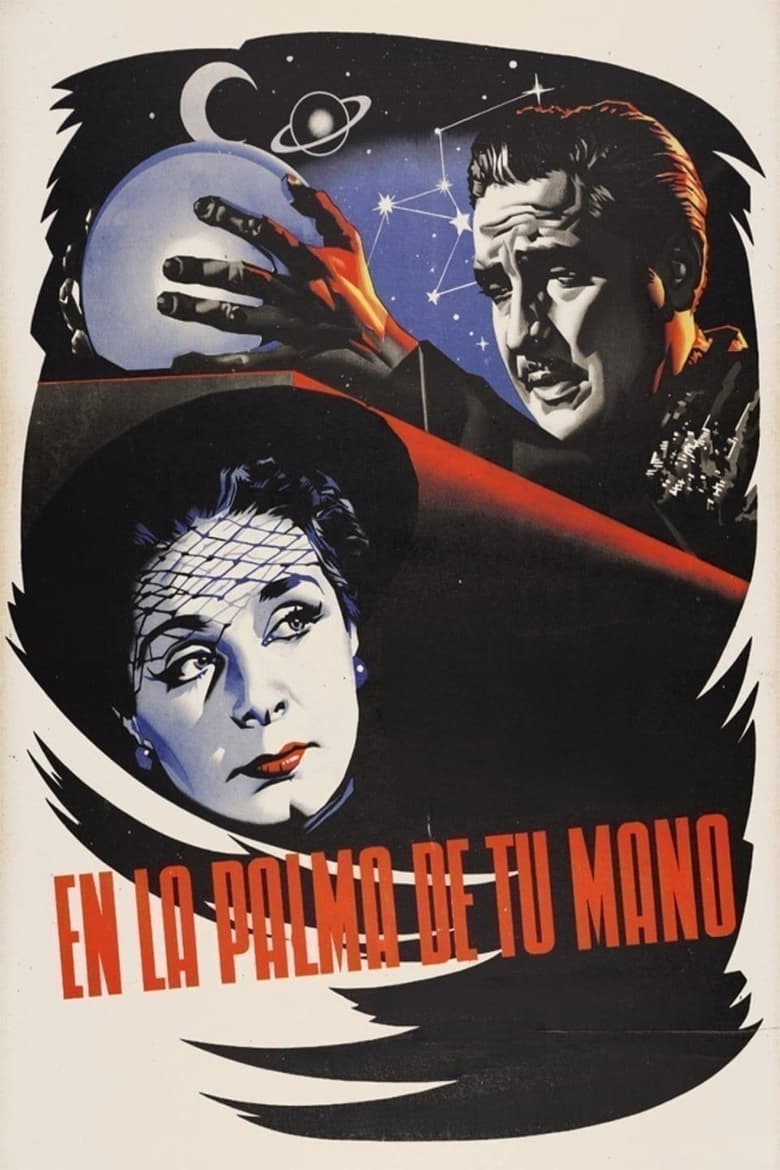
En la palma de tu mano 1951
1951 Producciones Mier y Brooks
★★★★☆ Recommended
Film Noir · 112 minutes · Black & White

En la palma de tu mano

Directed by Roberto Gavaldón
Year 1951
Runtime 112 min
Studio Producciones Mier y Brooks
TMDB 6.0 / 10
"A man who reads fortunes has already written his own."

In Mexico City, Professor Jaime Karin is a charlatan who operates as a clairvoyant, trading on the credulity of wealthy clients and the particular desperation that money cannot cure. His practice brings him into contact with Ada Cisneros de Romano, a beautiful and restless woman married to the prosperous Leon Romano. Karin is sharp enough to read people rather than stars, and Ada is sharp enough to recognize the difference – which makes their attraction something more corrosive than simple desire.

Ada and Karin move toward each other with the careful deliberation of people who understand consequences and choose to ignore them. Leon Romano stands between them not merely as a husband but as an obstacle whose removal becomes, by degrees, a subject of unspoken negotiation. Around this triangle, a supporting world accumulates: Sra. Arnold, Clara Stein, and the domestic figure of Carmelita, each a pressure point on the sealed world Karin believes he controls. The Inspector de policía watches from a cautious distance, assembling what Karin assumes cannot be assembled.

En la palma de tu mano belongs to a strand of Mexican noir that imports the genre's fatalism and moral geometry while grounding them in a specifically Mexican social landscape – the prosperous bourgeoisie, the performance of professional authority, the distance between the face a person shows and the one they carry home. The film uses the con man's trade as its controlling metaphor: a protagonist whose entire livelihood depends on convincing others he sees clearly, while remaining precisely blind to where his own path leads.
Classic Noir

Roberto Gavaldón was the most formally rigorous director working in Mexican cinema during the 1940s and 1950s, and En la palma de tu mano is among his most controlled achievements in the noir register. The film takes a premise familiar from American crime pictures – the scheming couple, the inconvenient husband, the investigator closing in – and invests it with a texture that is distinctly Mexican without being folkloric. Arturo de Córdova's Karin is not a sympathetic figure corrupted; he arrives already compromised, which gives the film a harder moral center than most of its Hollywood contemporaries. Leticia Palma brings a comparable coldness to Ada, refusing the femme fatale's usual theatrical excess in favor of something quieter and more persuasive. Gavaldón and cinematographer Alex Phillips construct a visual world in which interiors feel like traps before any trap has been set. The film's concern with performance – Karin performs omniscience, Ada performs fidelity, the Inspector performs ignorance – gives its inevitable collision a quality less of tragedy than of accounting.

– Classic Noir
4 ★★★★☆ Recommended
Credits

The Crew

DirectorRoberto Gavaldón
ScreenplayLuis Spota
CinematographyAlex Phillips
MusicRaúl Lavista
EditingCharles L. Kimball
ProducerÓscar J. Brooks
Performances

The Cast

Close Reading

The Signature Scene

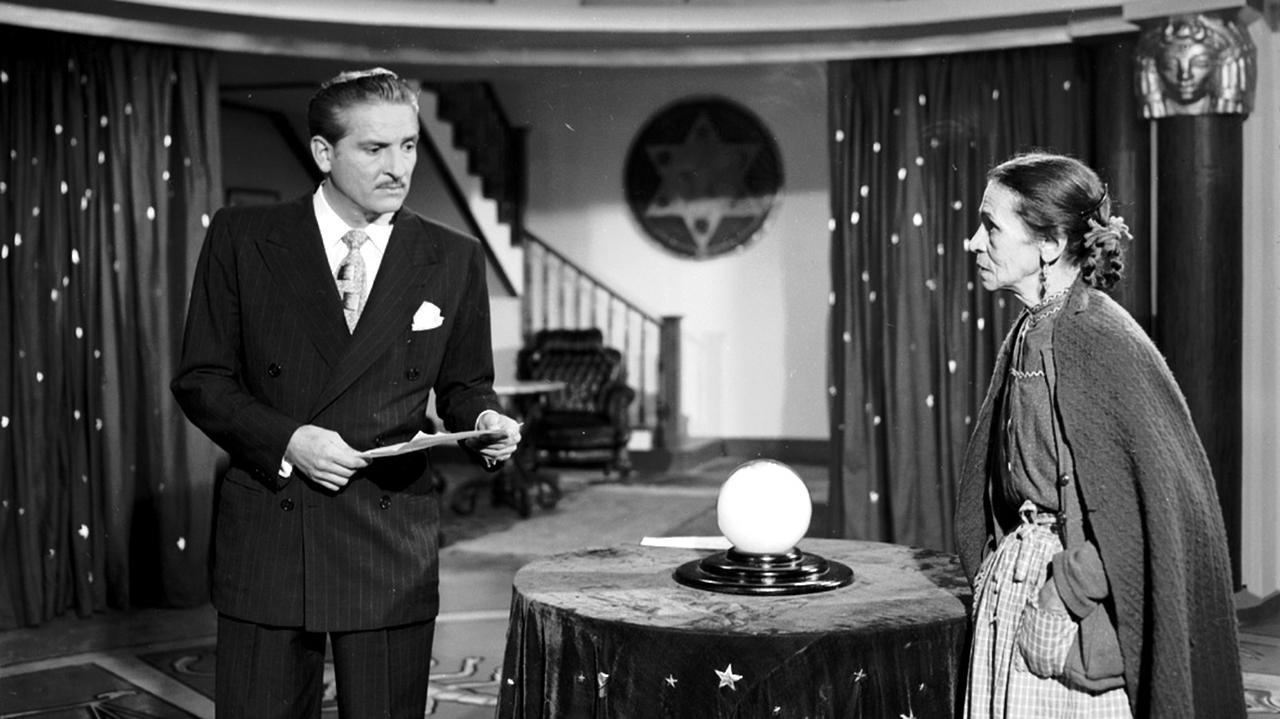
En la palma de tu mano – scene
The Consultation Room Light Falling on Hands

Phillips frames Karin behind his consultation table with the light source placed low and to one side, so that shadows climb the wall behind him and his face sits half in darkness while his hands – the instrument of his fraud – remain fully illuminated. The camera holds at a medium distance, refusing the close-up that would invite identification, while Ada sits opposite with her face turned slightly away from the key light. The composition places them in the same frame but in different moral temperatures, the geometry of the table between them as formal as a contract.

The scene establishes the film's central argument before a word of consequence has been spoken: Karin sees what he wants to see, and Ada shows only what serves her purpose. The light that falls on his hands is the light of exposure rather than revelation. What both characters mistake for intimacy is, the frame suggests, merely a shared willingness to deceive – including themselves.

Visual Language

The Cinematography

🎞️
Alex Phillips – Director of Photography

Alex Phillips, a Canadian-born cinematographer who became one of the foundational figures of Mexican studio cinema, works in En la palma de tu mano with a restrained but exacting chiaroscuro. The film is shot predominantly in studio interiors – the controlled environment allowing Phillips to construct lighting setups of precise intentionality, placing hard sources at oblique angles to generate shadows that seem to precede the characters into each room. He avoids wide-angle distortion in favor of moderate lenses that flatten space slightly and compress figure to background, reinforcing the film's atmosphere of enclosure. His shadow work is not decorative; it functions as moral cartography, marking the boundaries of what characters choose not to see. When the film moves to exterior locations, Phillips does not relax the visual logic – the natural light is treated with the same selective hardness as the studio work, so that the city outside never offers the noir escape that open space sometimes provides. The result is a visual language in which there is no neutral ground.

In the Catalogue

Themes & Motifs

Availability

Where to Watch

Also in the Directory

See Also