In Mexico City, Julieta works as a cigarette girl in a nightclub, holding together a modest life for herself and her young son Juanito while her husband Octavio pursues a shadowy career in labor organizing that keeps him perpetually on the margins of danger. When Ignacio Elizalde, a man from Julieta's past, reappears after years of absence, the reunion carries the weight of an old attachment neither has fully resolved. Ignacio is now entangled with corrupt political interests and arrives carrying a document that powerful men want suppressed.
Octavio quickly senses the threat Ignacio represents – not merely to his safety but to the fragile equilibrium of his marriage. The document Ignacio possesses becomes the pivot around which loyalty, desire, and survival rotate with increasing pressure. As the night deepens across the city, Julieta is forced to navigate between a husband whose idealism edges toward recklessness and a former lover whose cause may be just but whose presence reopens wounds she has carefully kept closed. The men around her operate through coercion and compromise; she alone must decide what survives morning.
Distinto amanecer belongs to the wave of Mexican noir that emerged in the early 1940s, drawing on the visual grammar of German Expressionism and the narrative preoccupations of American hard-boiled fiction while grounding them in a recognizably Mexican political landscape of corruption, working-class precarity, and institutional betrayal. The film frames its thriller mechanics around questions of moral accountability rather than mere survival, and it positions Julieta not as a femme fatale but as the steadiest moral intelligence in a story otherwise dominated by men in various stages of self-deception.
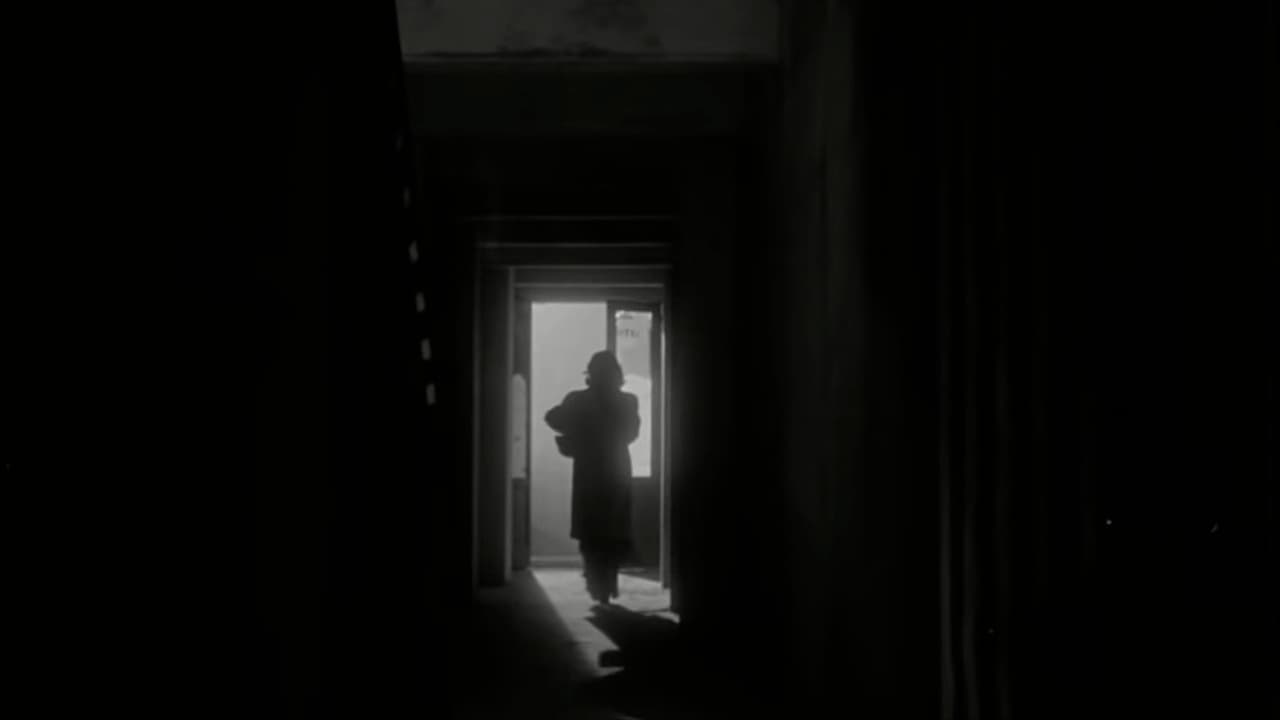
Distinto amanecer occupies a foundational position in Mexican noir, arriving two years before the genre fully consolidated its visual identity in the country's cinema. Julio Bracho, working from a screenplay alert to the contradictions of postrevolutionary Mexico, constructs a thriller that is also a precise social document: the corruption here is not exceptional but systemic, woven into the fabric of labor politics and urban night life. Andrea Palma, who had already established her noir credentials in La mujer del puerto (1934), brings a self-possession to Julieta that reframes the film's center of gravity entirely – she is not acted upon but observing, calculating, surviving with full knowledge of what survival costs. Pedro Armendáriz, meanwhile, plays Octavio's idealism as something close to a liability, a quality the film regards with genuine ambivalence. The film does not celebrate its heroes cleanly. What lifts it above the competent thriller is its insistence that the personal and the political cannot be disentangled, that the document Ignacio carries and the marriage Julieta protects are versions of the same problem.
– Classic Noir
Gabriel Figueroa frames Julieta in a narrow corridor backstage at the club, the light source pushed hard to one side so that her face is split between illumination and deep shadow – a composition that owes something to Expressionist portraiture but is handled with a restraint that keeps it from becoming theatrical. The camera holds at a slight low angle, making the low ceiling press down into the frame, and the curtain separating the corridor from the club's main floor registers as a translucent membrane through which sound and diffuse light bleed without resolving into anything legible.
The scene establishes the governing argument of the film's visual system: Julieta exists in a threshold space, neither fully exposed nor fully hidden, with the world of performance and transaction on one side and whatever private self she has preserved on the other. Figueroa's framing refuses to let her occupy either side completely, and that refusal is the film's central moral image – a woman who cannot afford the luxury of a single, coherent position in a world that would prefer she simply choose.
Gabriel Figueroa, who would go on to define the visual texture of Mexican cinema's golden age, brings to Distinto amanecer a command of low-key lighting that demonstrates his debt to Gregg Toland and the deep-focus Expressionist tradition while already bending those influences toward something distinctly his own. Working largely on studio sets that double as nightclubs, corridors, and cramped domestic interiors, Figueroa constructs spaces through shadow rather than through architecture – walls exist primarily as surfaces for shaped darkness, and the light sources are kept low and lateral so that faces carry the same textural weight as the environments around them. His lens choices favor a slightly longer focal length that compresses depth without flattening, allowing characters who share a frame to occupy different emotional registers without the frame declaring a winner. The result is a visual grammar in which moral ambiguity is structural rather than thematic, built into the geometry of every shot rather than communicated through dialogue.
Criterion's streaming library has featured Mexican golden age cinema including Figueroa collaborations; check current availability as titles rotate.
MUBISubscriptionMUBI periodically programs Latin American classical cinema and is among the more likely platforms to carry a restored or subtitled print of this title.
Archive.orgFreePublic domain or freely uploaded prints of Distinto amanecer have circulated on Archive.org; image quality varies and subtitles are not guaranteed.