Films People Pull a Fast One Night Beat Reading Room On TV Shop
Destination Murder 1950
1950 Prominent Features
★★★☆☆ Notable
Film Noir · 72 minutes · Black & White

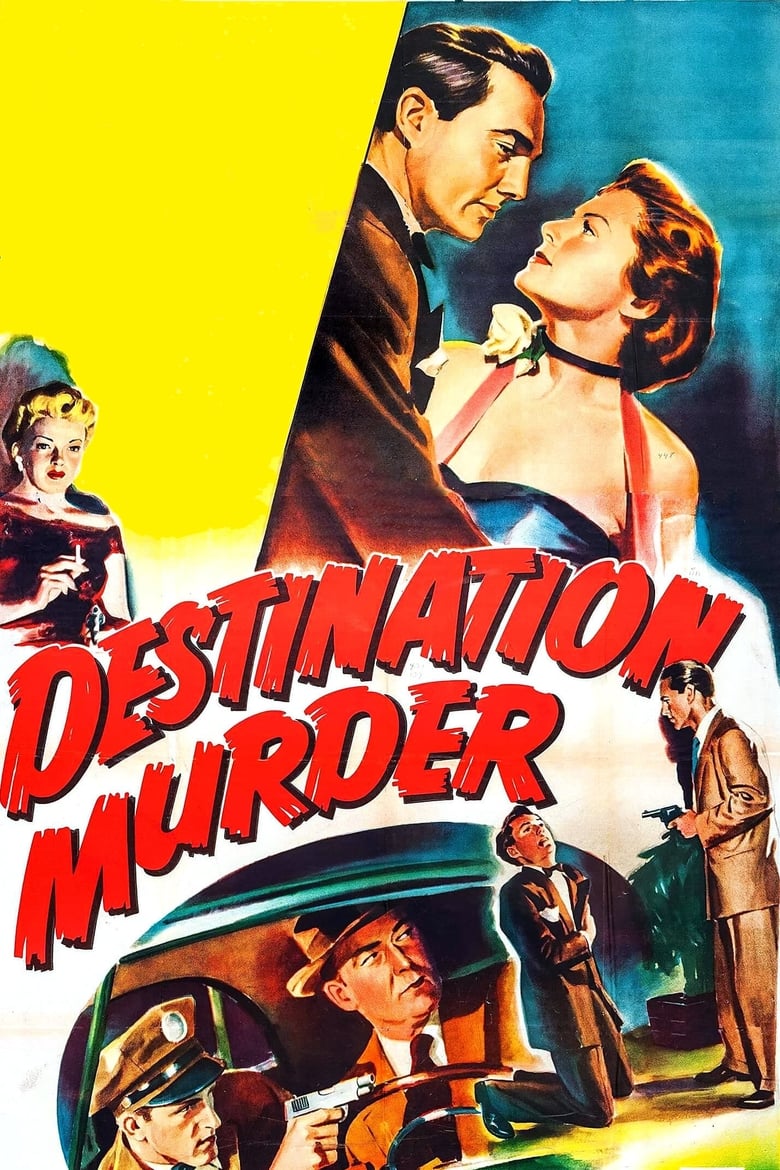
Destination Murder

Directed by Edward L. Cahn
Year 1950
Runtime 72 min
Studio Prominent Features
TMDB 5.2 / 10
"A young woman walks into a nightclub looking for her father's killer and finds something worse than the truth."

When her father is shot dead outside a nightclub, Laura Mansfield does not wait for the police to act. She takes matters into her own hands, insinuating herself into the orbit of Stretch Norton, the smooth, vaguely menacing figure who runs the club and who Laura suspects of orchestrating the murder. Posing as an ordinary young woman looking for work and excitement, she draws close to Norton and his associates, including the dangerous Armitage, who operates in the background of every transaction with the quiet authority of a man who owns people.

Laura's investigation pulls her into an entanglement with Jackie Wales, a small-time opportunist whose loyalties are never entirely clear and whose interest in Laura is compromised by self-interest. The nightclub itself functions as a clearing house for criminality, and as Laura moves deeper into its routines, the line between her infiltration and her genuine vulnerability begins to dissolve. Police Lt. Brewster watches from a distance, but the institutional machinery of law enforcement moves too slowly to be of use to anyone inside that world.

Destination Murder belongs to the cycle of postwar B noirs built around ordinary people caught in structures of organized crime that exceed their ability to understand or escape. The film works within the constraints of its budget and running time to generate genuine unease, locating moral ambiguity not in any single villain but in the transactional nature of every relationship Laura encounters. Whether justice and survival can coexist is the question the film keeps open until its final frames.
Classic Noir

Destination Murder is a modest but purposeful entry in the early 1950s B-noir cycle, made at a moment when independent studios were still finding commercial traction in the genre's moral pessimism. Director Edward L. Cahn works within tight constraints and makes few mistakes. The film's real distinction lies in its casting: Hurd Hatfield, whose screen persona carries the residue of Dorian Gray's cold aestheticism, is precisely right as Stretch Norton, a man whose danger is all surface and implication. Albert Dekker, always a reliable presence in these films, lends weight to Armitage without overplaying the part. Joyce Mackenzie holds the center credibly, avoiding the passivity that often limits female protagonists in similar material. What the film understands is that the nightclub economy of this period – entertainment as a front, labor as leverage – was itself a form of corruption, and Laura's investigation is less a detective story than an education in how power distributes itself invisibly. At 72 minutes, nothing is wasted.

– Classic Noir
3 ★★★☆☆ Notable
Credits

The Crew

DirectorEdward L. Cahn
ScreenplayDon Martin
CinematographyJackson Rose
MusicIrving Gertz
EditingPhilip Cahn
Art DirectionBoris Leven
ProducerEdward L. Cahn
Performances

The Cast

Close Reading

The Signature Scene

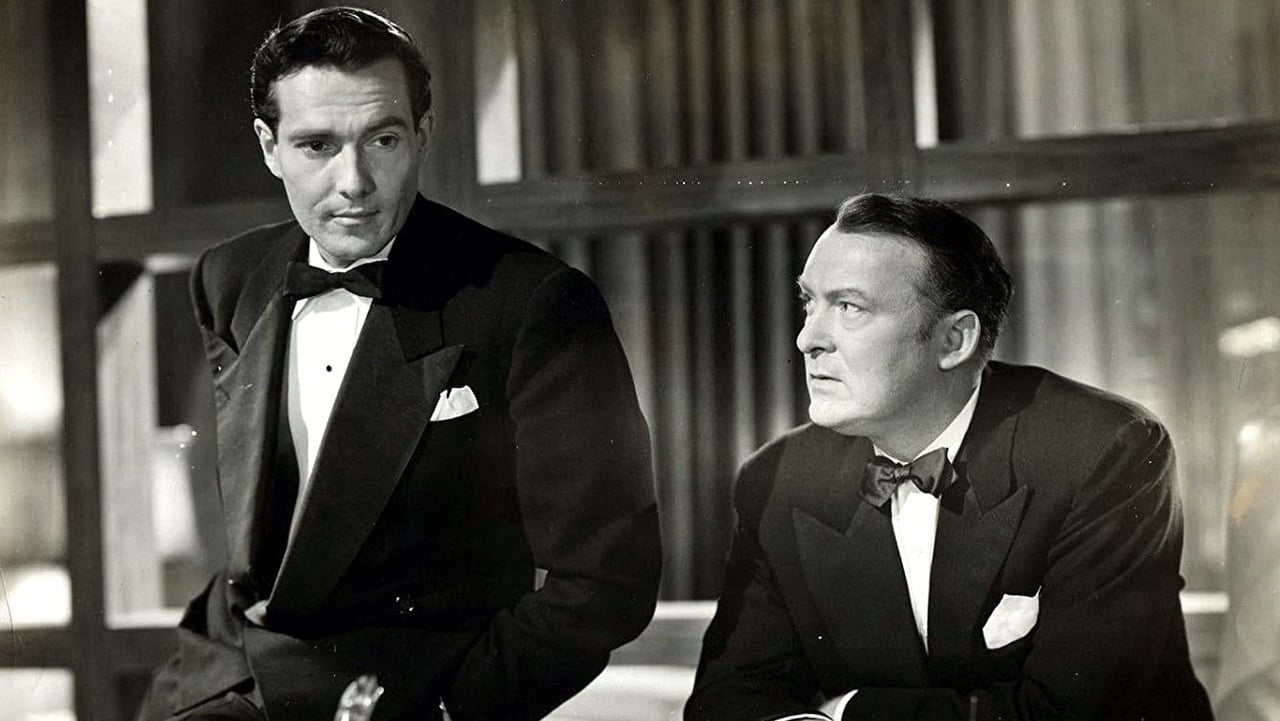
Destination Murder – scene
The Nightclub Floor Watching Without Being Seen

Jackson Rose frames Laura from a middle distance as she moves through the club's main room, the camera static while the crowd shifts around her. The light source is overhead and theatrical, the kind of illumination that flatters performers and exposes everyone else. Shadows pool at the edges of the frame, and Stretch Norton, when he appears at the far side of the room, is caught in a half-light that renders his expression unreadable. The composition places Laura at the center of a space she does not control, surrounded by people whose purposes are opaque.

The scene's function is not action but calibration. The viewer is asked to measure the distance between what Laura knows and what she is walking into, and that distance is made visible through physical space. Norton's stillness across the room suggests a man who has already assessed the situation and found it untroubling. The frame holds both figures long enough to make the disparity between them felt rather than stated.

Visual Language

The Cinematography

🎞️
Jackson Rose – Director of Photography

Jackson Rose shoots Destination Murder with the disciplined economy that defined competent B-unit noir cinematography in the early 1950s. Working largely on studio interiors with limited natural light access, Rose relies on hard-source key lighting and deliberate shadow placement to compensate for the absence of elaborate set construction. The nightclub sequences use overhead practical fixtures as diegetic motivation for a high-contrast look that flatters no one, which is precisely the point. Rose shows particular control in two-shot framings during dialogue scenes, where the differential between how characters are lit – one figure in clarity, one slightly obscured – does moral work that the script occasionally leaves implicit. There are no conspicuous crane moves or expressionist angles; the camera stays at eye level and lets the lighting carry the instability. This restraint serves the film's argument that ordinary-looking spaces contain ordinary-looking menace, and that the real danger in this world is never announced.

In the Catalogue

Themes & Motifs

Availability

Where to Watch

Also in the Directory

See Also