Films People Pull a Fast One Night Beat Reading Room On TV Shop
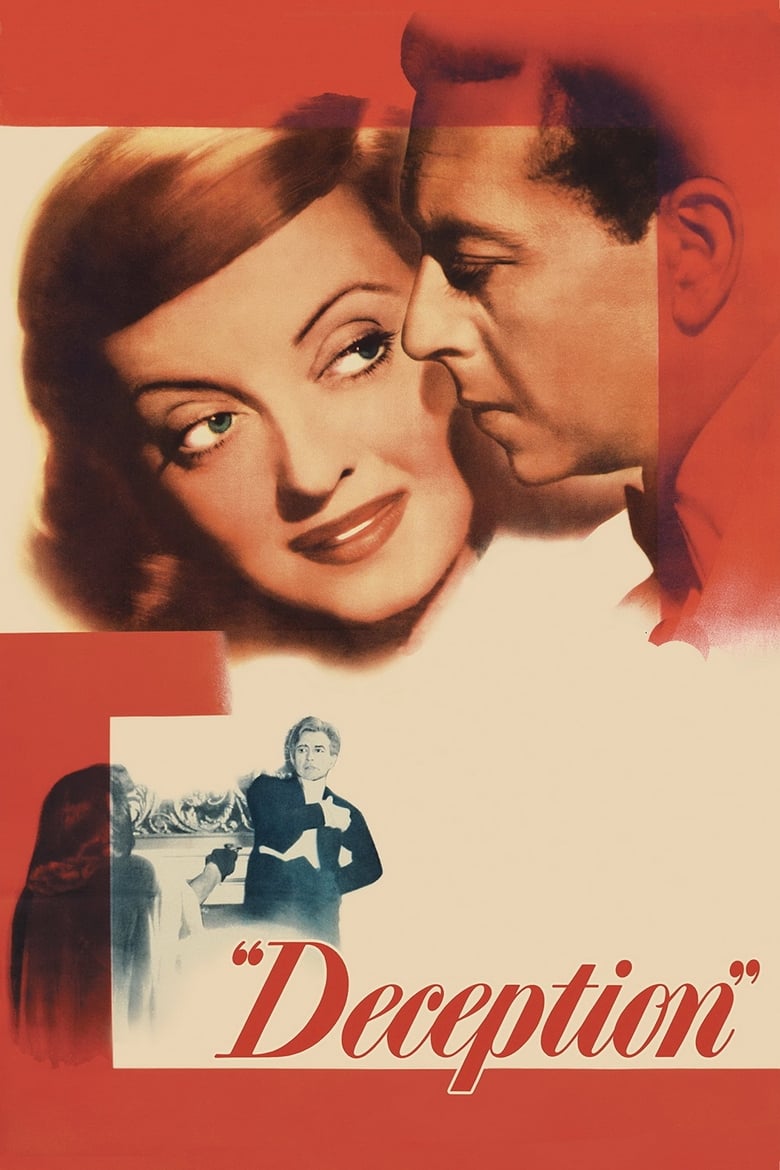
Deception 1946
1946 Warner Bros. Pictures
★★★☆☆ Notable
Film Noir · 110 minutes · Black & White

Deception

Directed by Irving Rapper
Year 1946
Runtime 110 min
Studio Warner Bros. Pictures
TMDB 6.7 / 10
"A woman's past returns in the form of a man she cannot afford to remember."

In postwar New York, Christine Radcliffe is a pianist of modest reputation living comfortably in a furnished apartment that belies her origins. When Karel Novak – a cellist she loved in Europe and believed dead – reappears, her carefully constructed present collapses. She marries him without confession, absorbing the shock of his survival into a new domestic arrangement she hopes will hold.

What Christine has concealed is the source of her comfort: Alexander Hollenius, a celebrated and imperious composer who has kept her in luxury and possesses a claim on her that exceeds affection. When Hollenius learns of the marriage, he does not withdraw – he tightens his grip, offering Karel the premiere of his new cello concerto as both gift and instrument of control. Karel, unaware of the full history, accepts. Christine watches the two men circle each other and understands that Hollenius intends to destroy what she has built.

Deception operates at the intersection of the woman's picture and noir, where romantic obsession becomes a structural trap and financial dependence a form of captivity. The film is less interested in crime as procedure than in the psychology of leverage – how one person's knowledge of another becomes a weapon, and what a woman will do when she sees no exit remaining.
Classic Noir

Deception arrives at an interesting threshold in Bette Davis's Warner Bros. tenure, pitched between the studio melodrama that made her and the harder-edged material noir was beginning to demand. Irving Rapper's direction is controlled if seldom inventive, and the film's real architecture is carried by Claude Rains, whose Hollenius is one of the period's more precisely drawn portraits of a man who mistakes possession for devotion. The film does not function as noir in the procedural sense – there is no investigation, no femme fatale in the operative meaning – but it shares the genre's core preoccupation: the past as inescapable debt. Korngold's score, particularly the original cello concerto he composed for the film, is not incidental decoration but structural argument, making the concert sequences function as scenes of emotional confrontation by other means. As a document of its era, Deception records the postwar atmosphere of precarious reinvention – identities rebuilt in new cities, histories suppressed – with more fidelity than its melodramatic surface might suggest.

– Classic Noir
3 ★★★☆☆ Notable
Credits

The Crew

DirectorIrving Rapper
ScreenplayJohn Collier
CinematographyErnest Haller
MusicErich Wolfgang Korngold
EditingAlan Crosland, Jr.
Art DirectionAnton Grot
ProducerHenry Blanke
Performances

The Cast

Close Reading

The Signature Scene

Deception – scene
The Restaurant Confrontation Hollenius Commands the Table

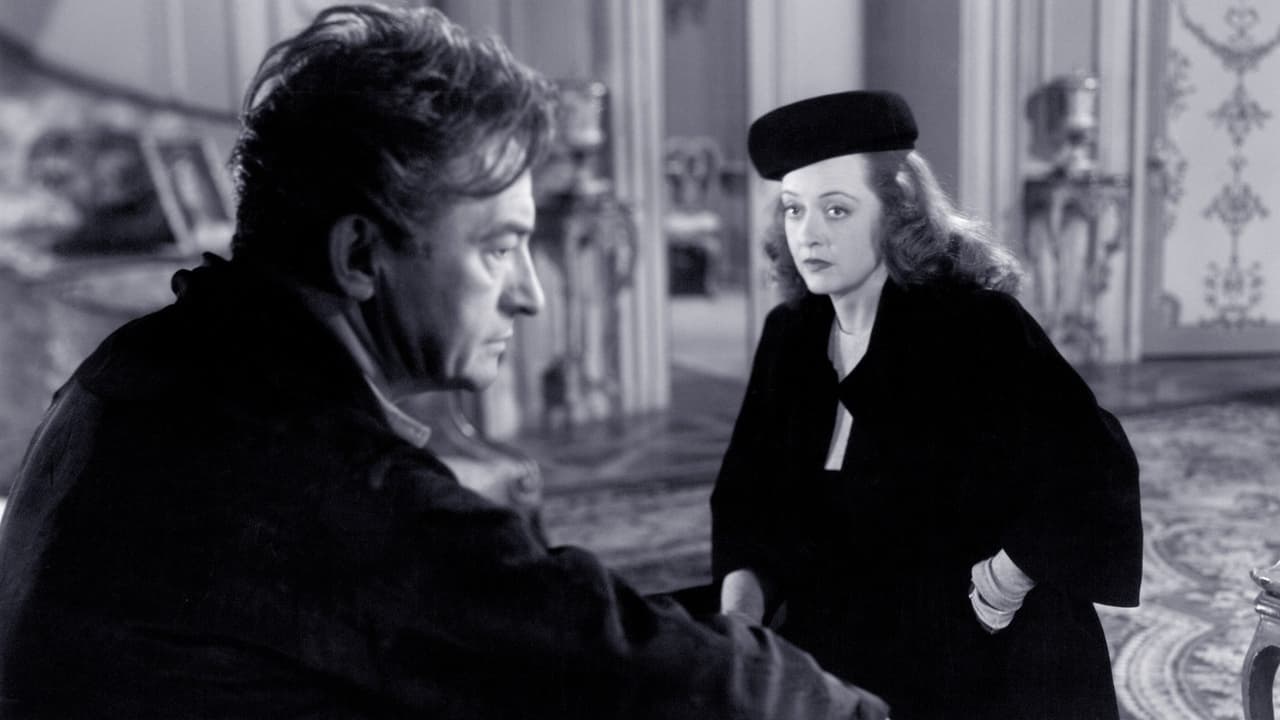
Hollenius invites Karel and Christine to dinner at an extravagant restaurant, and Rapper frames the scene so that Rains occupies the visual center regardless of where he sits. Ernest Haller keeps the lighting on the table warm and close, isolating the three figures from the ambient noise of the room. Davis is held in a three-quarter angle that conceals her expression from Karel while exposing it to the camera, a compositional choice that literalizes her position as mediator between two men with incompatible knowledge.

The scene argues that power in this world is primarily performative – Hollenius does not threaten directly but monologues, orders extravagantly, and watches Christine absorb his implications while Karel remains oblivious. What the camera records is the cost of a secret: Davis's face cycling through composure, fear, and cold resolution within a single unbroken exchange. The restaurant, site of social display, becomes a theater of coercion, and the scene establishes that Christine's eventual action will not be impulsive but the conclusion of a sustained calculation.

Visual Language

The Cinematography

🎞️
Ernest Haller – Director of Photography

Ernest Haller, who had photographed Davis in Jezebel and would again in Beyond the Forest, brings to Deception a studio-controlled visual grammar suited to a film in which surfaces are the subject. Shot entirely on Warner Bros. soundstages, the film uses controlled light sources – practicals, motivated key lights through tall windows – to give Christine's apartment a warmth that reads as prosperity but carries a faint claustrophobia. Haller tends toward relatively tight focal lengths in interior scenes, which compresses the space and places characters in closer proximity than comfort allows. Shadow work is restrained compared to the harder noir titles of the same period; Rapper and Haller are not interested in expressionist distortion so much as in the slow revelation of what a well-lit room conceals. The concert sequences open the visual field deliberately, wide frames with depth of focus, an irony the film pursues – the most public setting is where the most private confrontation resolves.

In the Catalogue

Themes & Motifs

Availability

Where to Watch

Also in the Directory

See Also