Films People Pull a Fast One Night Beat Reading Room On TV Shop
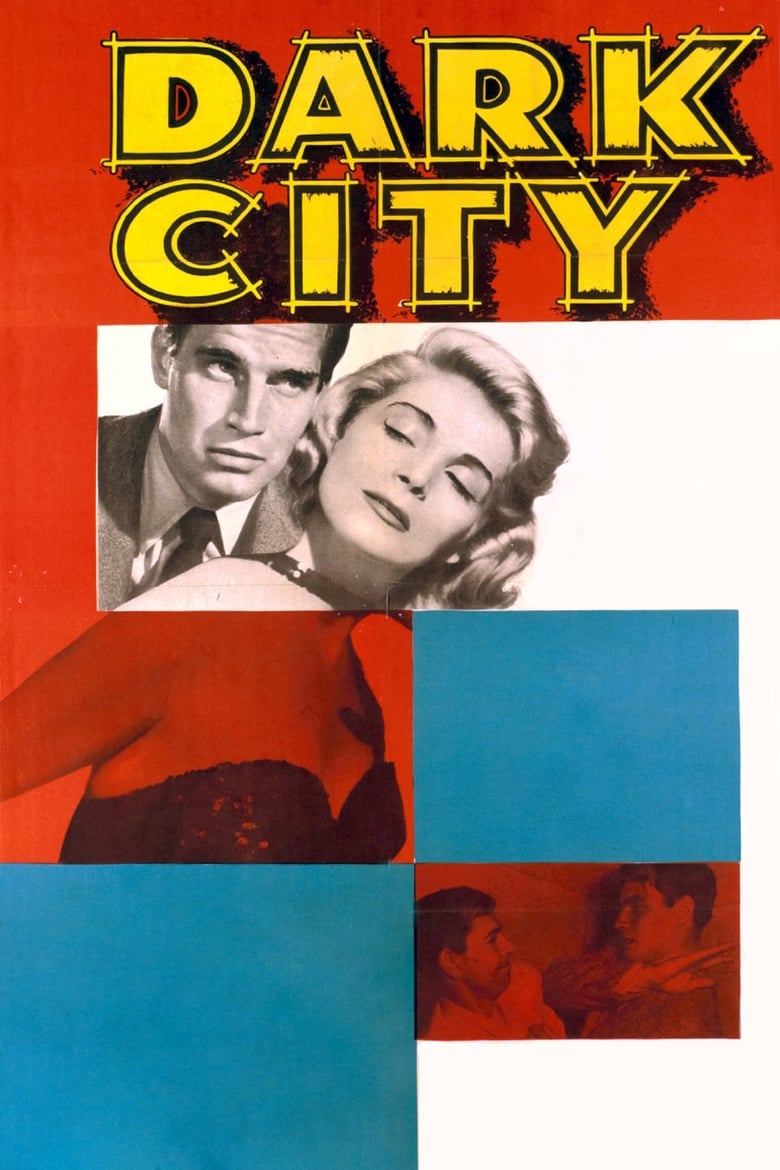
Dark City 1950
1950 Paramount Pictures
★★★☆☆ Notable
Film Noir · 98 minutes · Black & White

Dark City

Directed by William Dieterle
Year 1950
Runtime 98 min
Studio Paramount Pictures
TMDB 6.5 / 10
"A man who lives by the angle discovers that someone else is keeping score."

Danny Haley is a small-time operator in postwar Los Angeles, running crooked card games with a tight crew that includes the wiry Augie and the stolid Barney. When a naive out-of-towner named Arthur Winant loses everything at their rigged table and then takes his own life, the incident appears to close itself. Danny returns to the smoky orbit of Fran Garland, a nightclub singer who tolerates his wandering attention, and tries to put the dead man behind him.

Arthur Winant, it turns out, had a brother – a methodical, violent man who has already killed two of the men connected to that card game and is working through the list. Captain Garvey of the Los Angeles Police Department presses Danny for cooperation while Danny, motivated by something closer to survival than conscience, begins his own investigation. He travels to Phoenix, where he encounters Victoria Winant, Arthur's composed and grief-worn widow, and finds that the geometry of guilt is more complicated than he assumed.

Dark City belongs to a specific postwar cycle in which the protagonist is neither detective nor innocent bystander but an ethical middle case – a man whose complicity is real and whose redemption, if it arrives, is earned under duress. The film frames its suspense around the question of whether Danny can locate the killer before the killer locates him, and uses that chase to conduct a quieter inquiry into what a man owes the people his carelessness has destroyed.
Classic Noir

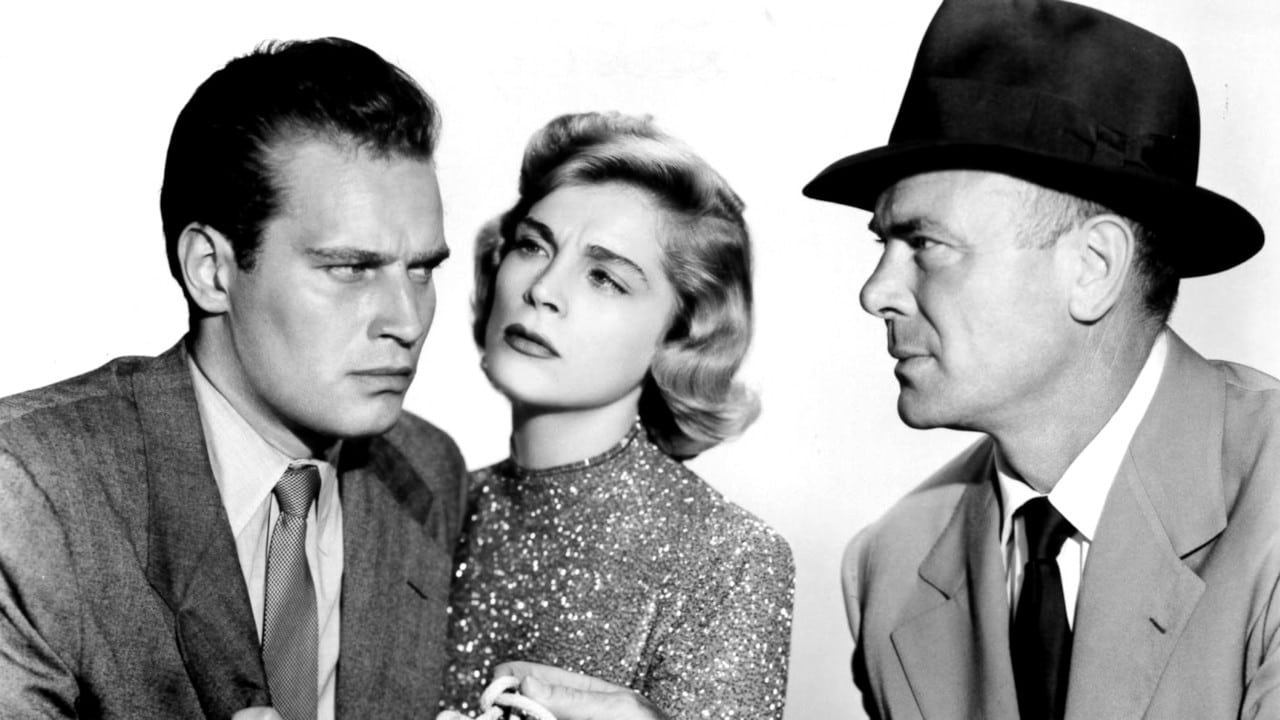
Dark City occupies a minor but instructive position in the Paramount noir cycle of the late 1940s and early 1950s. It is notable, perhaps above all else, as Charlton Heston's feature debut, and the casting is cannily against type in retrospect: Heston plays not a man of destiny but a man of angles, someone whose physical authority masks a compromised interior. William Dieterle, a director more associated with prestige biography than pulp, brings a certain compositional deliberateness to the material that occasionally slows the film's momentum but consistently sharpens its moral framing. The screenplay, derived from a story by Larry Marcus, is less interested in plot mechanics than in the specific postwar condition of men who returned from the war without any clear sense of what civilian virtue was supposed to look like. Danny Haley is not a villain, but he is not innocent, and the film refuses to let that distinction collapse into easy absolution. Lizabeth Scott, as reliably effective as she was underused by the industry, gives Fran Garland a patient, watchful quality that grounds the film's emotional register.

– Classic Noir
3 ★★★☆☆ Notable
Credits

The Crew

DirectorWilliam Dieterle
ScreenplayLawrence B. Marcus
CinematographyVictor Milner
MusicFranz Waxman
EditingWarren Low
Art DirectionFranz Bachelin
CostumesEdith Head
ProducerHal B. Wallis
Performances

The Cast

Close Reading

The Signature Scene

Dark City – scene
The Phoenix Hotel Room Widow at the Window

Victor Milner frames Victoria Winant in a medium shot against a bright desert window, the exterior light bleaching the background while her face is caught in a controlled half-shadow that neither flatters nor accuses. The camera holds its distance, declining the intimacy of a close-up, and the geometry of the room – spare furniture, pale walls, a single lamp unlit in daytime – communicates a life reduced to essentials. When Danny enters the frame, Milner's lighting separates the two figures tonally: he carries the interior darkness with him, she exists in a washed, grief-neutralised light.

The scene is the film's moral hinge. Danny has come for information, but Viveca Lindfors plays the widow as someone who has already done her accounting and found that anger requires more energy than she has. Her restraint refuses Danny – and the audience – the relief of accusation. He cannot be forgiven because she will not perform the ceremony of blame. The scene argues that the most severe judgment a noir protagonist can face is not a gun or a courtroom but the composed, exhausted gaze of someone whose life he made worse.

Visual Language

The Cinematography

🎞️
Victor Milner – Director of Photography

Victor Milner, whose long Paramount career stretched back to the silent era, brings a controlled, studio-bound precision to Dark City that suits a film about men who manage and contain rather than feel. Working primarily on interior sets, Milner favours mid-range focal lengths that keep spatial relationships legible without flattening them – the card room in the early scenes is lit with overhead sources that carve downward shadows across the players' faces, literalising the moral pressure from above. Exterior sequences, including the Los Angeles street work, use available urban geometry to crowd the frame without resorting to expressionist distortion. The lighting is not baroque; it is systematic, which is its own kind of argument. Milner withholds deep shadow when the narrative is still negotiable and deepens contrast as Danny's options narrow. The cinematography does not announce the film's noir credentials so much as demonstrate them through accumulation – a grammar of constriction that tightens almost imperceptibly across the runtime.

In the Catalogue

Themes & Motifs

Availability

Where to Watch

Also in the Directory

See Also