Films People Pull a Fast One Night Beat Reading Room On TV Shop
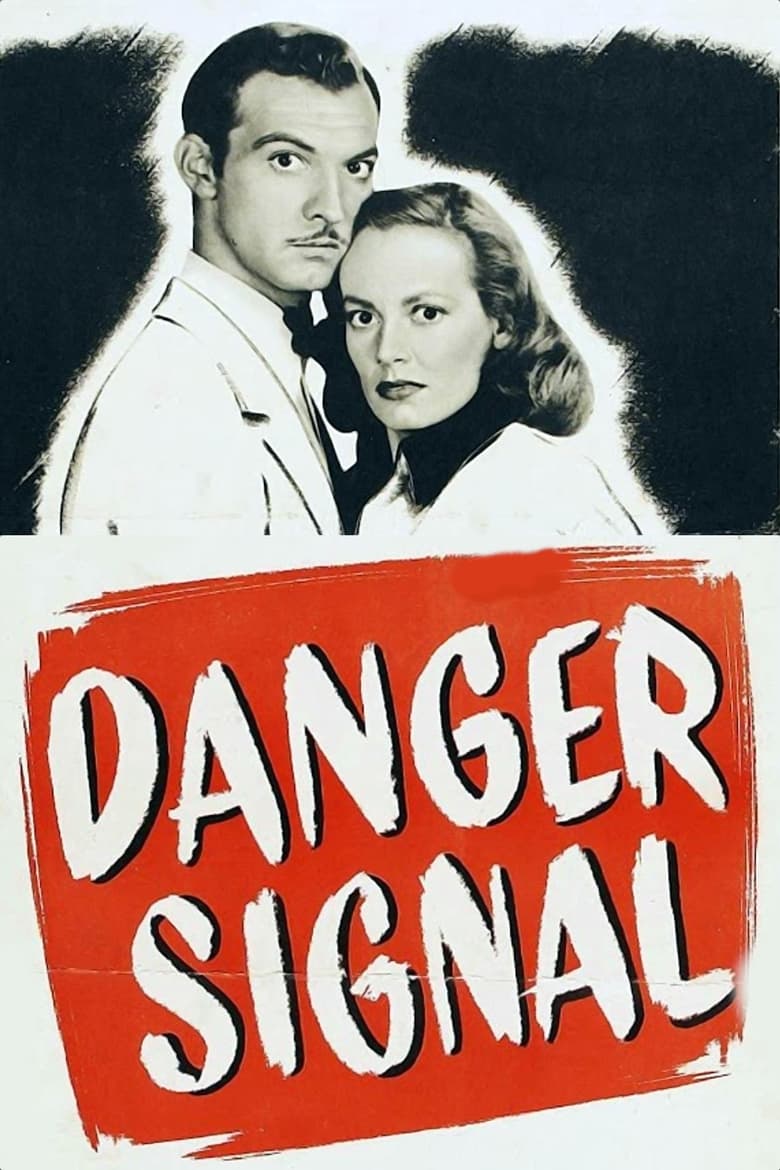
Danger Signal 1945
1945 Warner Bros. Pictures
★★★☆☆ Notable
Film Noir · 78 minutes · Black & White

Danger Signal

Directed by Robert Florey
Year 1945
Runtime 78 min
Studio Warner Bros. Pictures
TMDB 6.0 / 10
"A charming stranger moves through a household of women, and someone will not survive his attention."

Hilda Fenchurch is a Los Angeles secretary living with her mother and younger sister Anne in a modest but respectable household. When the smooth-talking Ronnie Mason insinuates himself into their lives, Hilda is quickly drawn to him – unaware that Mason is a practiced manipulator who has left a trail of dead women behind him. He is, in the most precise sense, a man who solves his problems by eliminating them.

Mason's scheme is to court Hilda for her small savings, but the plan grows complicated when Anne, younger and more openly trusting, also develops feelings for him. Dr. Jane Silla, a psychologist who has encountered Mason before, begins to piece together his pattern, while Hilda's colleague Thomas Turner and the straightforward Dr. Andrew Lang represent the kind of honest affection Mason has no use for. As Mason's intentions sharpen, the Fenchurch household becomes a closed arena in which charm and danger are indistinguishable.

Danger Signal belongs to the cycle of postwar domestic noir in which the threat arrives not from the underworld but from the parlor – a well-dressed predator operating inside the codes of courtship. The film's tension is less about detection than about whether ordinary people can read the signs in time, and it asks what social conventions make certain women legible targets for men like Mason.
Classic Noir

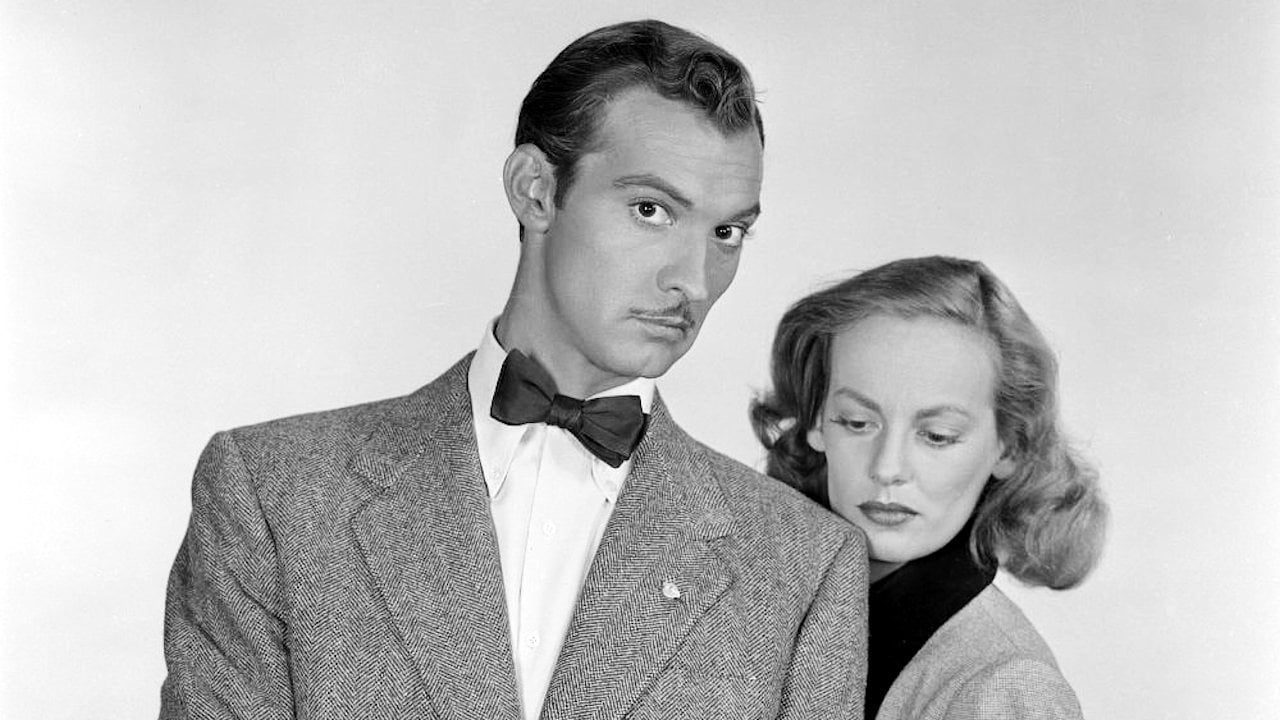
Danger Signal is a modest but precise Warner Bros. noir that deserves more attention than it typically receives. Robert Florey directs with economy rather than flourish, keeping the film's menace domestic and the geography tight. Zachary Scott, still trading on the reptilian appeal he had established in The Mask of Dimitrios the previous year, brings a calibrated coldness to Mason – the character works because Scott never plays him as a monster, only as a man for whom other people are instruments. Faye Emerson is given more internal life than the standard victim role allows, and Rosemary DeCamp's forensic psychologist functions as an unusually grounded rational counterforce to Mason's manipulations. The film is also a period document: its anxieties about returning social disorder and the vulnerability of women managing households without male protection are entirely characteristic of 1945. It does not reinvent the genre, but it executes its particular argument cleanly.

– Classic Noir
3 ★★★☆☆ Notable
Credits

The Crew

DirectorRobert Florey
ScreenplayAdele Comandini
CinematographyJames Wong Howe
MusicAdolph Deutsch
EditingFrank Magee
Art DirectionStanley Fleischer
CostumesMilo Anderson
ProducerWilliam Jacobs
Performances

The Cast

Close Reading

The Signature Scene

Danger Signal – scene
Mason's Apartment – The Typed Letter Words Composed in Cold Blood

James Wong Howe frames Mason at his desk in a pool of harsh, directed light that leaves the room's edges in shadow. The camera holds on Scott's hands at the typewriter rather than his face – the mechanical, unhurried rhythm of the keystrokes doing more work than any expression could. The composition is tight and lateral, the desk surface filling the lower third of the frame, the darkness above Mason suggesting enclosure rather than freedom.

The scene makes the argument that Mason's violence is administrative. He does not act in passion; he plans in private, in silence, with the same deliberate care a man might bring to correspondence. It is the film's clearest statement about the nature of his danger – not the heat of crime but its cold organization – and it reframes everything that has appeared charming in him as something closer to predatory efficiency.

Visual Language

The Cinematography

🎞️
James Wong Howe – Director of Photography

James Wong Howe's work on Danger Signal is disciplined and purposeful rather than showy, which suits the film's domesticated menace exactly. Howe photographs the Fenchurch household in soft, naturalistic light that establishes it as a place of ordinary life – then systematically withdraws warmth from Mason's scenes, replacing it with harder sources and longer shadows. He favors medium shots that keep characters slightly hemmed by the frame, reinforcing the sense of a trap closing. The studio interiors are lit with enough tonal contrast to register threat without expressionist excess, a calibration Howe had refined across years of Warner Bros. productions. There is particular care in the way Mason's face is lit in two-shots with Hilda: the light flatters him from her eyeline, but Howe introduces a subtle underlighting in solo coverage that makes the same face fractionally harder. It is cinematography in service of dramatic irony – the audience seeing what the character cannot.

In the Catalogue

Themes & Motifs

Availability

Where to Watch

Also in the Directory

See Also