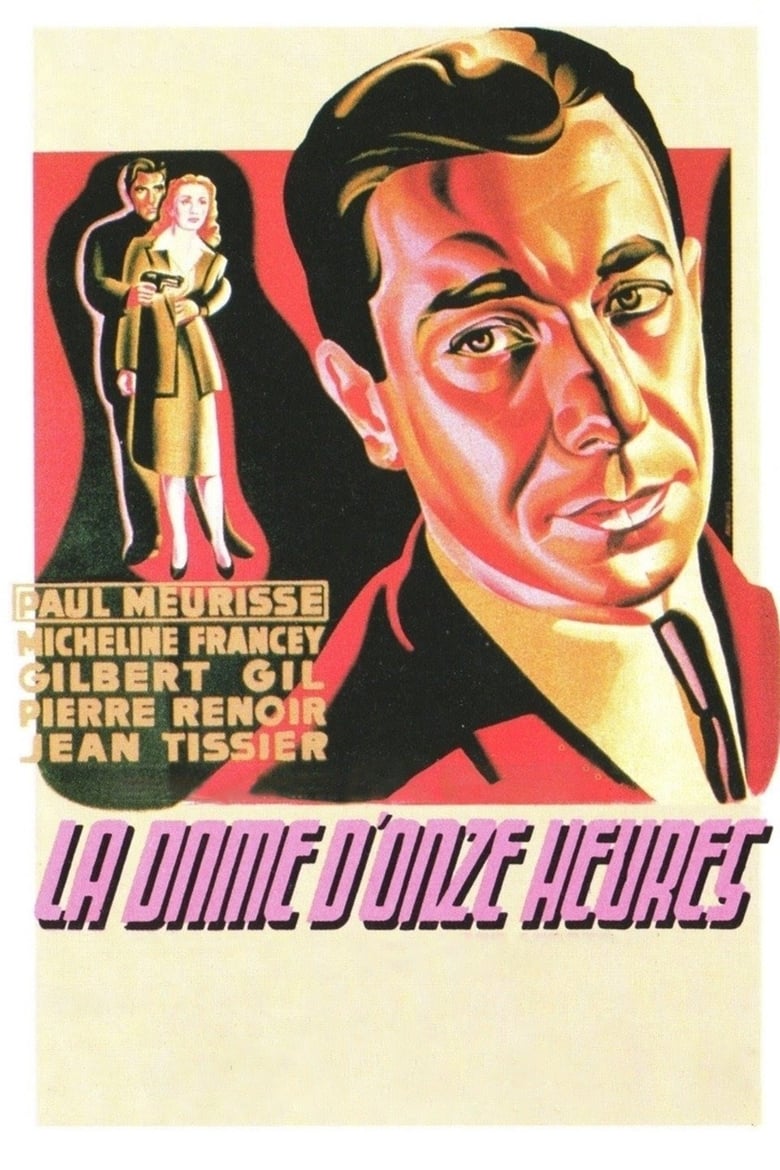
In postwar Paris, a private detective known as SOS – Stanilas Octave Seminario, played with dry precision by Paul Meurisse – is engaged to investigate the affairs of the Pescara household. The patriarch, Doctor Gérard Pescara, is a figure of established bourgeois respectability, but the family circumstances are uneasy: his daughter Muriel and son Charles each carry their own pressures, and a nurse named Hélène Tassin moves through the household with an attention that exceeds professional duty. The eleven o'clock woman of the title is a figure whose significance takes time to clarify.
As SOS works the case, allegiances prove unstable. Guillaume, a shadowy intermediary played by Jean Tissier, and Paul Wantz complicate the investigative terrain, introducing motives that reach beyond the family's walls. What appeared to be a contained domestic matter opens onto questions of inheritance, concealment, and the willingness of respectable people to countenance violence when property and position are threatened. Muriel's position shifts from observer to something more compromised, and the detective's detachment is tested by the convergence of evidence and sympathy.
Dame d'onze heure belongs to the tradition of French crime cinema that draws on the roman policier while absorbing the moral pessimism characteristic of American noir. The film uses the detective figure not as a reliable instrument of justice but as a lens through which social hypocrisy is exposed. The resolution, when it arrives, carries the weight of inevitability rather than revelation – in keeping with a genre that tends to confirm what was already half-known.
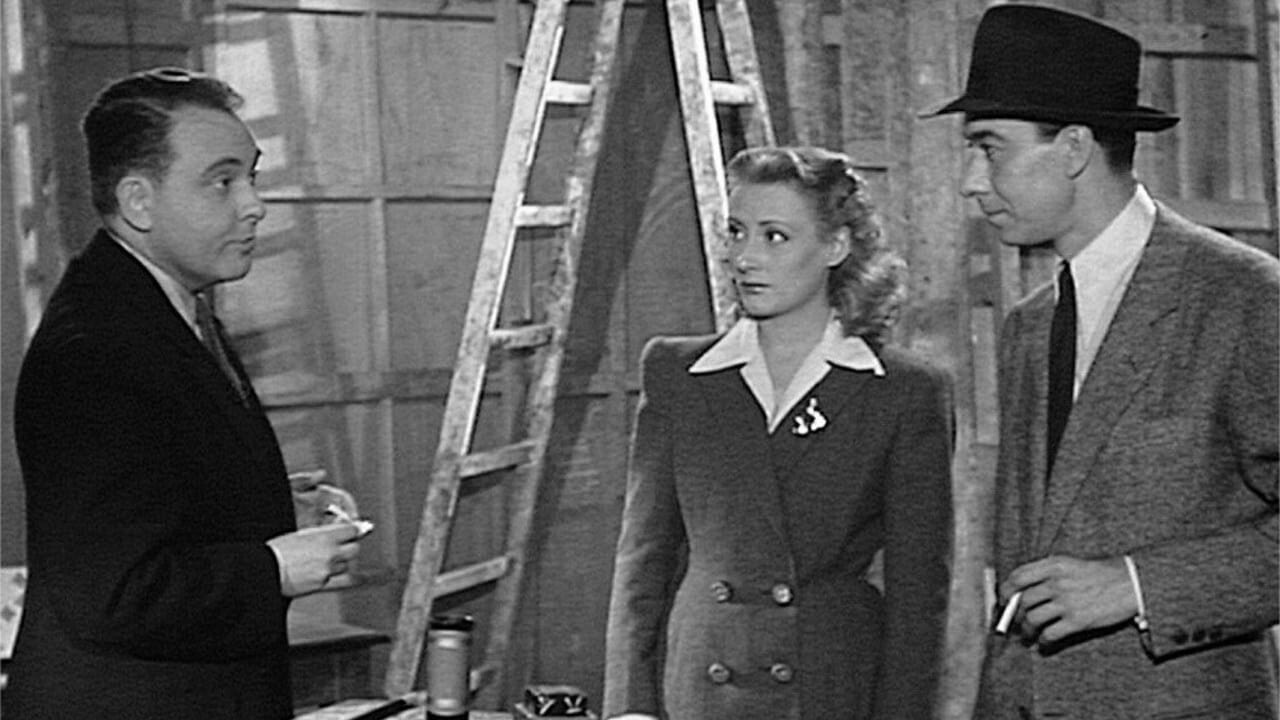
Jean Devaivre's Dame d'onze heure occupies a specific and instructive position in postwar French noir: it takes the conventions of the detective procedural and directs them inward, toward the closed world of the provincial bourgeoisie rather than the underworld. Paul Meurisse, whose lean, ironic presence would serve him well through a long career in French crime cinema, brings a quality of controlled skepticism to SOS that keeps sentiment at a distance without tipping into cynicism. Pierre Renoir's casting as the doctor-father carries its own weight of association – his face and manner encoding a generation of French cinema history. The film was made at a moment when French production was reconstituting itself after the Occupation years, and there is a perceptible unease in the family drama that may reflect more than the screenplay intends. Joseph Kosma's score, refined from his collaborations with Prévert and Carné, serves the film's tonal economy without overstatement. Dame d'onze heure is not a rediscovered landmark, but it is a competent and occasionally pointed example of how the genre functioned in France in 1948.
– Classic Noir
René Gaveau positions the camera at the far side of the study, so that the desk lamp becomes the scene's sole light source. Its cone falls hard across the surface of papers and the hands of Doctor Pescara, leaving his face in partial shadow and reducing the room beyond him to gradations of dark gray. SOS stands to one side, his figure catching only residual light – present but withheld, the detective as witness rather than participant. The composition places authority and its instrument in unresolved proximity.
The scene does the work the screenplay has been preparing: it establishes that the detective's knowledge and the patriarch's guilt have now fully coincided, without either man yet naming what both understand. The lamp's hard geometry – its refusal to illuminate the whole room – is the film's central moral argument made visible. What is partially seen is still seen. The shadows do not exonerate; they simply record the cost of looking.
René Gaveau's cinematography on Dame d'onze heure works within the constraints of studio production at Films Neptune while sustaining the tonal demands of the material. Gaveau favors deep-focus arrangements in interior scenes, keeping both foreground figures and background details legible, which sustains a sense of watched space appropriate to a detective film. His lighting setups lean on single practical sources – desk lamps, corridor fixtures – to generate the hard-edged shadow patterns that align the film visually with the contemporaneous American model while retaining the somewhat flatter, more analytical quality associated with French studio work of the period. There is less expressionist distortion than one finds in comparable Hollywood productions; instead, Gaveau's shadows tend to function as social notation, marking the places where transparency has failed. His lens choices favor a moderate focal length that keeps the viewer in a position of cool observation rather than immersive identification – consistent with the film's insistence on the detective as a professional outsider, and with its ultimately skeptical view of the family as an institution.
MUBI's rotating catalogue of French and international cinema from this period makes it the most likely current streaming home for this title, though availability varies by region and should be confirmed.
Archive.orgFreePublic domain or unlicensed prints of obscure French productions from the late 1940s occasionally surface here; picture quality is variable and subtitles are not guaranteed.
Criterion ChannelSubscriptionThe Criterion Channel periodically programs French noir and postwar crime cinema in curated series; this title has not been confirmed in their catalogue but represents the most likely source for a subtitled, properly mastered version if licensed.