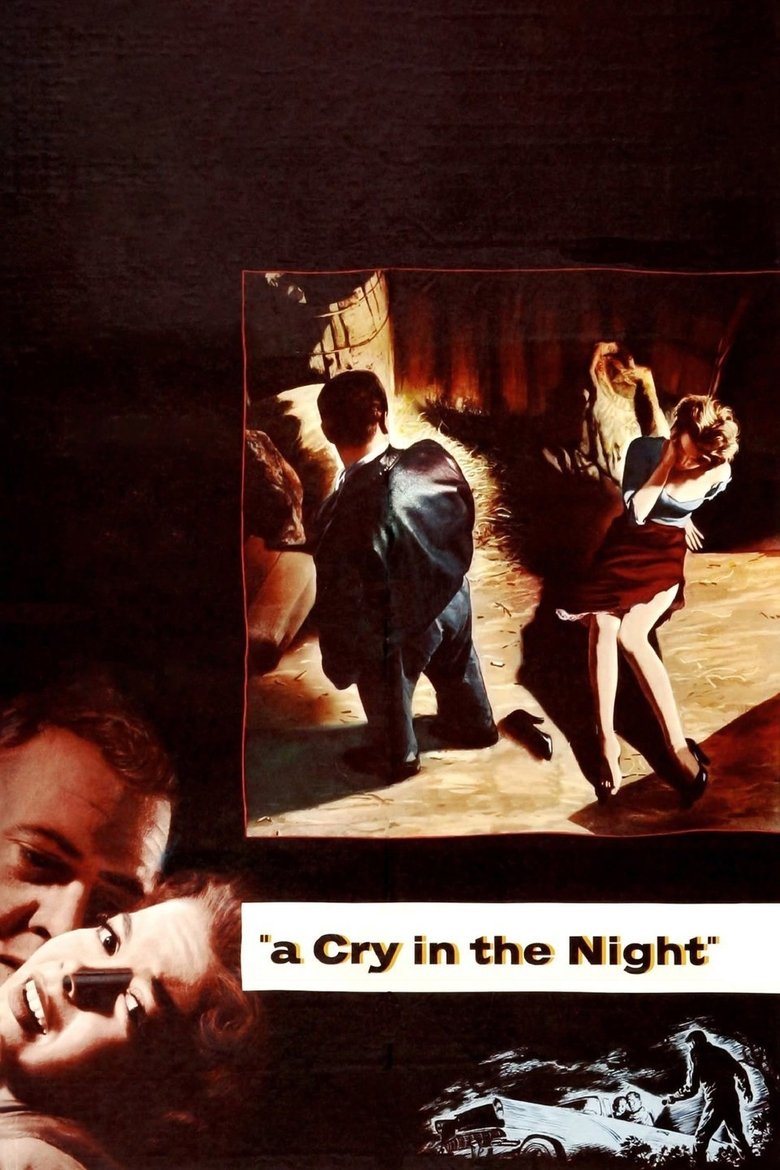
In a quiet California city, police captain Dan Taggart (Edmond O'Brien) is a man whose professional confidence masks a rigidly controlling relationship with his adult daughter, Elizabeth (Natalie Wood). One night, while parked at a lovers' lane with her new boyfriend Owen Clark (Richard Anderson), Elizabeth is abducted by Harold Loftus (Raymond Burr), a physically imposing, emotionally stunted man who lives under the thumb of his domineering mother, Mabel (Carol Veazie). Owen is knocked unconscious; Elizabeth is carried off into the dark.
Taggart's investigation forces him into a double reckoning: finding his daughter before Loftus's fixation turns lethal, and confronting the parallel between his own possessiveness and Loftus's pathological need for control. Police lieutenant Ed Bates (Brian Donlevy) works the case alongside Taggart, while Taggart's wife Helen (Irene Hervey) quietly absorbs the domestic costs of her husband's rigidity. Loftus, revealed as a man shaped entirely by maternal domination, is not simply a predator but a figure whose violence is the logical end of a household without autonomy.
Cry in the Night belongs to the cycle of mid-1950s noirs that displaced the femme fatale with the damaged male psyche as the genre's true subject. Its threat is domestic rather than criminal in the traditional sense, and its resolution depends less on police procedure than on a father's willingness to examine what he has built at home. The film uses the abduction plot as a pressure test for the American family unit, finding fault lines that the happy ending cannot entirely seal.
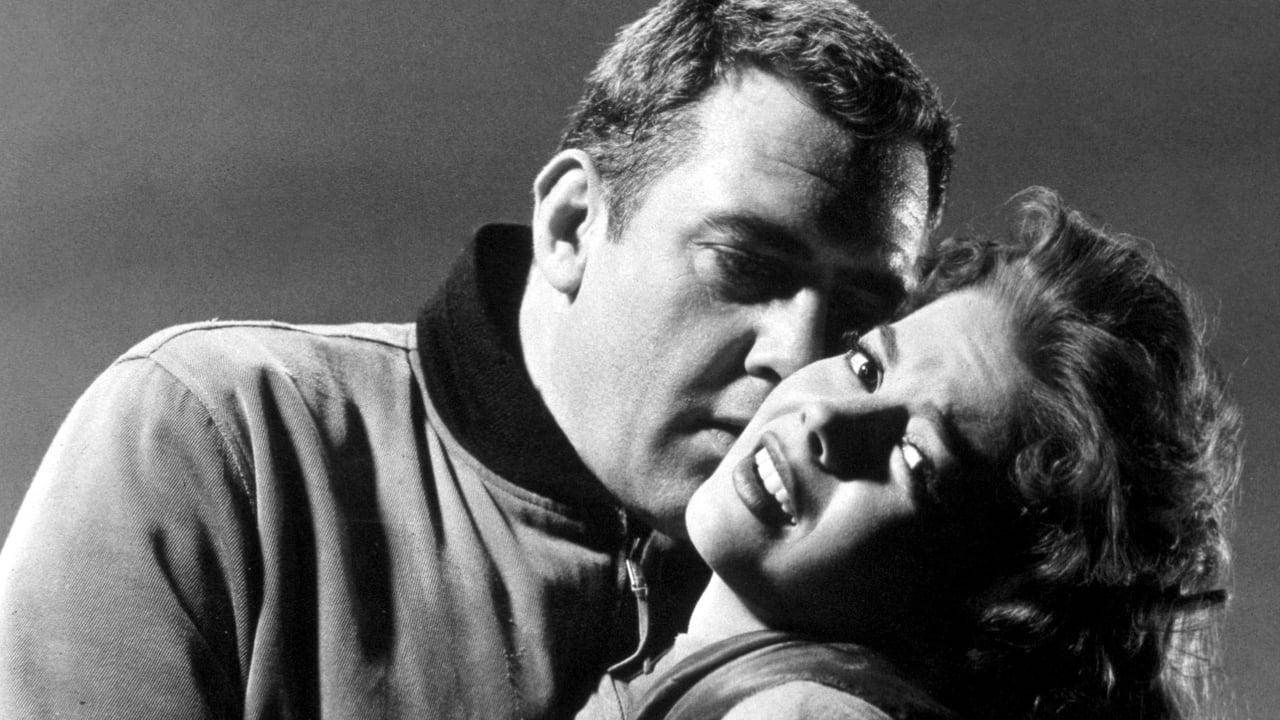
Cry in the Night is a minor but pointed entry in the postwar noir cycle, notable for the way it redistributes guilt across its male characters rather than locating danger exclusively in the kidnapper. Raymond Burr's Harold Loftus – mute in his desires, infantilized by his mother, catastrophically ill-equipped for the world – belongs to a specific 1950s type: the man whose violence is the product of domestic pathology rather than criminal ambition. That Edmond O'Brien's Taggart must recognize himself in some measure in Loftus gives the film more psychological texture than its modest runtime might suggest. Director Frank Tuttle, whose career stretched back to the silent era, handles the procedural elements efficiently, and John F. Seitz's cinematography keeps the film grounded in a credible night geography. Natalie Wood, still building toward the roles that would define her, brings more interiority to Elizabeth than the script strictly demands. The film does not press its thematic implications to any uncomfortable conclusion, but it raises them honestly enough to earn its place in the genre's record of postwar social unease.
– Classic Noir
Seitz lights the ravine sequence with a hard, narrow key source that isolates Burr's face from the surrounding darkness, leaving his body partially dissolved into shadow so that he reads as presence rather than person. The camera holds at a low angle, elongating his silhouette against a sky with no ambient light, and the framing keeps Wood's Elizabeth at the periphery – visible but unable to command the center of the image. When Loftus moves, the camera does not follow fluidly; it adjusts in small, reluctant increments, as if the lens itself is uncertain how close to get.
The scene does the film's central argumentative work in purely visual terms: Loftus is not shot as a predator in control of his environment but as a man trapped in it, the darkness pressing in on him as much as on his captive. His violence is framed as desperation rather than dominance, which is the film's most uncomfortable and most honest claim – that the threat Elizabeth faces is not an external intrusion into an otherwise ordered world, but the world's own disorder made flesh.
John F. Seitz, whose work on Double Indemnity and Sunset Blvd. set a standard for noir's visual grammar, brings a disciplined low-key approach to Cry in the Night that keeps its limited budget from registering as a deficit. Seitz favors tight, high-contrast setups in which practical darkness – ravines, unlit corridors, the unspecific geography of suburban night – does narrative work without recourse to expressionist distortion. His lens choices favor moderate focal lengths that keep figures in psychological proximity to their environments rather than aesthetically isolated from them. The result is a visual texture that feels closer to the procedural realism of the early 1950s than to the stylized shadows of the decade before. Interior scenes in the Loftus house rely on motivated sources – a single overhead, a window edge – that make the domestic space feel surveilled and airless. The cinematography's consistent moral logic is that no space in this film is safe, not because danger is everywhere, but because the architecture of ordinary American life has been designed without adequate light.
Tubi has carried this title as a free, ad-supported stream and is among the more reliably accessible options for mid-tier 1950s noirs; verify availability in your region before viewing.
Archive.orgFreeAs a film whose rights status has been uncertain, Archive.org has hosted a viewable print; quality varies and availability should be confirmed, but it remains a fallback for public-domain or lapsed-copyright titles of this era.
Amazon Prime VideoRentalA rental or purchase option has appeared on Amazon's platform and typically offers a cleaner transfer than free streaming sources; check current availability as catalogue rotation affects older titles.