Films People Pull a Fast One Night Beat Reading Room On TV Shop
Castle on the Hudson 1940
1940 Warner Bros. Pictures
★★★☆☆ Notable
Film Noir · 77 minutes · Black & White

Castle on the Hudson

Directed by Anatole Litvak
Year 1940
Runtime 77 min
Studio Warner Bros. Pictures
TMDB 7.0 / 10
"Inside the walls, a man's will is the only thing they cannot confiscate."

Tommy Gordon (John Garfield) is a small-time thief with an inflated sense of his own invulnerability. Caught and sentenced to Sing Sing, he arrives at the prison with the same bravado that landed him there, confident he can work the institution the way he worked the streets. His girlfriend Kay Manners (Ann Sheridan) waits on the outside, sustaining a loyalty that Tommy takes as his due rather than a gift. Warden Walter Long (Pat O'Brien) watches the new arrival with the measured patience of a man who has seen this particular confidence before.

Tommy's cellblock friend Steve Rockford (Burgess Meredith) provides a counterweight – a man who has absorbed the prison's lessons and accepted their cost. Tommy, unwilling to reckon with consequence, pursues a dangerous escape plan that places Kay in jeopardy and tests the warden's authority in ways that blur the line between institutional duty and human sympathy. The district attorney (Henry O'Neill) moves in the background as an instrument of a system indifferent to individual circumstance, while Tommy's associate Ed Crowley (Jerome Cowan) demonstrates how quickly loyalty inverts under pressure.

Castle on the Hudson belongs to the cycle of Warner Bros. social-conscience pictures that used the prison film as a vehicle for examining the machinery of American justice – its formal procedures and its informal cruelties. The film does not romanticize Tommy's criminality, nor does it condemn the institution without nuance. What it traces, instead, is the narrowing of options available to a man who mistakes stubbornness for strength, and the collateral damage that narrowing inflicts on those closest to him.
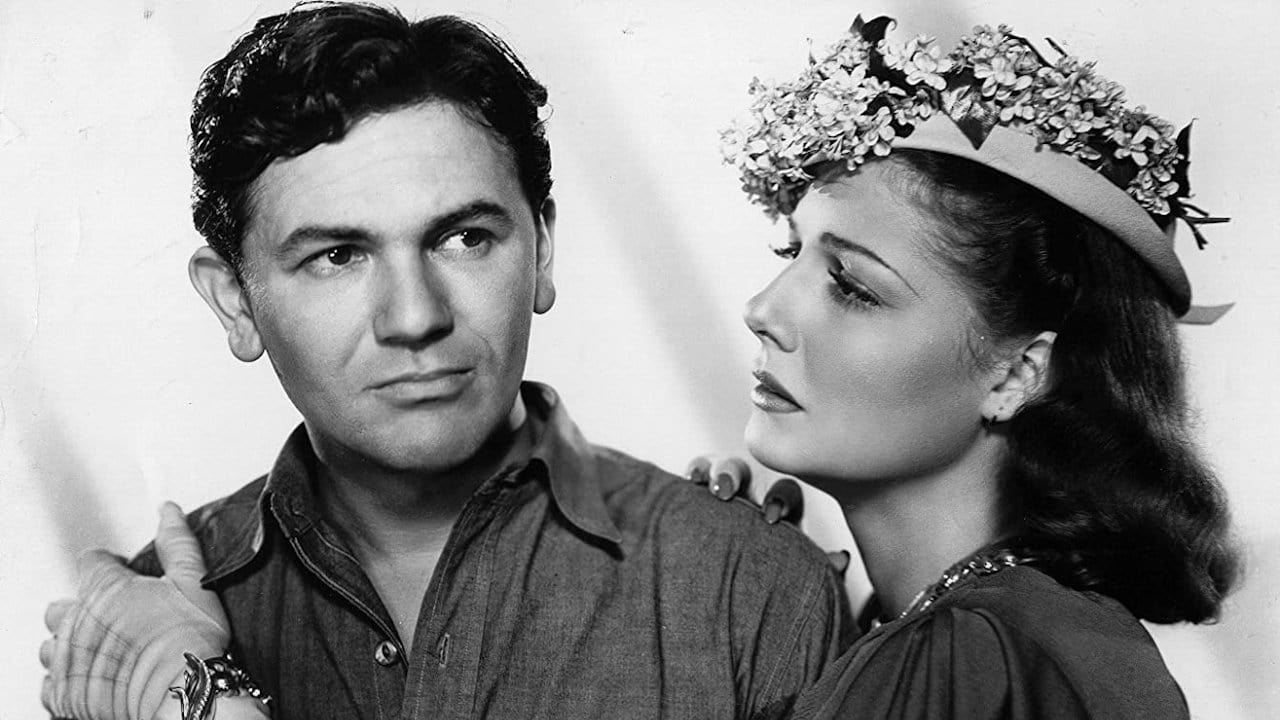
Classic Noir

Castle on the Hudson arrives at the tail end of Warner Bros.' Depression-era cycle of social-conscience melodramas, occupying an instructive position between the raw urgency of I Am a Fugitive from a Chain Gang and the more stylized noir that would define the studio's output in the mid-1940s. Anatole Litvak, working with material adapted from the memoir 20,000 Years in Sing Sing, maintains a documentary sobriety that keeps sentiment from overwhelming structure. Garfield, in one of his earliest starring vehicles, brings the particular quality he would refine across the decade – a defiance that reads simultaneously as courage and self-destruction, making sympathy and exasperation nearly indistinguishable. Pat O'Brien's warden is notably free of sanctimony, a figure defined more by institutional fatigue than moral superiority. The film is less interested in whether the prison system reforms men than in what it costs a specific kind of man to refuse reformation – a question the genre would continue to examine long after the social-conscience cycle exhausted itself.

– Classic Noir
3 ★★★☆☆ Notable
Credits

The Crew

DirectorAnatole Litvak
ScreenplayBrown Holmes
CinematographyArthur Edeson
MusicAdolph Deutsch
EditingThomas Richards
Art DirectionJohn Hughes
CostumesHoward Shoup
Performances

The Cast

Close Reading

The Signature Scene

Castle on the Hudson – scene
The Warden's Office, After the Verdict The Terms Are Not Negotiable

Arthur Edeson frames the exchange between Garfield and O'Brien across a desk that functions less as furniture than as a border. The warden sits with a lamp positioned to his left, throwing the right side of his face into partial shadow – authority that contains its own uncertainty. Garfield stands, and Edeson holds a medium shot that refuses to give him the visual dominance a close-up would provide. The office walls press in from the edges of the frame, their institutional gray absorbed by the shadows Edeson allows to pool in the corners. There is no dramatic chiaroscuro, no expressionist excess – only the controlled reduction of space that cinema uses to make entrapment visible.

What the scene makes plain is that the warden's power and Tommy's resistance are, in some structural sense, mirror conditions – each man locked into a role the institution has assigned him. Tommy cannot yield without ceasing to be Tommy; Long cannot bend without ceasing to be the warden. The desk between them is not a site of negotiation but of mutual captivity. This is where the film's central argument surfaces most cleanly: the prison does not merely contain men, it reveals the prisons they have already built inside themselves.

Visual Language

The Cinematography

🎞️
Arthur Edeson – Director of Photography

Arthur Edeson's work on Castle on the Hudson draws from the same discipline he brought to The Maltese Falcon the following year – a preference for controlled shadow over theatrical flourish, and a recurring use of environmental geometry to communicate constraint. Shooting primarily on studio-constructed sets representing Sing Sing's corridors and administrative spaces, Edeson uses hard sources placed at oblique angles to create shadow masses that don't so much decorate the frame as occupy it. Lens choices lean toward moderate focal lengths that preserve spatial relationships without flattering them; wide angles appear selectively, used to exaggerate corridor length or cell dimensions in ways that reinforce the film's preoccupation with confinement. Exterior sequences are handled with a newsreel-adjacent directness that sharpens by contrast the enclosure of interior scenes. The moral logic of the photography is consistent: the more a character operates within the institution's rules, the more evenly they are lit; the further Tommy moves toward transgression, the more the frame closes and the shadows accumulate.

In the Catalogue

Themes & Motifs

Availability

Where to Watch

Also in the Directory

See Also