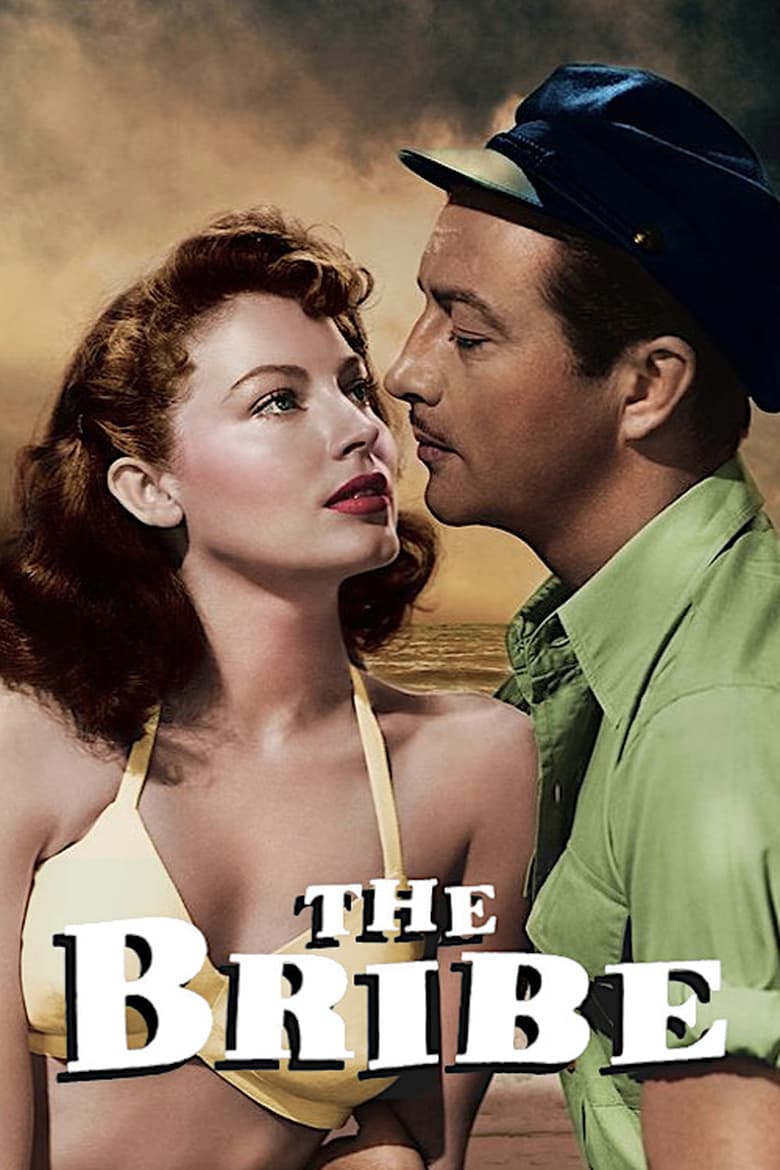
Federal agent Rigby arrives on a fictional Central American island under the cover of a routine investigation, tasked with dismantling a black-market ring smuggling surplus aircraft engines out of the country. The operation is run by the slick, calculating Carwood, who has built a comfortable arrangement with the local economy and its desperate participants. Into this already compromised environment steps Elizabeth Hintten, a nightclub singer of considerable beauty and uncertain allegiance, whose husband Tug – broke, weak-willed, and ensnared in Carwood's scheme – is the link Rigby needs to close his case.
Rigby finds himself drawn to Elizabeth even as professional duty demands he use her proximity to her husband as leverage. Tug Hintten is a man already past the point of self-rescue, and Elizabeth knows it, though she has not yet decided what that knowledge requires of her. Presiding over the island's humid social margin is J.J. Bealer, a corpulent, sardonic figure of theatrical menace who functions as both observer and enforcer – a man who seems to take a connoisseur's pleasure in the slow collapse of others. The net tightens as Rigby is offered a bribe that would make the whole problem disappear, and the question becomes whether anyone on the island, including Rigby himself, is entirely beyond purchase.
The Bribe operates within a recognizable noir framework – the incorruptible man placed in a corrupting environment, the woman suspended between loyalty and survival – but locates that framework in an exotic setting that allows the genre's moral heat to become almost literal. The film's resolution arrives through violence rather than revelation, and the climax, staged against a fireworks display on a rain-soaked waterfront, gives Ruttenberg's camera a rare opportunity to let spectacle and dread occupy the same frame.
The Bribe is a useful index of what MGM could and could not do with noir in the late 1940s. The studio's instinct toward production gloss works against the genre's essential seediness, and Robert Z. Leonard is not a director who complicates surfaces. Yet the film earns its place in the canon on the strength of three performances and a cinematographer who understood shadow better than his assignment required. Charles Laughton's Bealer is the film's genuine achievement – a character built from appetite and irony, never quite villainous in any conventional sense, but corrosive to everything around him. Vincent Price, working in an earlier register before camp absorbed him, gives Carwood a bureaucratic menace that feels modern. Miklós Rózsa's score, as was his habit, does more psychological work than the screenplay asks for. What the film finally reveals about its era is the postwar American anxiety about loyalty as a commodity – the idea that every allegiance has a price point, and that the man who refuses the bribe is as much an anomaly as a hero.
– Classic Noir
Ruttenberg frames the climax in a series of high-contrast cuts between bursting fireworks and the figures below, using the intermittent light as a substitute for conventional noir shadow work. Rather than the static chiaroscuro of the studio interior, the sequence demands a moving, unpredictable illumination – characters are lit and then swallowed by darkness in the same breath. The wet ground becomes a secondary screen, reflecting the explosions above and giving the low-angle compositions a disorienting vertical symmetry. Rain functions here not as atmosphere but as visual interference, softening edges and making every surface uncertain.
The choice to stage the confrontation during a public celebration is not merely logistical. It places private violence inside communal spectacle, suggesting that the island's festivity is as much a performance as any other transaction on display in the film. Rigby's persistence through the chaos reads less as heroism than as a kind of mechanical inevitability – the federal apparatus completing its function regardless of the human cost visible on either side of it.
Joseph Ruttenberg had already demonstrated, on films like Mrs. Miniver and Waterloo Bridge, a command of studio lighting that leaned toward refinement. The Bribe required him to work against that instinct, and the tension between his natural elegance and the material's tropical corruption produces some of the film's most interesting images. Ruttenberg uses hard sidelighting in the nightclub sequences to carve Elizabeth's face into something closer to a moral diagram than a glamour portrait – Gardner's features are lit to emphasize ambiguity rather than allure. The plantation interiors rely on deep shadow pools that the camera approaches rather than illuminates, preserving a sense of information withheld. For the exterior sequences, Ruttenberg works within the constraints of back-lot tropical construction, using foreground foliage and layered smoke to suggest depth that the sets do not literally possess. The fireworks finale represents his most formally daring contribution: available-light logic applied to a studio-controlled environment, the frame deliberately unstable in a film that has otherwise kept its compositions tightly governed.
TCM remains the most reliable broadcaster for MGM library titles of this period and typically airs The Bribe in an uncut, correctly framed presentation.
TubiFree (Ad-Supported)A free streaming option that has carried the film intermittently; transfer quality varies, but the service is accessible without subscription.
Amazon Prime VideoRental / PurchaseAvailable for digital rental or purchase when not included in subscription tiers; a reasonable option if broadcast scheduling is impractical.