Films People Pull a Fast One Night Beat Reading Room On TV Shop
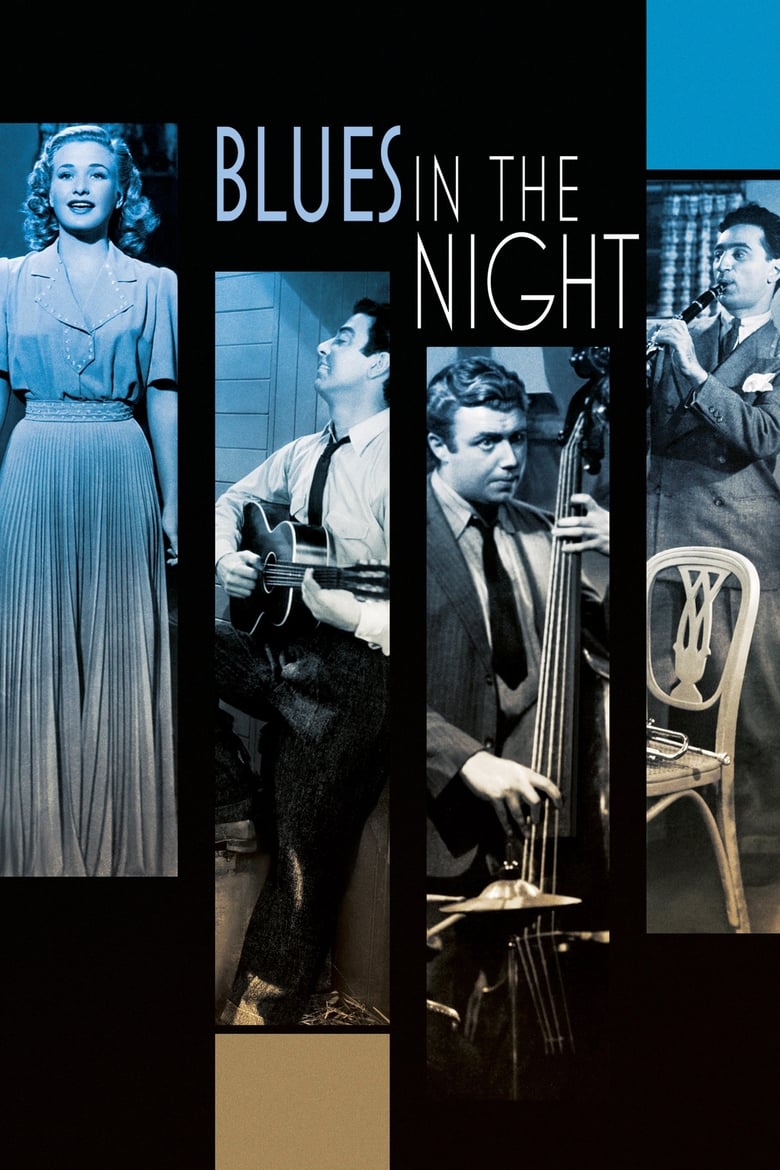
Blues in the Night 1941
1941 Warner Bros. Pictures
★★★☆☆ Notable
Film Noir · 88 minutes · Black & White

Blues in the Night

Directed by Anatole Litvak
Year 1941
Runtime 88 min
Studio Warner Bros. Pictures
TMDB 6.2 / 10
"A jazz man's ambition and a dangerous woman pull a band toward ruin, one slow note at a time."

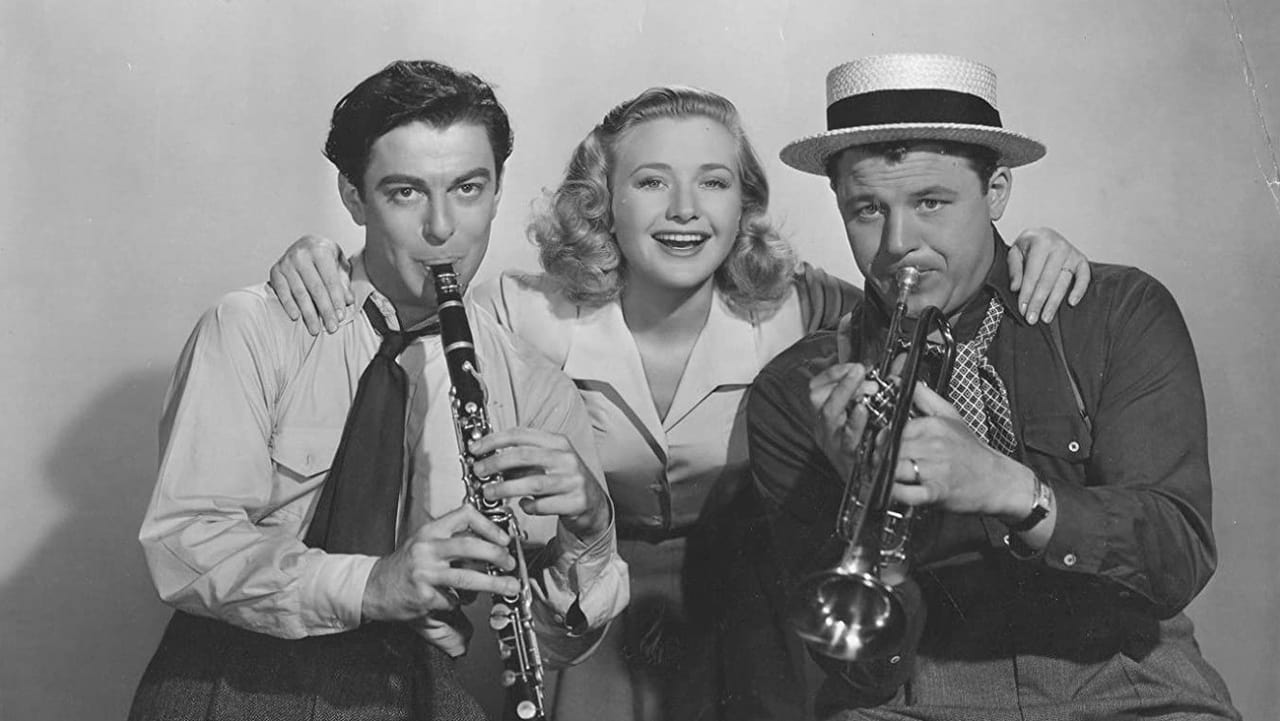
Jigger Pine is a pianist with genuine talent and a conviction that jazz, played honestly, is its own form of truth. Along with his friend and sometime-conscience Leo Powell, Jigger leads a small combo that scrapes through Depression-era America playing roadhouses and dives, chasing the sound he hears in his head. When the group lands in a Southern jail cell, they share the space with Del Davis, a smooth and vaguely threatening figure who takes an interest in the musicians and their prospects.

Del steers the band toward Kay Grant, a woman with money, a history, and a hold over men that she exercises without apparent effort. Jigger is drawn to her against his better judgment, while Leo's sister Ginger – who genuinely loves Jigger – watches the attachment deepen with quiet alarm. Del's motives remain opaque, his loyalties shifting with circumstance, and the atmosphere around the band curdles as the line between patron and predator becomes impossible to locate.

Blues in the Night positions jazz itself as the film's moral register: the music is what the characters reach for when language fails and compromise closes in. Warner Bros. frames the story as a cautionary account of artistic integrity under pressure, but the film's noir undertow is strong enough to trouble that reading. The result sits at the intersection of the backstage musical and the crime picture, belonging fully to neither, which is precisely where it earns its interest.
Classic Noir

Blues in the Night arrived in late 1941 at a moment when Warner Bros. was still negotiating the border between the social-problem picture and something darker and less redemptive. Anatole Litvak, working from Robert Rossen's adaptation of Edwin Gilbert's play, keeps the film from settling into either mode, and that restlessness is both its limitation and its distinction. Lloyd Nolan's Del Davis is one of the period's more quietly menacing supporting performances – a man whose charm functions as a kind of low-grade threat – and Betty Field brings an unnerving instability to Kay that anticipates the femme fatale figures who would dominate the following decade. The Mercer-Arlen title song, performed with raw economy, provides the film with an emotional center that the screenplay alone cannot sustain. What Blues in the Night finally reveals about its era is the anxiety embedded in the idea of artistic vocation: that the pursuit of an authentic sound could make a man vulnerable to precisely the forces he believed the music placed him above.

– Classic Noir
3 ★★★☆☆ Notable
Credits

The Crew

DirectorAnatole Litvak
ScreenplayRobert Rossen
CinematographyErnest Haller
MusicHeinz Roemheld
ProducerHenry Blanke
Performances

The Cast

Close Reading

The Signature Scene

Blues in the Night – scene
The Roadhouse Encounter Kay at the Window, Watching

Ernest Haller positions Kay in medium shot against a window whose light falls from the side, cutting her face into planes of illumination and shadow with clinical precision. The camera holds at a slight remove, declining to move closer, which denies the viewer the intimacy the scene's dialogue seems to invite. The frame keeps Jigger partially out of focus in the foreground, so that Kay remains the compositional anchor even as he speaks – a reversal of conventional staging that signals where narrative power actually resides.

The scene makes the argument that Kay's danger is not melodramatic but structural: she does not seduce so much as she makes herself available to be misread. Jigger projects onto her the romantic ideal his music reaches for, and Haller's framing refuses to correct that misreading – the camera sees what Jigger sees, not what is actually there. It is a precise visual enactment of the film's central claim: that desire and artistic self-delusion operate by the same mechanism.

Visual Language

The Cinematography

🎞️
Ernest Haller – Director of Photography

Ernest Haller, whose work across the Warner Bros. lot in the 1940s consistently demonstrated a preference for shadow as dramatic argument rather than decorative effect, brings a measured visual intelligence to Blues in the Night that the film's hybrid genre identity might have made difficult to sustain. Working on studio-constructed sets that simulate transient spaces – jails, roadhouses, rented rooms – Haller favors tight, high-contrast setups that emphasize confinement without making it explicit. His lens choices keep backgrounds slightly soft, isolating figures in a way that suggests psychological as much as physical enclosure. The lighting on Betty Field is consistently more fragmented than on any other character, shadows falling across her face in configurations that shift within single scenes, an approach that renders her visually unresolvable in a way the script rarely manages through dialogue alone. Throughout, Haller's cinematography serves the film's quiet moral argument: that clarity of vision, like integrity of sound, is harder to maintain than it appears.

In the Catalogue

Themes & Motifs

Availability

Where to Watch

Also in the Directory

See Also