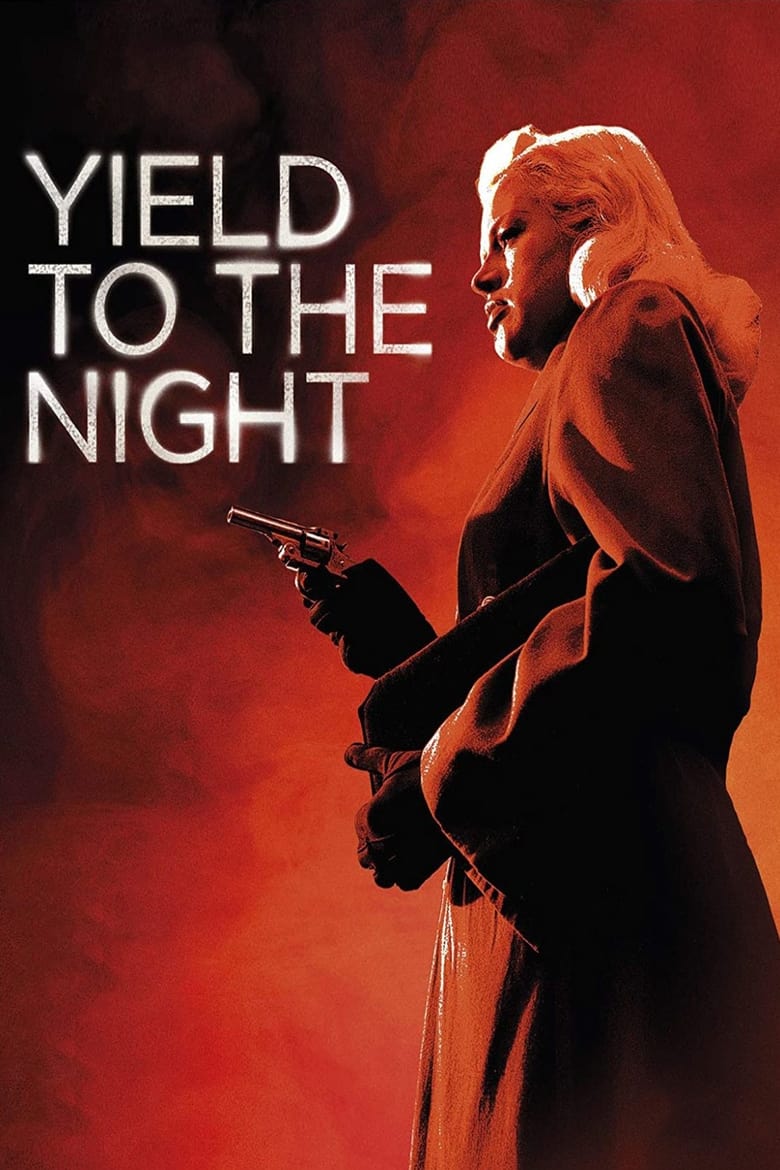
Mary Price Hilton (Diana Dors) arrives at a British women's prison under sentence of death, convicted of murdering her husband. The institution is governed by a strict hierarchy – Prison Governess, matrons, chaplain, doctor – each of whom reads Mary differently: as evidence, as burden, as soul in need of saving. Matron Hilda MacFarlane (Yvonne Mitchell) is assigned to watch over her during the long weeks of the appeal process, and the two women begin a wary, charged relationship across an unbridgeable divide of class and circumstance.
As the appeal grinds through the courts, journalist Jim Lancaster (Michael Craig) pursues the story from outside the walls, convinced that the verdict was wrong. Inside, MacFarlane finds her professional detachment eroding under the pressure of proximity to a condemned woman who refuses to perform either guilt or innocence. The prison's bureaucratic rhythms – shifts, inspections, the measured routine designed to suppress feeling – become a kind of secondary sentence, imposed equally on the watched and the watching.
Blonde Sinner positions itself at the intersection of women's prison drama and capital-punishment procedural, two cycles that British cinema of the mid-1950s was testing for social content. The film's tension is less about whether Mary killed her husband than about what a society reveals when it places a woman's life inside a machine built for judgment. Thompson keeps the moral question open long enough to make the audience feel the weight of the mechanism before the resolution arrives.
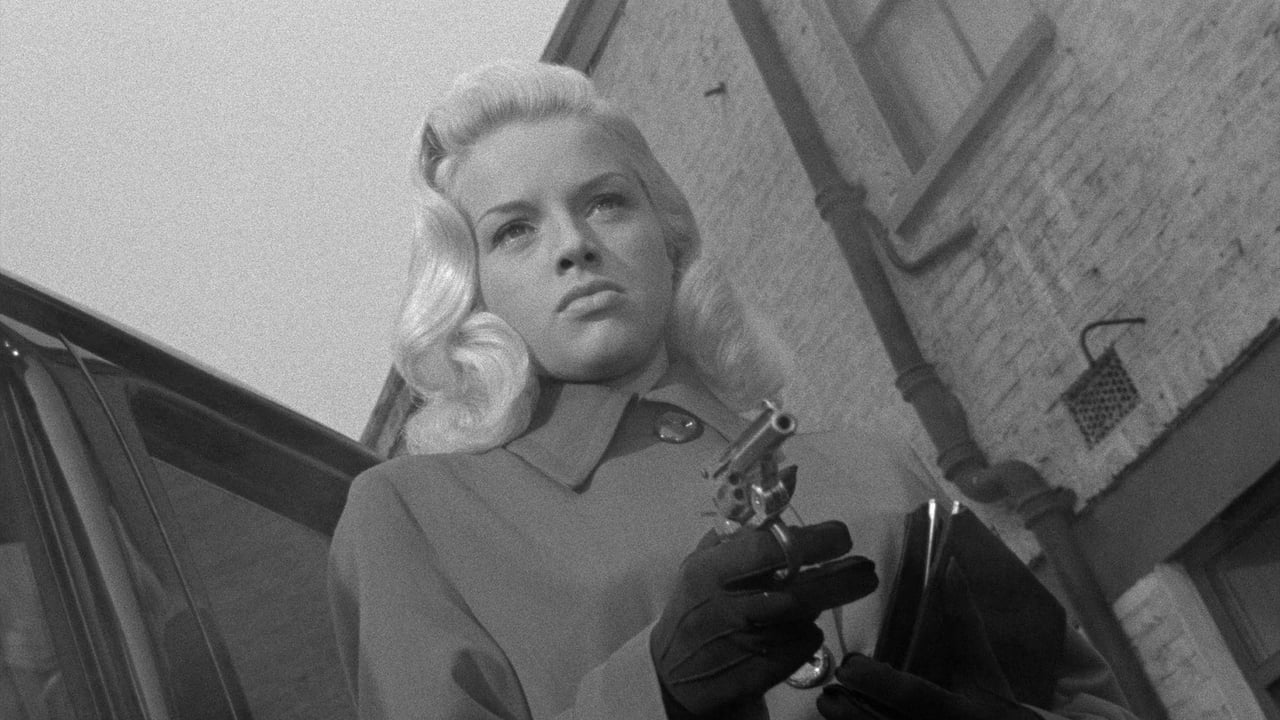
Blonde Sinner – released in the UK under the title Yield to the Night – sits at a particular pressure point in British postwar cinema, arriving while the campaign to abolish capital punishment was gaining parliamentary traction. J. Lee Thompson uses the genre framework of the prison picture not to produce sensation but to produce duration: the film insists on time, on waiting, on the slow erosion of certainty. Diana Dors, routinely underestimated as a manufactured platinum commodity, delivers work of considerable internal precision, suppressing the star persona almost entirely. Yvonne Mitchell's MacFarlane is the film's true fulcrum, a professional woman whose institutional loyalty and human sympathy cannot be held in the same posture indefinitely. The screenplay avoids the editorialising that damages comparable American pictures on similar subjects. What the film reveals about its era is a society conducting an argument with itself through the contained space of the cell, using a woman's body and the state's calendar as the terms of debate.
– Classic Noir
Taylor frames Mary from a low angle, the ceiling pressing down as the single source of light – a narrow strip beneath the cell door – cuts across the floor and finds her face at an oblique angle. The camera does not move. The composition holds Mary in stillness while the light outside shifts slightly as a guard passes, briefly narrowing the bar on the floor. Shadow reasserts itself across her eyes, leaving the lower half of her face in dim illumination: mouth, throat, the place where breath is visible.
The scene makes an argument without dialogue. The light that reaches Mary is the light that escapes the institution's control – it cannot be scheduled, cannot be entirely withheld. That it originates beyond the door, from the corridor's routine surveillance, and yet becomes in the frame something closer to the natural world, is the image's central irony. Mary does not reach toward it. She has learned, the film suggests, that reaching changes nothing about what the light will do or when it will go.
Gilbert Taylor shoots Blonde Sinner with a discipline that mirrors the film's institutional subject. Working in black and white, Taylor constructs the prison interior as a geometry of right angles interrupted only by the curved vulnerability of faces, and his lighting setups refuse the decorative expressionism that American noir had by 1956 made available as a default. Shadows are motivated: they come from practical sources – corridor lamps, barred windows, a single overhead in the cell – and their function is spatial before it is psychological. Taylor's lens choices favour a moderate focal length that keeps the actors in clear relation to walls and doors, never allowing claustrophobia to become abstraction. The effect is documentary pressure rather than stylised dread. Where light does fall expressively – on Dors in close-up, on Mitchell during the film's pivotal confrontations – it has been earned by the surrounding austerity. The cinematography argues that the prison's power lies not in darkness but in the remorseless evenness of institutional illumination.
MUBI has carried Yield to the Night in curated British cinema programmes and represents the most likely streaming home for a restored presentation.
TubiFreeTubi has offered British noir titles from this period in standard-definition transfers; availability varies and should be confirmed.
Archive.orgFreePublic domain or rights-lapsed prints occasionally appear here; quality is inconsistent but the film is worth seeking out in any available version.