Films People Pull a Fast One Night Beat Reading Room On TV Shop
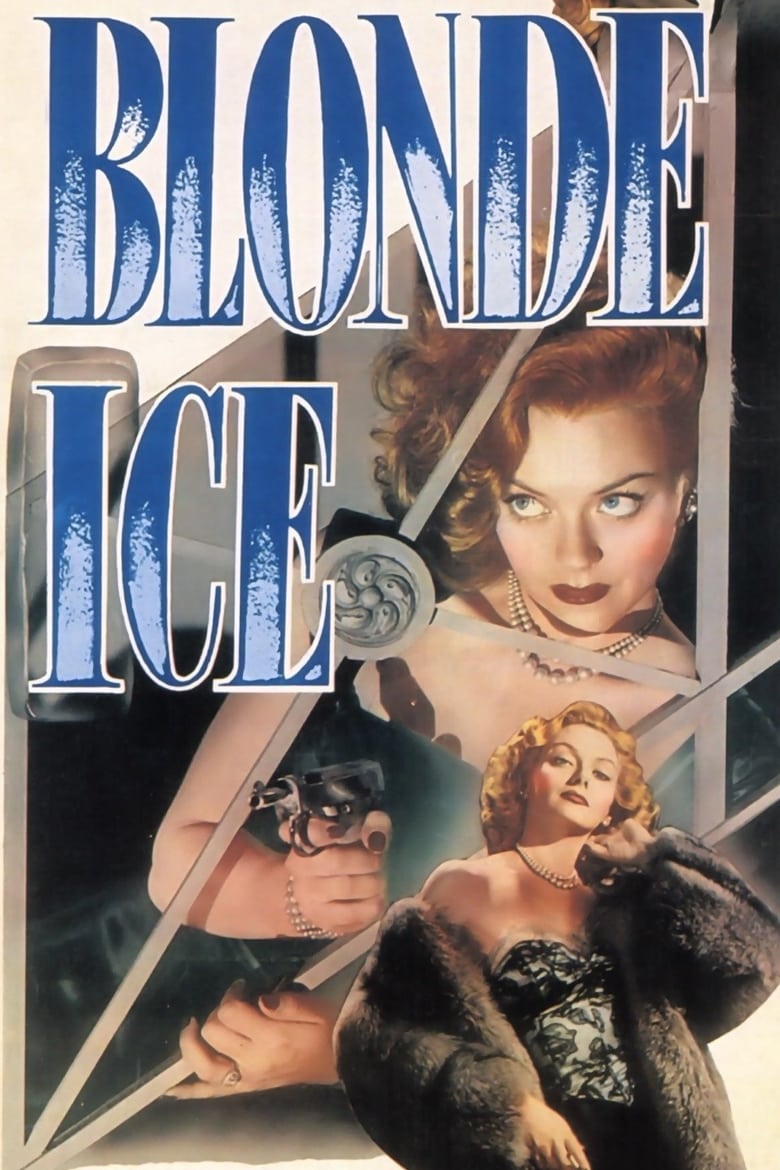
Blonde Ice 1948
1948 Martin Mooney Productions
★★★☆☆ Notable
Film Noir · 73 minutes · Black & White

Blonde Ice

Directed by Jack Bernhard
Year 1948
Runtime 73 min
Studio Martin Mooney Productions
TMDB 5.8 / 10
"A woman collects husbands the way other people collect debts – and pays neither back."

Claire Cummings is a society columnist in San Francisco with a talent for marriage and a complete absence of sentiment. When she abandons her longtime admirer, newspaper reporter Les Burns, to wed the wealthy Carl Hanneman, Burns absorbs the blow professionally and personally – covering the wedding for his paper while quietly nursing what he mistakes for love. Claire moves through her new life with the same cool efficiency she brings to her column, treating men as instruments of social and financial advancement.

Hanneman's death follows quickly, ruled accidental under circumstances that trouble Burns more than they trouble the police. Claire, already pivoting toward Stanley Mason, a well-connected attorney, draws Burns back into her orbit with a practiced ease that functions as both seduction and distraction. Blackie Talon, a pilot with his own entanglements with Claire, and the dogged Captain Murdock add pressure from different angles, while Al Herrick, a man who knows too much, becomes a liability Claire cannot afford to carry.

Blonde Ice belongs to the cycle of postwar noir built around the predatory woman – not as victim or accomplice but as primary agent of destruction. The film strips the femme fatale of ambiguity: Claire is not driven by trauma or desperation but by appetite, which makes the portrait bleaker and, in its own way, more honest. The film's modest budget and tight runtime work in its favor, keeping the moral geometry clean and the pace unsparing.
Classic Noir

Blonde Ice occupies a specific and underexamined position in the noir canon: the sociopath-as-protagonist film that refuses psychological mitigation. Jack Bernhard, working at the low end of the budget scale with Martin Mooney Productions, directs without flourish, and that restraint suits the material. Leslie Brooks's Claire Cummings is not a woman undone by circumstance or warped by a damaged past – she is simply and completely without conscience, which the film presents as a social pathology rather than a personal tragedy. Robert Paige's Burns functions as the audience's moral anchor, but the script is intelligent enough to implicate him: his persistence in the face of obvious danger reads less as heroism than as its own compulsion. The film engages, obliquely, with postwar anxieties about women who had accumulated agency during the war years and showed no intention of surrendering it – a subtext the genre returned to repeatedly, though rarely with this degree of cold economy.

– Classic Noir
3 ★★★☆☆ Notable
Credits

The Crew

DirectorJack Bernhard
ScreenplayKenneth Gamet
CinematographyGeorge Robinson
MusicIrving Gertz
EditingW.L. Bagier
ProducerMartin Mooney
Performances

The Cast

Close Reading

The Signature Scene

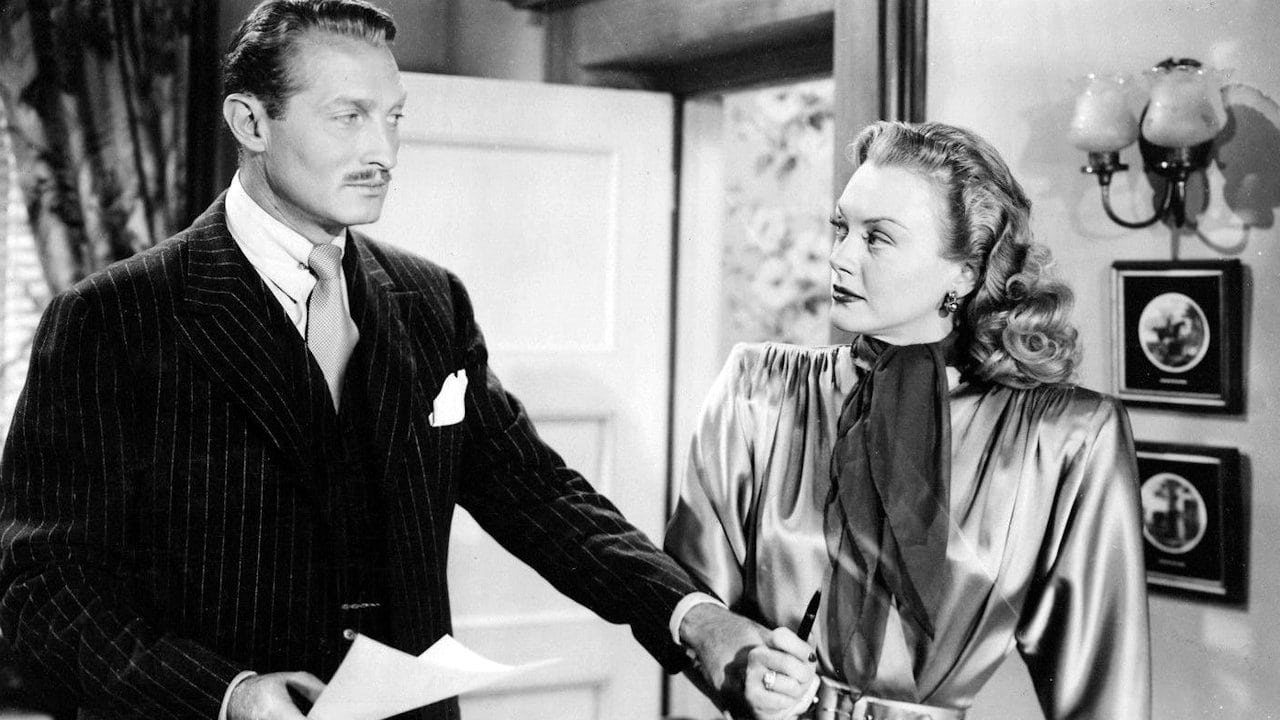
Blonde Ice – scene
The Study Confrontation Still Water, No Ripple

The camera holds Claire in medium shot against a dark interior, the key light placed high and slightly lateral so that one side of her face settles into shadow while the other remains composed and luminous. George Robinson's setup refuses the expressionist excess common to higher-budget noir – there are no venetian blind patterns, no dutch angles. The frame is almost classical, which makes the content more unsettling. When a man confronts her with what he knows, the editing stays on her face rather than cutting to his, keeping the viewer locked inside her stillness.

The scene's argument is that genuine threat does not require agitation. Claire's immobility in the face of accusation is not stoicism – it is the absence of the guilt that would produce agitation in the first place. The film uses this moment to confirm what the audience has suspected: the conventions of the genre, in which confrontation precipitates confession or collapse, do not apply here. The scene resets the viewer's expectations and raises the stakes of every remaining scene.

Visual Language

The Cinematography

🎞️
George Robinson – Director of Photography

George Robinson, whose career extended back to the silent era and encompassed significant work at Universal, brings a controlled economy to Blonde Ice that suits both the budget and the subject. Working largely on studio interiors, Robinson avoids the temptation to compensate for modest production values with shadow theatrics. His lighting setups are precise rather than ornate: high-contrast pools that isolate characters against undefined backgrounds, creating a moral geography in which no figure is fully lit and no space feels safe. Close-ups on Brooks are handled with a flatness that is itself a formal statement – the absence of soft-focus glamour registers as the absence of sympathy. The overall visual language is one of surfaces: polished, legible, and concealing nothing because there is nothing beneath to conceal. This flatness of affect, achieved through deliberate restraint rather than limitation, is the cinematography's most coherent contribution to the film's argument about a woman who is exactly what she appears to be.

In the Catalogue

Themes & Motifs

Availability

Where to Watch

Also in the Directory

See Also