Films People Pull a Fast One Night Beat Reading Room On TV Shop
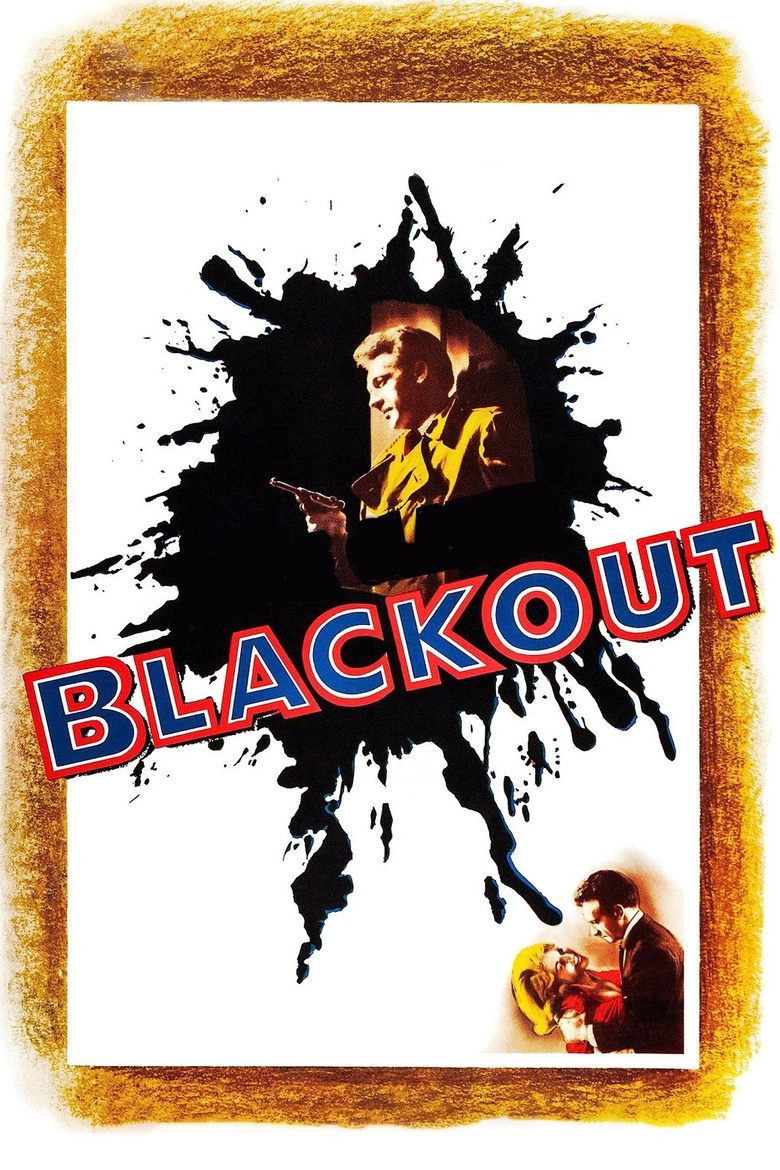
Blackout 1954
1954 Hammer Film Productions
★★★☆☆ Notable
Film Noir · 87 minutes · Black & White

Blackout

Directed by Terence Fisher
Year 1954
Runtime 87 min
Studio Hammer Film Productions
TMDB 6.2 / 10
"A man wakes without a past and finds the present worse than anything he might have forgotten."

Casey Morrow, an American adrift in postwar London, regains consciousness with no memory of the previous night and a dead body on his hands. The police want him for murder; he wants the truth. Working from the fragments of a name and a face, he moves through the city's margins – cheap lodgings, hired cars, and the kind of people who prefer not to be found – searching for evidence that will either clear him or confirm the worst.

His investigation draws him toward Phyllis Brunner, a young woman whose connection to the dead man is unclear and whose loyalty proves difficult to fix. Her mother, Alicia, occupies the household with an air of concealed motive, while Lance Gordon, smooth and professionally cautious, circles both women in ways that suggest interests beyond the domestic. Morrow's reporter contact Maggie Doone provides what institutional support she can, but the further he presses into the case, the more the architecture of deception reveals itself to have been built well in advance of his arrival.

Blackout belongs to the cycle of wrong-man thrillers that British studios produced in quantity during the early 1950s, drawing on American noir conventions and filtering them through a distinctly English sense of social containment. The amnesia plot is a formal device as much as a narrative one – a way of placing the protagonist outside normal accountability and forcing the audience to reconstruct guilt and innocence alongside him. Terence Fisher, two years before his career-defining work at Hammer in horror, handles the material with economy, keeping the film's moral uncertainty alive until the machinery of resolution closes in.
Classic Noir

Blackout arrives at an instructive moment in Fisher's career, when his craft was fully formed but not yet fixed to any single genre identity. The film works the amnesia-and-murder premise with professional discipline, and what distinguishes it from second-tier programme pictures of the period is the consistency of its social observation. Casey Morrow is explicitly positioned as an outsider – American, displaced, without local allegiance – and the film uses that displacement not merely for convenience but to examine the networks of obligation and concealment that operate just beneath respectable London surfaces. Dane Clark carries the role with a restrained tension that suits the material; Belinda Lee, in an early performance, conveys something genuinely ambiguous in Phyllis, resisting the pull toward straightforward victim or accomplice. Betty Ann Davies as Alicia Brunner is the film's most quietly unsettling presence. Blackout does not reinvent its genre, but it executes its premises with a sobriety that separates it from the merely competent, and its portrait of a city where the war's dislocations have not yet resolved into settled identities remains historically instructive.

– Classic Noir
3 ★★★☆☆ Notable
Credits

The Crew

DirectorTerence Fisher
ScreenplayRichard H. Landau
CinematographyWalter J. Harvey
EditingMaurice Rootes
Art DirectionJ. Elder Wills
ProducerMichael Carreras
Performances

The Cast

Close Reading

The Signature Scene

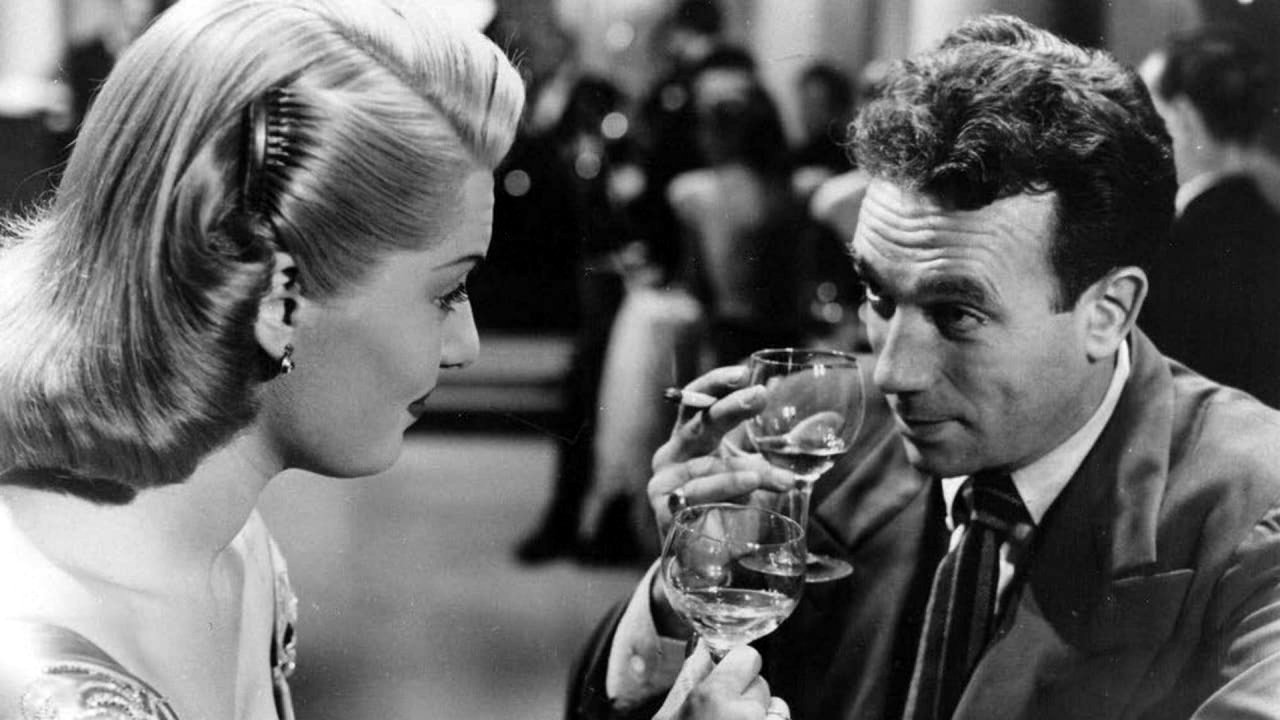
Blackout – scene
The Back-Street Confrontation Light Through Broken Glass

Walter J. Harvey frames the scene in a cramped interior lit by a single oblique source, the light entering from street level and cutting across the space at a shallow angle that leaves the upper halves of faces in shadow. The camera stays close, using slight low angles that compress the background and deny both men the comfort of readable space behind them. Reflections in cracked glass multiply the figures without clarifying them, so that movement reads as threat before any dialogue confirms it.

The geometry of the scene enacts the film's central problem: Morrow cannot determine what is real and what is projection, and Harvey's framing refuses to resolve the ambiguity for the audience either. What the scene ultimately argues is that memory, in this world, functions less as a record than as a liability – the man who cannot remember is dangerous precisely because he cannot be predicted, and the man who remembers everything has long since decided to use that advantage.

Visual Language

The Cinematography

🎞️
Walter J. Harvey – Director of Photography

Walter J. Harvey, working within the constraints of a modest Hammer production schedule, constructs a visual grammar that borrows from American studio noir without simply replicating it. His lighting favours hard sources placed low and to the side, generating shadows that fall across walls at angles that suggest enclosure rather than drama for its own sake. Studio interiors are dressed to read as functional rather than atmospheric – the drabness is itself a moral statement about the postwar world the film inhabits. Harvey makes deliberate use of reflective surfaces, mirrors and wet pavements, to fragment figures and introduce visual uncertainty into scenes that might otherwise resolve too cleanly. The exterior London sequences carry a documentary coldness, the ambient light flattening faces and denying characters the romantic penumbra that a warmer treatment might have offered. Throughout, the cinematography serves Fisher's evident interest in a world where appearance and reality have parted company, and where the camera's apparent neutrality is itself a form of suspicion.

In the Catalogue

Themes & Motifs

Availability

Where to Watch

Also in the Directory

See Also