Chicago, the early 1930s. Lester Gillis – known to the press and the public as Baby Face Nelson – is a volatile, hair-trigger criminal whose rage functions as a kind of career. Released from prison and immediately folded into the orbit of John Dillinger's gang, Nelson operates on the margins of the Depression-era underworld, where bank robbery has become a strange species of folk theater and the FBI is slowly learning to play a harder game. His wife Sue travels with him, loyal without illusion, watching a man she loves consume himself.
Nelson's association with Dillinger is less a partnership than a collision of temperaments. Dillinger is calculating; Nelson is combustion. As the gang's operations grow more violent and the law closes in, Nelson's refusal to subordinate his fury to any practical discipline begins to fracture every alliance around him. Doc Saunders, a compromised physician who tends the gang's wounds, and the syndicate figure Rocca represent the institutional underworld that Nelson is constitutionally incapable of serving – a man too volatile even for organized crime.
Don Siegel frames the film not as a celebration of outlaw mythology but as a clinical study in self-destruction. Baby Face Nelson belongs to a strain of American crime cinema that treats the gangster not as tragic hero but as a kind of natural disaster – something that burns through people and places and is finally extinguished not by justice alone but by its own intensity. The film asks, quietly, what society produces when it discards men like Gillis, and what those men cost on their way out.
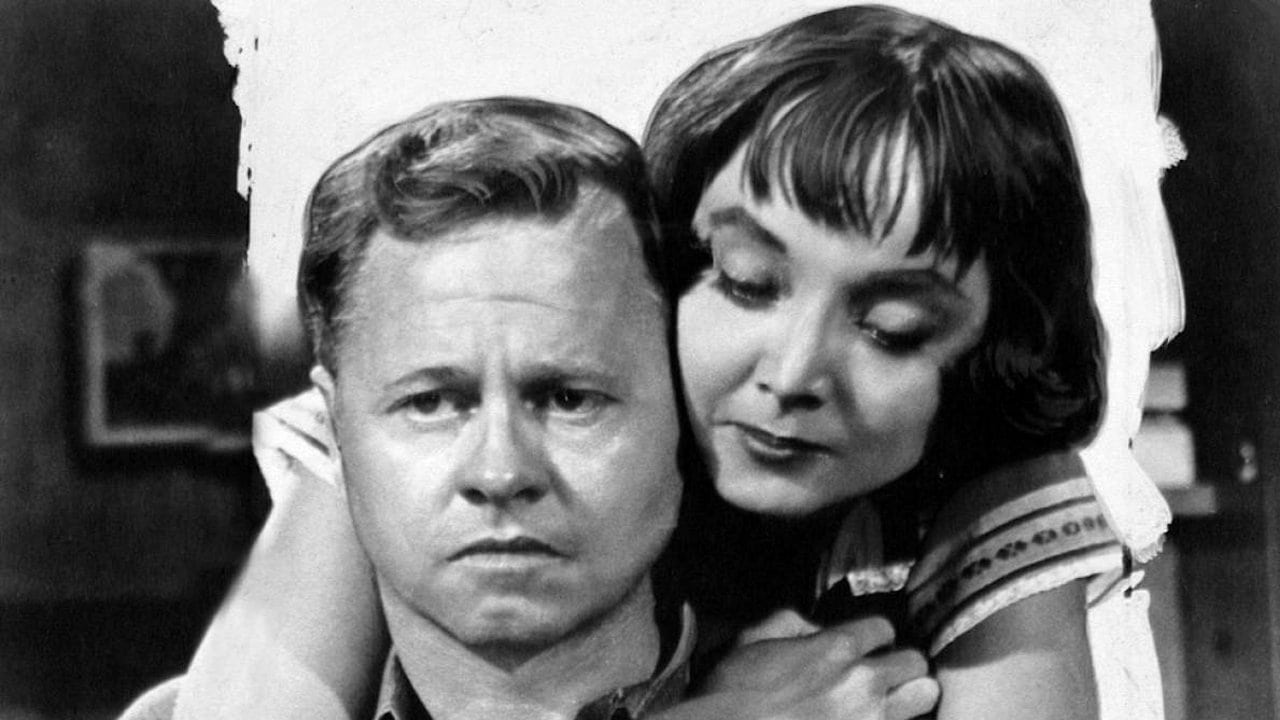
Don Siegel made Baby Face Nelson two years before Riot in Cellblock 11 had already established his credentials as a director who understood institutional violence, and the film is a logical extension of that sensibility into the gangster biopic. What distinguishes it from the Warner Bros. template of the 1930s is its refusal of grandeur. Mickey Rooney's casting is the film's central argument: a man physically unimposing, denied the romantic silhouette of a Cagney or a Bogart, whose violence reads as compensation rather than charisma. Rooney commits fully, and the performance is genuinely unsettling rather than merely energetic. Siegel keeps the pacing functional and the sentiment minimal. The supporting cast – Leo Gordon's Dillinger, Jack Elam's Fatso, Ted de Corsia's Rocca – populates the margins with faces that carry their own weight of menace. The film does not reach the formal ambition of Siegel's later work, but it demonstrates the efficiency that would define his mature style: no scene lasts longer than its purpose, and the moral accounting is settled without editorializing.
– Classic Noir
Hal Mohr frames the sequence in the compressed geography of a two-lane road at night, the headlights of the pursuing vehicles cutting hard diagonal shafts across the asphalt. The camera holds at a low angle, keeping the horizon line flat and the sky absent – a world reduced to tarmac, steel, and the narrow cones of artificial light. Shadows pool in the wheel wells and across the faces of the men inside; there is no ambient warmth to the image. When the shooting begins, Mohr does not sensationalize the muzzle flash but lets it flare briefly, a crude punctuation in an otherwise controlled visual register.
The scene condenses the film's argument about Nelson's fate into pure spatial logic: he is always moving, always cornered, the road ahead and the road behind equally dangerous. The geography of flight has become the geography of a trap. What the sequence reveals is that Nelson's velocity – the quality that has kept him alive – is also the quality that has made retreat impossible. There is nowhere to stop, and stopping, the film implies, was never really an option for a man constituted as he is.
Hal Mohr, a cinematographer whose career stretched back to the silent era, shoots Baby Face Nelson with the economy of someone who has no interest in decorating a frame for its own sake. Working in black-and-white on what were clearly modest budgets, Mohr favors hard sources – practical lights, headlamps, bare bulbs – that carve faces into planes of highlight and shadow without softening. The effect is less the expressionist chiaroscuro of a Gregg Toland and more a forensic flatness, as though the camera is recording evidence rather than constructing atmosphere. Locations feel functional rather than chosen for pictorial value, which suits Siegel's directorial temperament. The lens work stays largely in the mid-range; there are few of the distorting close-ups that signify psychological extremity in more self-conscious noirs. This restraint serves the film's moral logic: Nelson is not rendered monstrous by the camera but observed, which is, finally, the more damning treatment.
Tubi has carried Baby Face Nelson in its classic crime library and offers the most accessible free option, though transfer quality may vary by region.
Archive.orgFreeAs a production from a minor independent studio, the film may exist in the public domain; Archive.org is worth checking for a full, unpaywalled version.
Amazon Prime VideoRentalAvailable to rent on Amazon in standard definition, providing a reliable fallback if streaming libraries have rotated the title out.